











When a site is cut into fragments by fencing, pipelines or existing buildings, the difficulty of earthwork leveling is often not the total volume of earth but whether the equipment can get in, whether the turning radius is sufficient, and whether the dozing path has room to maneuver. If only horsepower or blade capacity is compared before purchase, it is easy to overlook that machine dimensions and ground conditions are what truly limit the work.
This article does not discuss whether a particular machine "can do all the work"; instead, it breaks the leveling task on narrow sites into verifiable equipment conditions, then uses public data for a small crawler bulldozer to explain which parameters correspond to each condition and which still need on-site confirmation.
Break Down the Task First: Space, Ground, Dozing, Attachments
Earthwork leveling on narrow sites generally involves four types of constraints, in order of operation:
- Whether the equipment can pass through entrances and turn within the work area;
- Whether the ground can bear the tracks and the machine's weight without sinking;
- Whether the dozing distance and path from the cut point to the fill point are continuous;
- Whether blade width, lift height and rear attachments match the on-site materials and auxiliary operations.
Of these four, the first two determine whether the equipment can enter and work on site, while the latter two determine the configuration direction. They are not a parallel parameter table but a judgment chain with a sequence: if space and bearing capacity are inadequate, dozing efficiency is irrelevant.
Which Machine Dimensions Correspond to Space Conditions
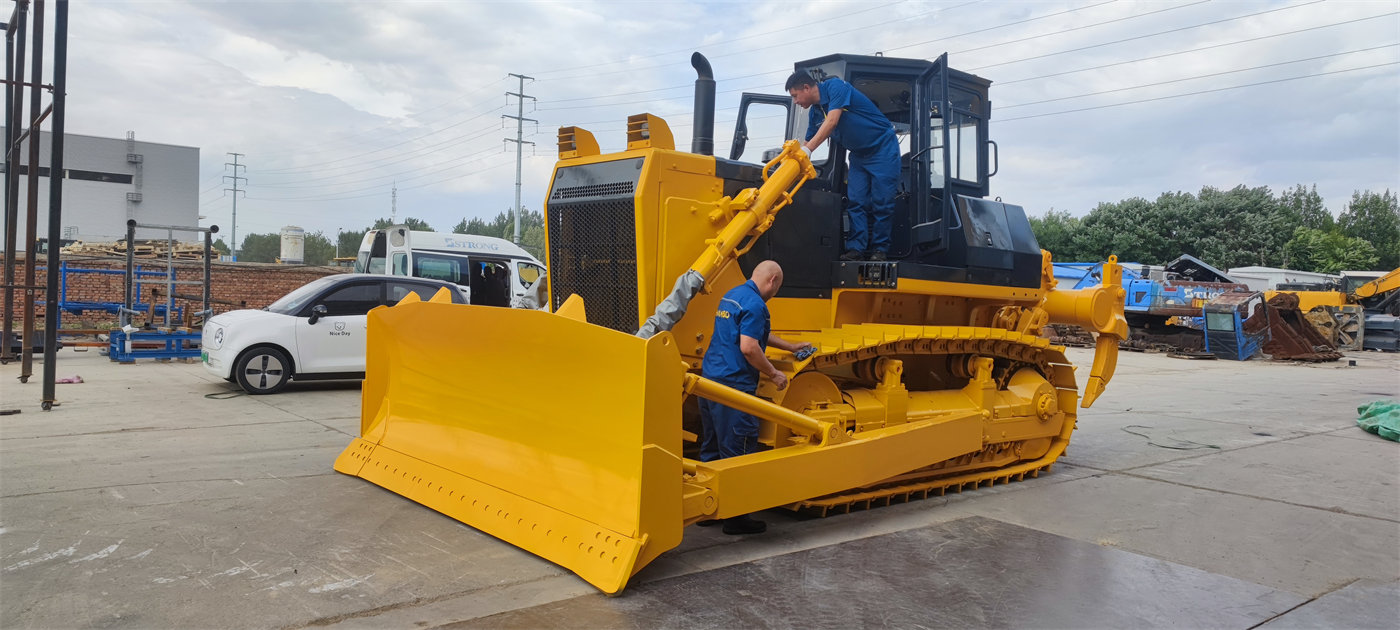
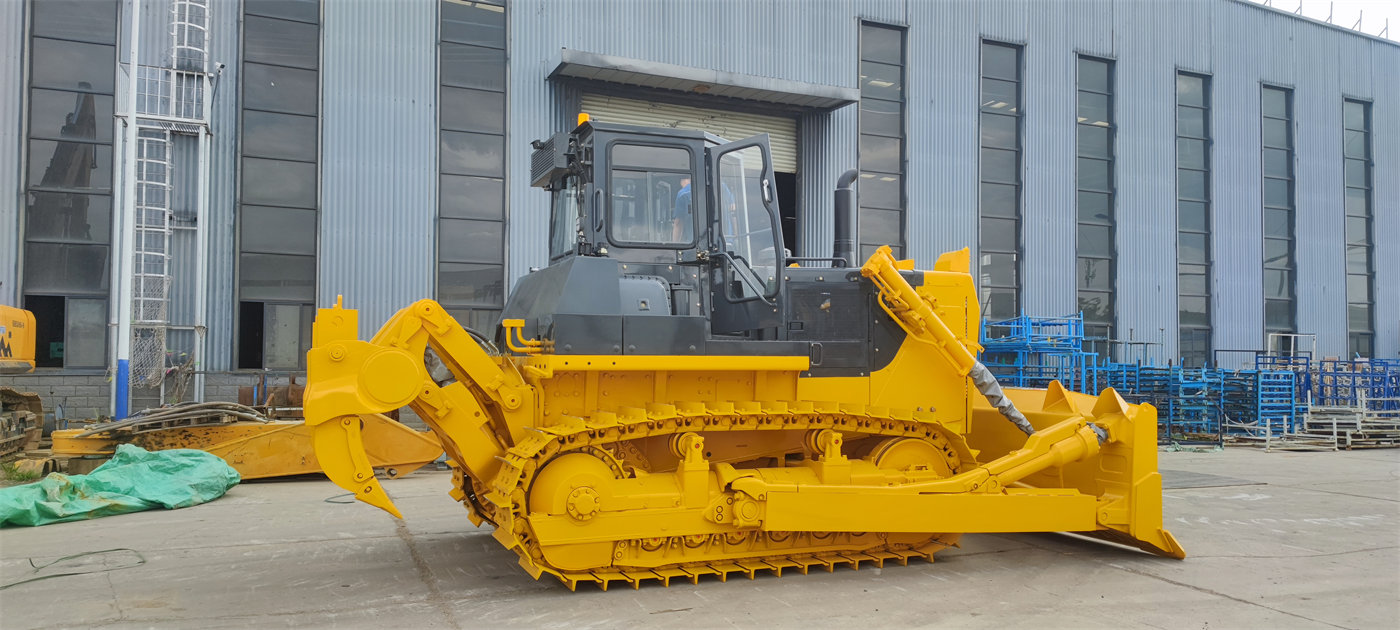
Taking the SD10 small bulldozer as an example, its overall dimensions are 4400×2960×3030 mm (length×width×height), and the track shoe width is 450 mm. The overall width of about 2.96 m is better used for comparison with the narrowest on-site passage, the clear width of gate openings and the equipment turning area, rather than being directly equated with "can enter any narrow site."
Items requiring on-site confirmation include: the actual clear width of entrances and exits, whether in-place turning is needed within the work area, and whether there is space for stockpiling soil at the dozing endpoint. The data does not provide the minimum turning radius, so turning capability cannot be inferred from dimensions; this item should be treated as a condition to be measured on site or verified with the supplier before mobilization.
Ground Bearing Capacity and Ground Pressure
The SD10 has a total weight of 10000 kg, a ground pressure of 54.4 kPa, a Cummins 4BT3.9-C125 engine, a rated power of 81 kW (125 HP)/2300 r/min, and a maximum drawbar pull of 95 kN. Ground pressure is an important basis for judging whether work is possible on soft ground and backfill areas, but the data does not provide allowable bearing capacity for different soil types, so it cannot directly determine whether a particular site is suitable.
For narrow sites, ground conditions often appear together with bearing capacity: backfill areas after existing hardened layers are broken up, plain soil soaked by rain, and edges of temporary roads all need separate verification. A conditional judgment can be used: if the site surface is loose backfill with unknown bearing capacity, bearing capacity should be verified first before discussing machine matching.
Dozing Stage: Blade and Speed
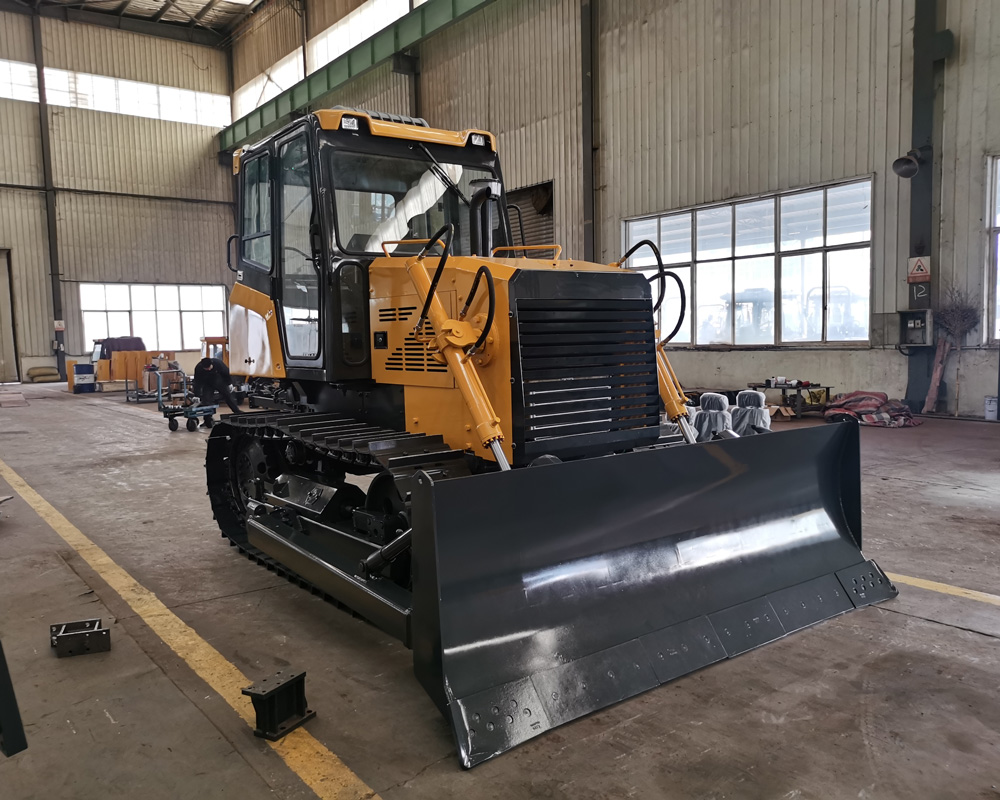
The SD10 blade dimensions are 2960×960 mm, with a maximum lift height of 830 mm, a maximum digging depth of 350 mm, and optional straight, curved and coal blades. The transmission is a 4F+2R mechanical gearbox, with forward speeds of 2.6–10.4 km/h and reverse speeds of 3.7–6.7 km/h.
On narrow sites, dozing distances are usually short, and matching blade width to work area width is more practical than simply pursuing a larger blade: if the blade is too wide, its edges easily conflict with fencing and pipelines; if too narrow, more passes are required. The data does not provide actual dozing efficiency for different materials, so shift output cannot be estimated from it; it can only serve as a reference for configuration direction.
Rear Attachments and Process Integration
The SD10 can be equipped with a fixed drawbar device or a three-shank ripper at the rear. On narrow sites, the ripper may be used to handle local hard layers or old foundations, but the data does not specify the applicable rock strength or soil range; whether to configure it should be confirmed against on-site materials, and it cannot be assumed that all hard layers are suitable for ripper treatment.
Conditional Selection and Items to Be Confirmed
Overall, the data for this small bulldozer is closer to the task profile of "limited space, medium earthwork volume, mainly leveling and short-distance dozing." Whether it is worth considering depends on whether the following conditions can be verified:
| Check Item | Data Basis | Still to Be Confirmed |
|---|---|---|
| Access passage | Overall width about 2.96 m | Measured clear width of gate openings and turning space |
| Ground bearing capacity | Ground pressure 54.4 kPa | On-site soil type and allowable bearing capacity |
| Dozing organization | Blade 2960×960 mm | Dozing distance and material type |
| Hard layer treatment | Optional three-shank ripper | Hard layer strength and applicability |
When requesting a quotation, it is recommended to provide: the site plan and narrowest passage dimensions, earthwork volume and dozing distance, ground soil type and bearing conditions, operating hours per shift, and whether a ripper or drawbar device is needed. Blade type and track configuration should be confirmed item by item according to actual materials and ground conditions, rather than drawing conclusions solely from the machine specification table.