











When organizing compaction work at a landfill, a common conflict arises: if the lift is too thick, the equipment cannot compact it through in one pass; if the lift is too thin, the number of passes increases and the working face advances slowly. To clarify whether compaction depth or lift thickness determines the other, the relationship between the two must first be explained, followed by which fields in equipment data are worth verifying.
Compaction depth refers to the spread layer reachable by the teeth, not the final compacted density
Landfill compactors typically use teeth on compaction wheels to crush, spread, and compress the waste layer. The statement in product data that "compaction spreading depth can reach over 1 meter" describes the depth range of the spread layer where the teeth can act effectively, not the density value achieved after each compaction pass. Density also depends on waste composition, moisture state, lift uniformity, pass arrangement, and site slope conditions.
Therefore, treating the depth parameter as a promise that "one compaction pass achieves a certain density" is inaccurate. A more reasonable interpretation is that it provides a reference upper limit for lift organization; beyond this range, the teeth's effect on lower waste layers weakens, and actual results must be supplemented through layered spreading and pass arrangement.
How lift organization corresponds to depth parameters
Assume the landfill advances by layered spreading, with each waste layer entering the compaction process after being leveled. At this point, the relationship between lift thickness and equipment effective depth falls roughly into three categories, explained below through conditional analysis and not representing measured conclusions from any specific project:
| Lift-to-depth relationship | Possible situations | Organization direction |
|---|---|---|
| Lift significantly less than effective depth | Tooth action range has margin, but per-layer advance is small and passes may be excessive | When equipment capability and site allow, appropriately increase lift thickness to reduce layer count |
| Lift close to effective depth | Action range basically covers the full layer, but uniformity depends on spreading quality | Leveling and compaction must be tightly coordinated to avoid local mounding |
| Lift exceeds effective depth | Lower layers may not be effectively acted upon by teeth, causing uneven density | Use layered spreading, or increase passes and inspect lower layer condition |
These three relationships are not fixed operating standards but a framework to help judge lift organization direction. The actual choice depends on waste composition, daily intake volume, working face size, and compaction quality requirements.
Fields in C300H data related to lift organization
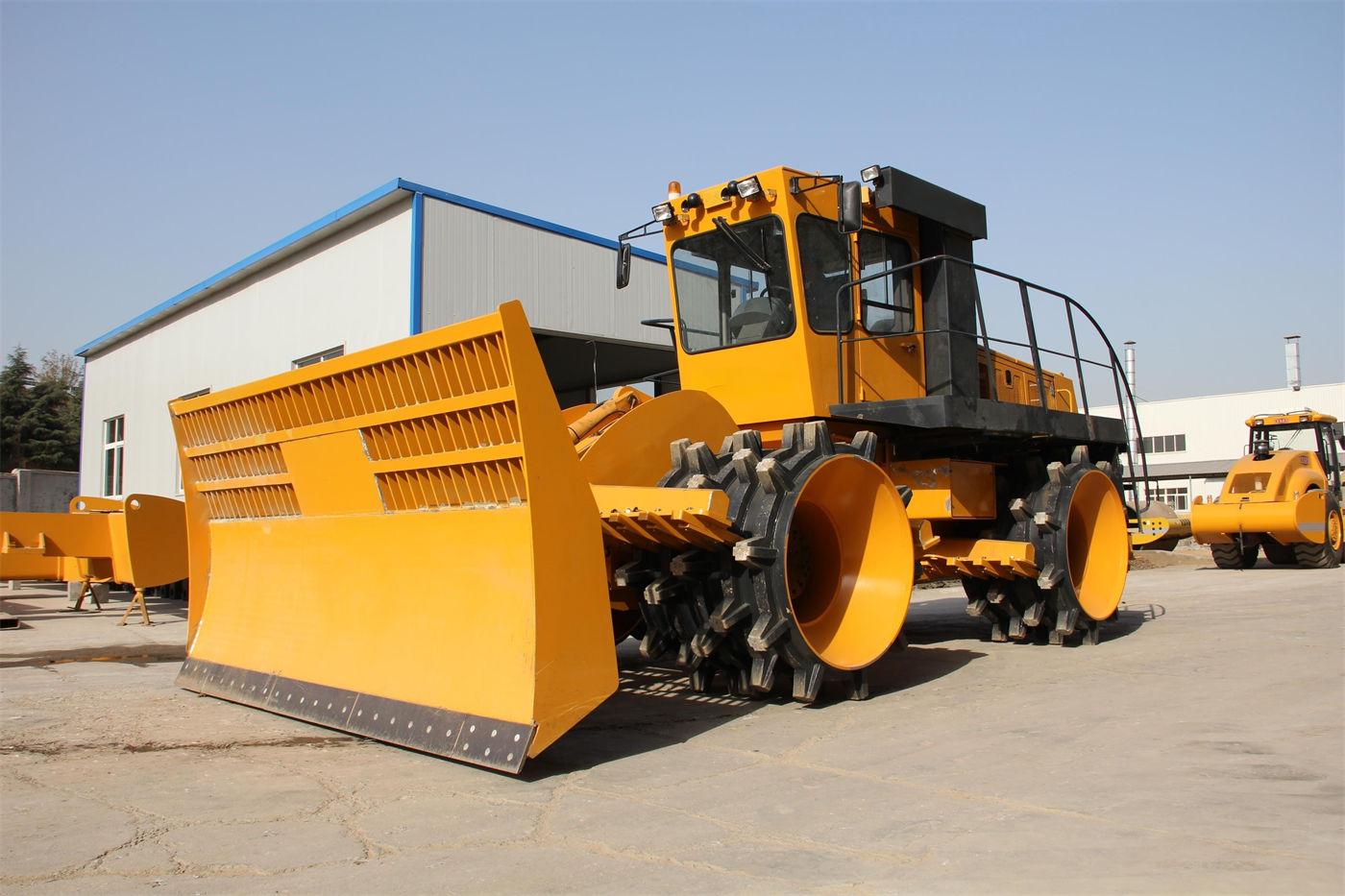
Taking the landfill compactor product data on this site as an example, the C300H has an operating weight of 29,100 kg, rated engine power of 192 kW, four-wheel drive, compaction width of 3,430 mm, front and rear roller diameters both 1,620 mm, front roller width 1,195 mm, rear roller width 970 mm, front roller teeth 50×2, rear roller teeth 40×2, maximum travel speed 11 km/h, gradeability 100%, and bulldozer blade height 1,880 mm. The data states that its high-strength wear-resistant cutting teeth can achieve a compaction spreading depth of over 1 meter.
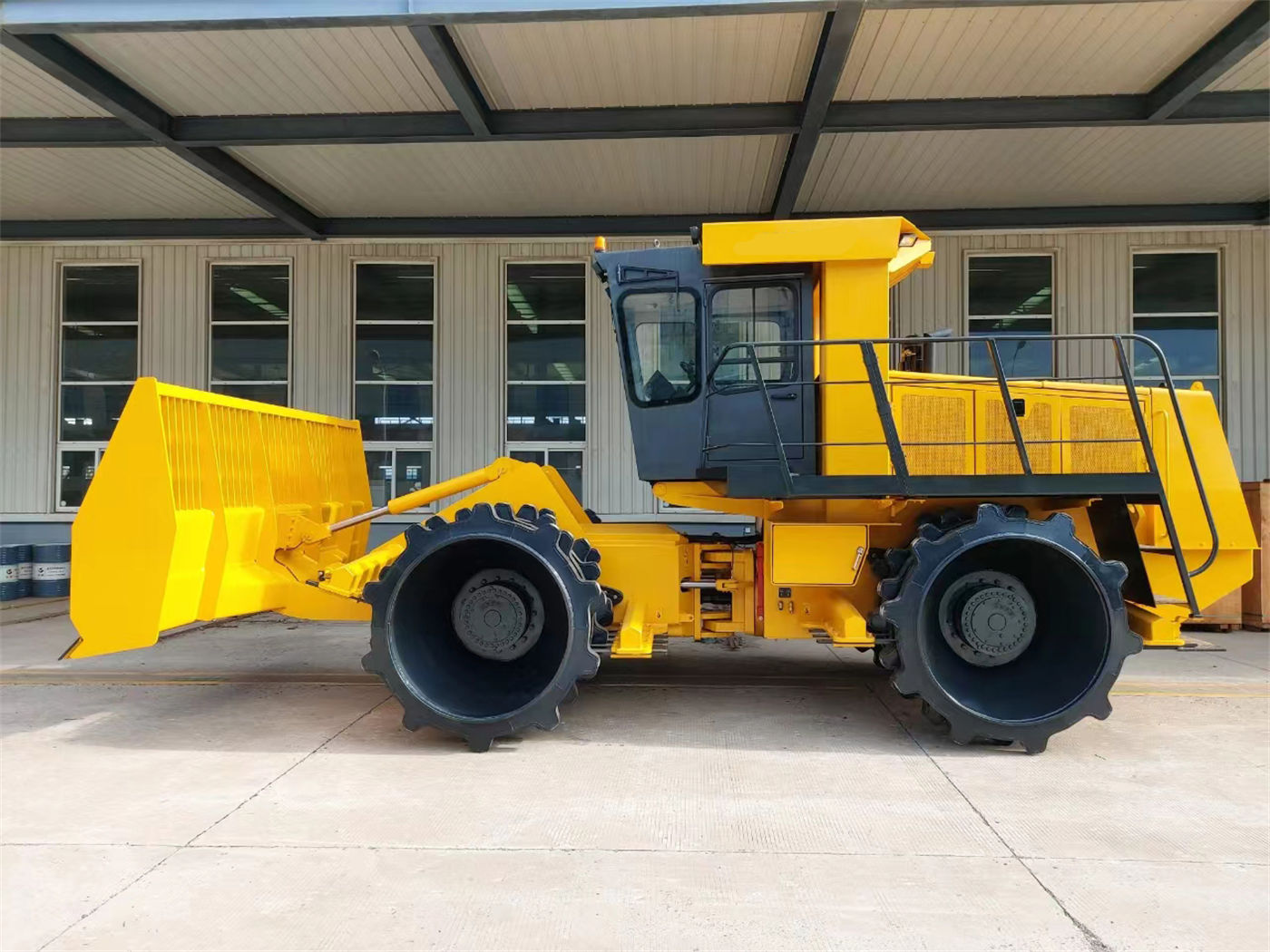
The relationship between these fields and lift organization can be understood as follows:
- Roller diameter and tooth count: Diameter and tooth count affect the contact pattern between teeth and the waste layer. The data does not provide specific dimensions for tooth height and shape, so actual material penetration depth cannot be inferred from tooth count alone.
- Compaction width 3,430 mm: Determines the working face width covered per pass and relates to strip division for lift advancement. When the working face is narrow or divided into many zones, turning and transition space must be verified.
- Bulldozer blade height 1,880 mm: When leveling and compaction are performed by the same machine, blade height affects single-pass pushing volume and relates to lift spreading efficiency, but the data does not provide push distance or cycle time.
- Four-wheel drive and rear-wheel proportional differential lock: The data states that when wheels on one side slip, the other side maintains power output, corresponding to passability on muddy and soft ground. This relates to landfill working face bearing conditions, but actual traction still depends on site conditions.
- Gradeability 100%: This value is as stated in the data. Slope travel is also affected by waste pile stability and lift condition, and cannot be directly equated to operability on any slope.
Lift and site conditions to verify before purchase
If evaluating equipment according to the above approach, first compile the following information, then confirm parameter applicability with the supplier:
- Average daily waste intake and design lift thickness, as well as planned compaction passes;
- Main waste composition, including whether bulky, hard, or high-moisture materials are present;
- Working face dimensions, zoning method, and slope locations, including whether compaction near slopes is required;
- Site bearing capacity and muddy conditions during rainy season, used to judge the actual value of four-wheel drive and differential lock;
- Cab protection and hygiene requirements, such as whether sealed cab, activated carbon filtration, and spray disinfection configurations are included;
- Number of centralized lubrication points and maintenance arrangements. The data states automatic periodic lubrication of 12 key working points, but lubrication intervals still need to be confirmed per the manual;
- Transport dimensions: overall length 8,100 mm, width 3,800 mm, height 3,670 mm. Verify whether site access roads and turning radii match.
Applicable boundaries and items to be confirmed
The C300H data positions it as an articulated four-roller landfill compactor, mainly used for pushing, leveling, and compacting waste piles at landfills, and also mentions use for filling and compacting cohesive materials. However, this does not mean it can be treated as an ordinary road roller for road base compaction, nor does it mean the same compaction result can be achieved under all waste compositions and slopes.
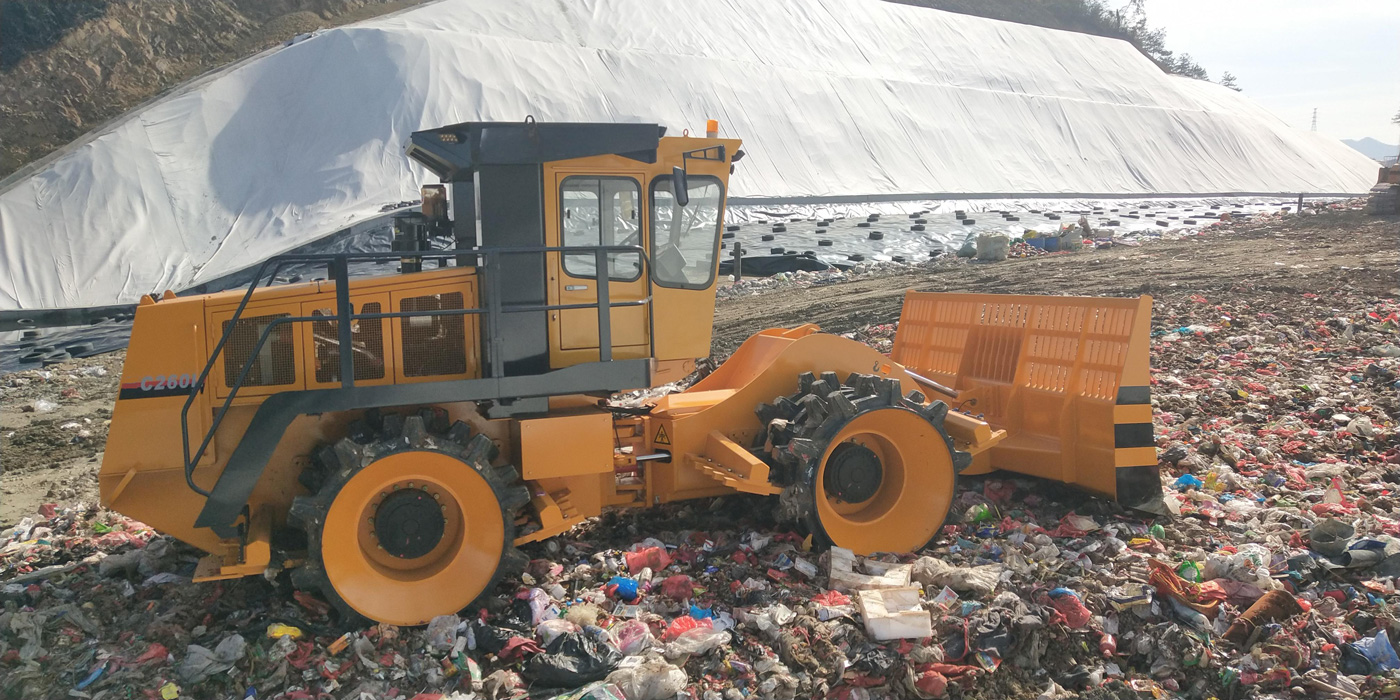
Items not provided in the data include: measured compaction density at different lift thicknesses, tooth wear cycles, fuel consumption data, charging or energy replenishment requirements (this model is diesel-powered and does not involve electric replenishment), and construction cases at specific sites. These should be raised as items to be confirmed during procurement communication rather than inferred from existing parameters.
For inquiries, provide: waste type and daily processing volume, planned lift thickness and compaction passes, working face dimensions and slope, site bearing capacity and rainy season conditions, shift arrangements, whether leveling and compaction need to be completed by one machine, and cab protection and hygiene configuration requirements. Whether the supplier can provide configuration recommendations for these conditions is more useful for judging equipment match than looking at depth parameters alone.