





















In layered subgrade compaction, the common question is not whether the roller is big enough, but whether the equipment matches the lift thickness, fill material condition and shift rhythm. Thick lifts, fill that is too dry or too wet, and narrow work areas all change the requirements for drum width, vibration parameters and travel capability. This article follows a decision order: first clarify the work objective and site constraints, then explain under what conditions a single-drum vibratory roller is worth considering, and finally use verified data for a 12-ton-class single-drum machine to explain which features correspond to which needs, as well as what still must be confirmed before purchase.
Step 1: First determine the objective of layered compaction
The objective of subgrade compaction is to bring each fill layer to the required design density. This objective is determined by several conditions together: fill type (such as soil or crushed stone mixture), lift thickness, moisture condition, compaction pass arrangement and testing method. Single-drum vibratory rollers are typically used in the vibratory compaction stage of subgrade filling; their role is to rearrange fill particles through the combined action of drum vibration and static linear load. However, whether the objective can be met depends on whether the above conditions match the equipment capability. When the data does not provide a specific compaction performance commitment, equipment parameters should not be directly equated with passing compaction.
Step 2: Break site constraints into verifiable items
Before discussing specific equipment, the site conditions can be organized into the following items. They are the basis for judging whether the equipment matches and the information to provide to the supplier when requesting a quote:
- Fill category and maximum particle size: determines whether vibratory compaction is applicable and the intensity of drum wear and impact.
- Single-layer paving thickness: affects the required excitation force and number of passes. The data does not give a recommended lift thickness for this model, so it must be confirmed according to the construction design documents.
- Work area width and frequency of relocation: affects the trade-off between drum width and turning radius.
- Site access conditions and slopes: affect requirements for gradeability and transport dimensions.
- Shift arrangement and continuous operating duration: affect the focus of checks on power, cooling and daily maintenance.
Step 3: Judge item by item whether the single-drum direction holds
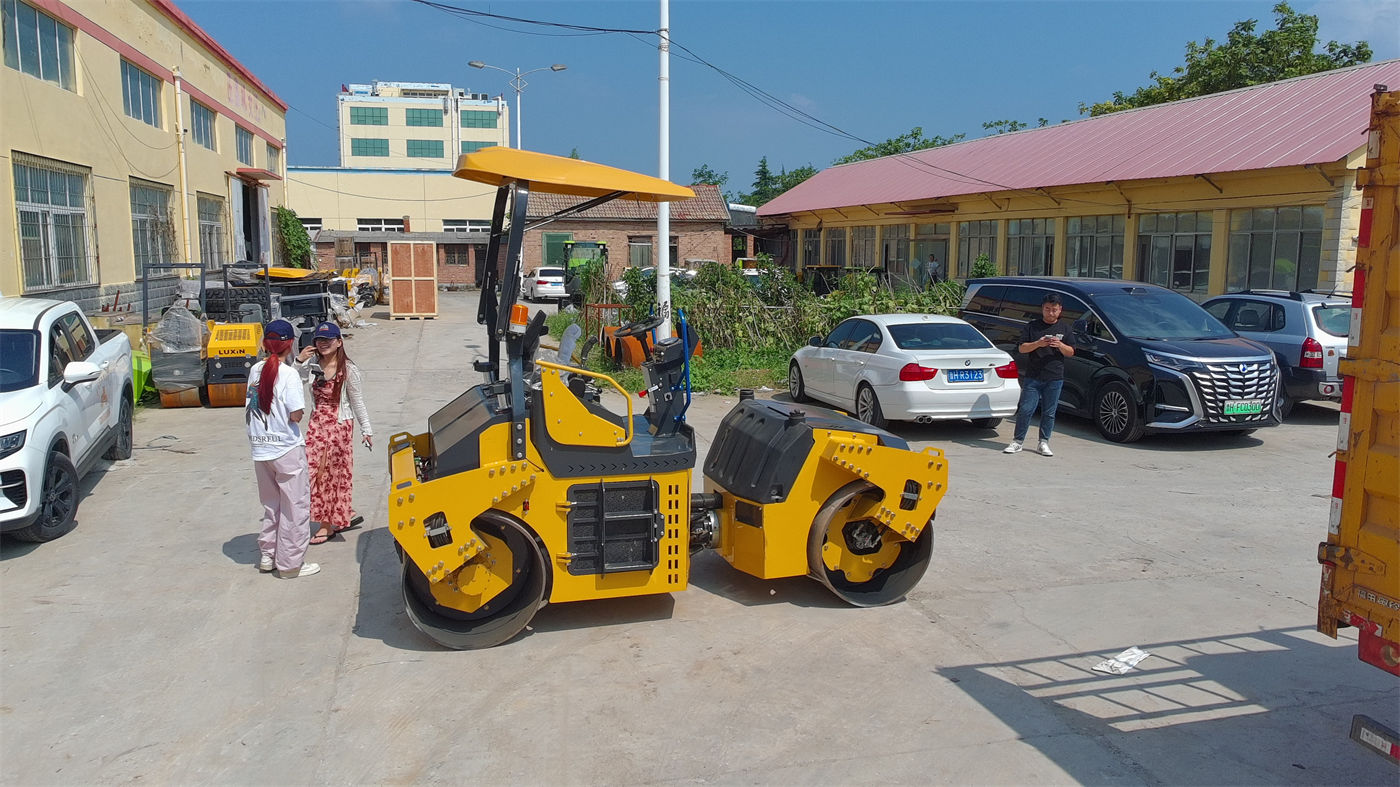
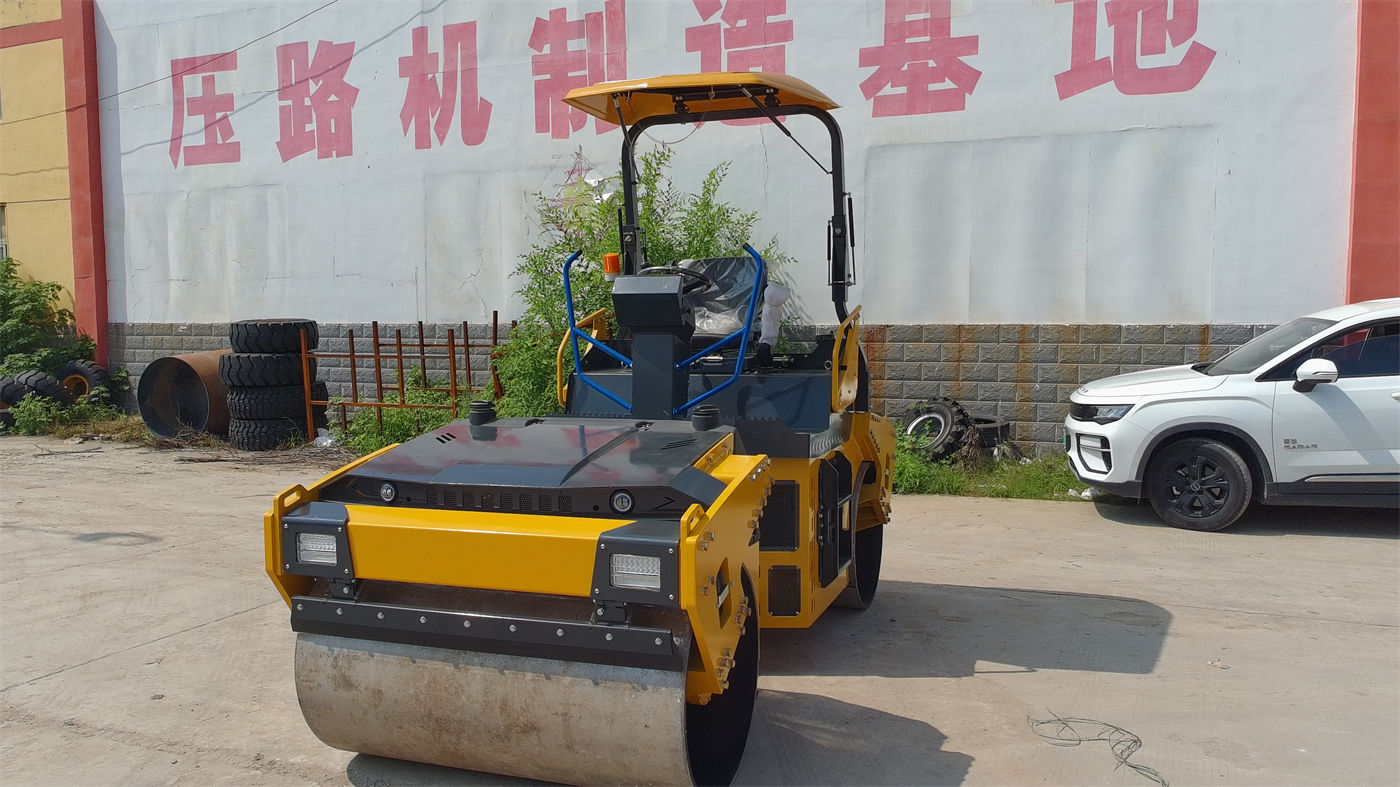
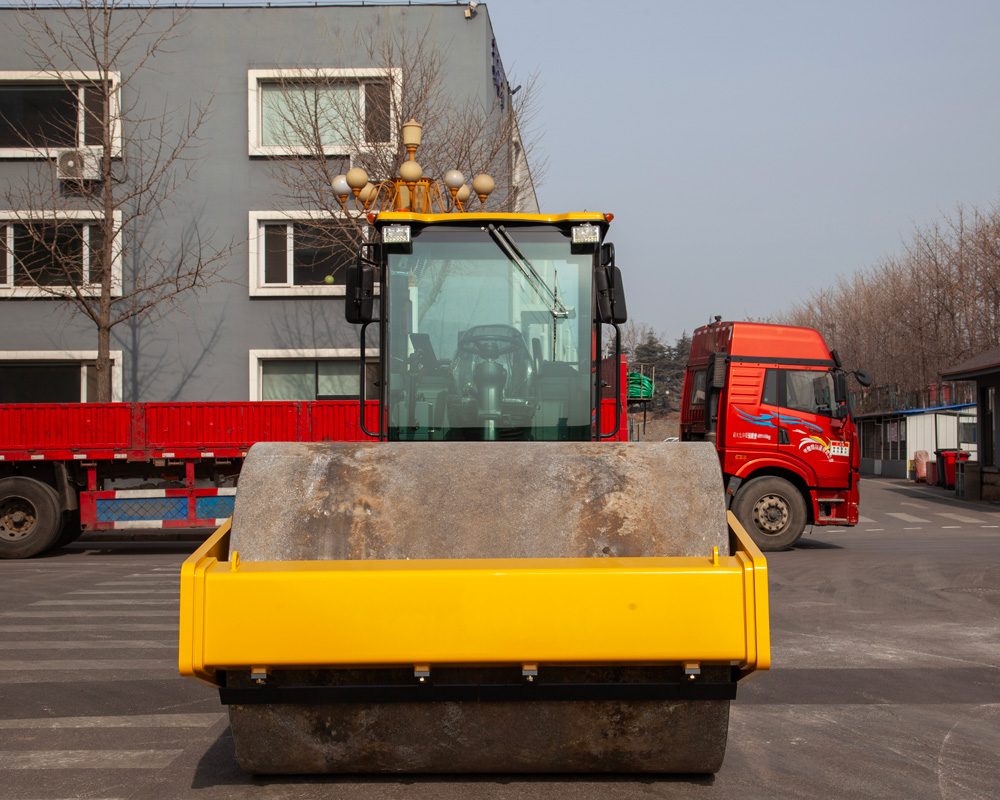
A single-drum vibratory roller uses the steel drum as the main vibratory compaction component, with rear tire drive. It is suitable for subgrade filling, general ground improvement and other stages focused on vibratory compaction. The judgment order can proceed as follows:
Whether the fill and lift are suitable for vibratory compaction
If the fill is mainly soil and crushed stone mixture and is constructed in layers, single-drum vibratory compaction is a common direction. If the fill has excessively large particle size, contains many boulders, or requires high surface flatness, the drum structure and compaction process must be further checked; a conclusion cannot be drawn solely from the category single-drum.
Whether drum width matches the work area
The narrower the work area and the more frequent the turns, the more the relationship between drum width and turning radius needs to be checked. A drum that is too wide may increase edge compaction and steering difficulty in narrow sections; one that is too narrow may increase the number of back-and-forth passes. This trade-off must be judged together with the site layout.
Whether excitation parameters cover the lift requirements
Centrifugal force and vibration frequency affect the energy input of vibratory compaction. However, the data does not provide compaction performance data for this model under different fills and lift thicknesses, so the parameters can only be used as items for comparison with construction design requirements; it cannot be directly inferred that a certain layer thickness will necessarily pass.
Whether travel and relocation conditions are met
Gradeability, minimum ground clearance and overall dimensions affect whether the equipment can enter and exit the work area smoothly. If the site has large longitudinal slopes or poor temporary road conditions, gradeability and transport dimensions should be included in the confirmation checklist.
Step 4: Compare the 12-ton-class single-drum machine data against needs
On the premise that the single-drum direction holds, the specific configuration can be further checked against site conditions. The following items from the verified data for this model are related to layered subgrade compaction:
| Check item | Verified data | Corresponding judgment |
|---|---|---|
| Operating mass | 12000 kg | Belongs to the 12-ton-class single-drum equipment, within the discussion scope for general subgrade filling and ground improvement tasks. |
| Drum width | 2100 mm | Coverage efficiency and edge compaction arrangements must be checked against the work area width. |
| Vibration frequency | 30 Hz | A parameter for comparison with construction process requirements; compaction performance cannot be judged from it alone. |
| Centrifugal force | 170 kN | Must be checked together with lift thickness and fill type; the data does not give a corresponding recommended layer thickness. |
| Amplitude | 1.6 mm | One of the vibration parameters; should be judged together with fill condition and pass arrangement. |
| Static linear load | 285 N/cm | Reflects static compaction action; must be viewed together with vibration parameters, not as a single value alone. |
| Gradeability | 30% | Used to check site slopes and temporary road conditions; actual usability is also affected by road surface condition. |
| Turning radius | 6250 mm | Used to judge layout for narrow work areas and turnaround space. |
| Speed range | 0–9 km/h | Affects arrangements for compaction travel speed and relocation efficiency. |
| Engine power | 97.5 kW (131 HP), China Stage II emissions | Power conditions must be checked against local emission requirements and work shifts. |
These parameters show that the equipment is a 12-ton-class single-drum vibratory roller with a drum width of 2100 mm, centrifugal force of 170 kN and vibration frequency of 30 Hz. The corresponding need is: in layered subgrade compaction, a machine that can provide vibratory compaction energy with a moderate drum width is required. However, the data does not give the number of compaction passes or density results for this model under specific fill and specific lift thickness, so it cannot be used to promise passing compaction, nor can it be inferred that it is suitable under all soil conditions.
Which conditions require key confirmation
- Whether this model offers different amplitude or frequency settings: the data lists only a single amplitude of 1.6 mm and frequency of 30 Hz and does not state whether they are adjustable; confirm with the supplier.
- Recommended lift thickness and number of compaction passes: not given in the data; should be determined according to construction design documents and test-section results.
- Emission compliance: whether China Stage II emission standards meet the project location requirements must be checked against local regulations.
- Transport dimensions and weight: overall length 5940 mm, overall width 2275 mm, overall height 2800 mm; before transport, check road width and height limits and trailer load capacity.
- Drum watering or mud-scraping configuration: not listed in the data; if the fill is highly sticky, confirm whether it is equipped.
Step 5: Turn the judgment order into a procurement checklist
After completing the above judgments, the following information should be provided to the supplier when requesting a quote so that they can judge whether the equipment matches:
- Fill type and maximum particle size, single-layer paving thickness, target compaction degree and testing method.
- Work area width, longitudinal slope gradient, relocation distance and transport road restrictions.
- Daily shifts and continuous operating duration, as well as local emission requirements.
- Whether watering, mud scraping or other drum accessories are required.
- Maintenance and inspection requirements for the drum and vibration system, and the manual content to refer to.
It should be noted that this article is a conditional analysis, not a customer case that has occurred. Whether this 12-ton-class single-drum machine is suitable for a specific subgrade project still depends on test-section results and verification of site conditions. Compaction performance, fuel consumption, efficiency or maintenance intervals not given in the data should not be used as a procurement basis.