





















Before a large bulldozer enters a site, a sequencing problem often arises: the equipment has already been selected for heavy-load conditions, but material state, ground bearing capacity, transport access, and continuous operation arrangements have not yet been put on paper item by item. By the time the equipment arrives, discovering that the blade does not match the material, track ground contact conditions are insufficient, or maintenance space is inadequate will make adjustments far more costly. This article lists the operating conditions that need to be checked for heavy-duty continuous operations in pre-entry preparation order, then compares them against verified information on a large crawler dozer to explain which design features correspond to these conditions and which can only be confirmed on site.
First Clarify Operating Objectives and Site Constraints
Heavy-duty continuous operations typically occur in mining stripping, large earthwork stockpile transfer, and rough mountain grading tasks. Their common features are high single-shift dozing volume, materials that may contain hard lumps or rock, and equipment that must maintain a relatively high load for extended periods. Selection judgment therefore cannot rely on a single power figure; the following constraints must be considered together:
- Material type: loose soil, bulk material, mixed material containing rock, or hard ground requiring ripping directly determines the blade form and whether a ripper is needed.
- Ground bearing capacity: whether track ground pressure matches ground softness/hardness, and whether stability on slopes and curves requires additional evaluation.
- Transport access: whether whole-machine transport dimensions, weight, and access roads are adequate, and whether the unloading site has sufficient bearing capacity and turning space.
- Continuous operation organization: whether shift duration, shift-change methods, fuel supply, and daily inspection locations coordinate with the site layout.
If any one of these conditions is not settled, looking only at equipment parameters can easily lead to overly optimistic conclusions.
Pre-Entry Preparation Checklist for Heavy-Duty Continuous Operations
To turn the above constraints into executable check items, proceed in the order of "material and blade—undercarriage and site—transport and unloading—continuous operation and maintenance." The checklist below is not a fixed template; items may be added or removed on site according to project stage.
Material and Work Equipment
- Confirm the state of the main dozed material: loose stockpile, undisturbed soil, or rock-containing mixed material.
- Confirm whether a ripper is needed, and the ripping depth and frequency.
- Check the relationship between blade capacity and dozing distance, avoiding looking only at capacity while ignoring one-way dozing organization.
Undercarriage and Ground Bearing Capacity
- Check track ground pressure against the surface bearing capacity of the site, especially soft foundations, backfill areas, and rainy-season sites.
- Confirm the match between slope gradient and equipment climbing capability; slope operations also require consideration of lateral stability.
- Inspect whether obstacles, drainage ditches, and temporary structures along the travel route will affect continuous dozing.
Transport and Unloading
- Check whole-machine transport dimensions and weight, and confirm transport vehicles and road clearances.
- Confirm whether the unloading site has sufficient bearing capacity and turning space, avoiding sinking into soft ground immediately after unloading.
- Check access road traffic conditions during the equipment arrival period.
Continuous Operation and Maintenance
- Confirm shift arrangements and fuel supply locations to reduce non-operating waiting.
- Confirm whether daily inspection points are easy to access, and whether there is enough space for opening the engine hood and replacing filters.
- Confirm operators' familiarity with pilot controls, instrument monitoring, and alarm information.
What the Information on a Large Crawler Dozer Can Answer
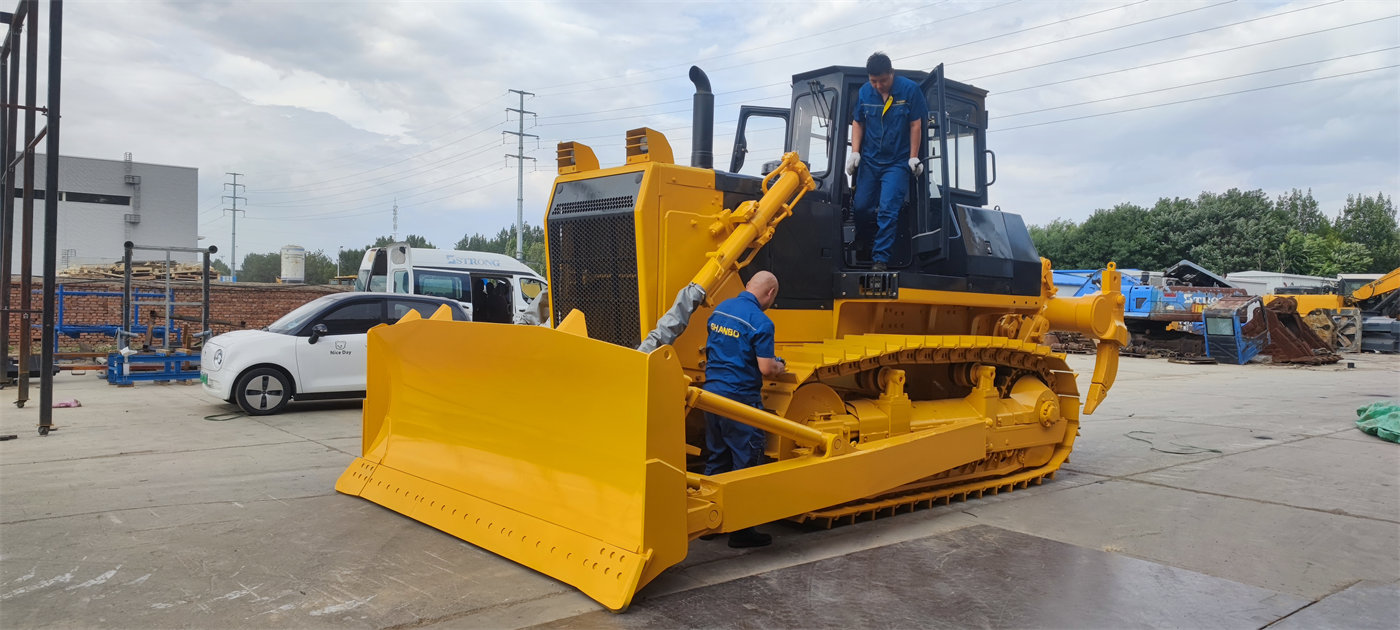
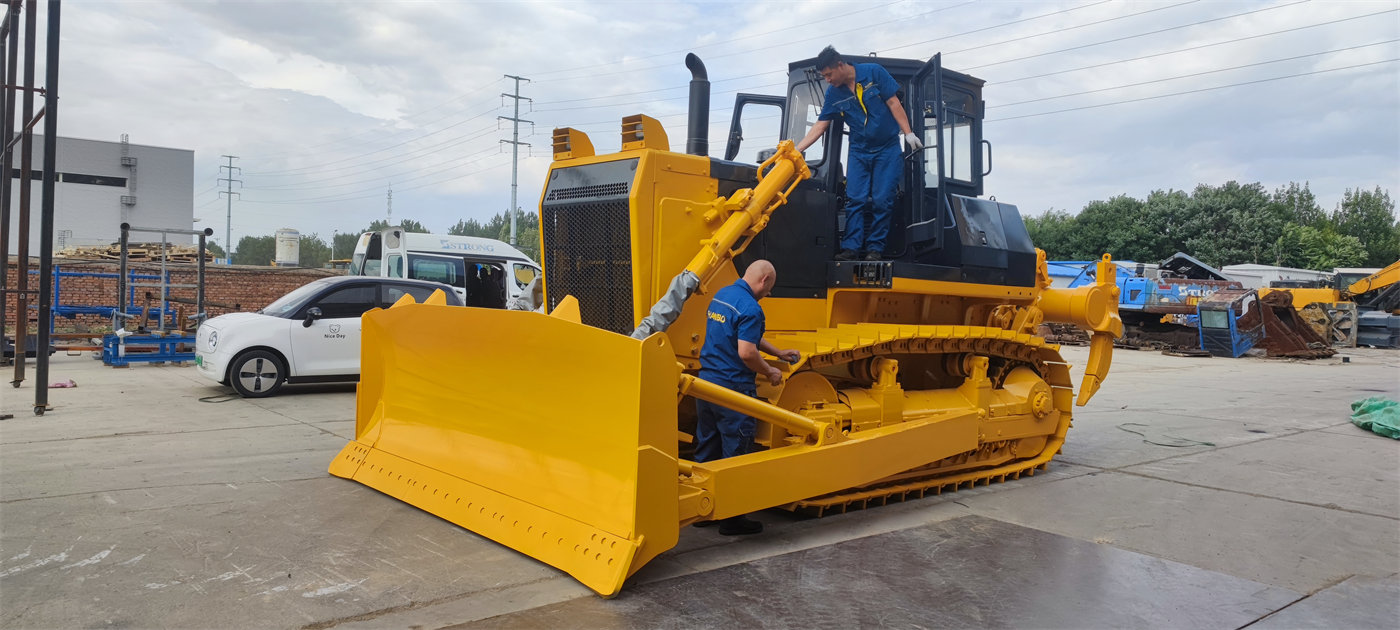
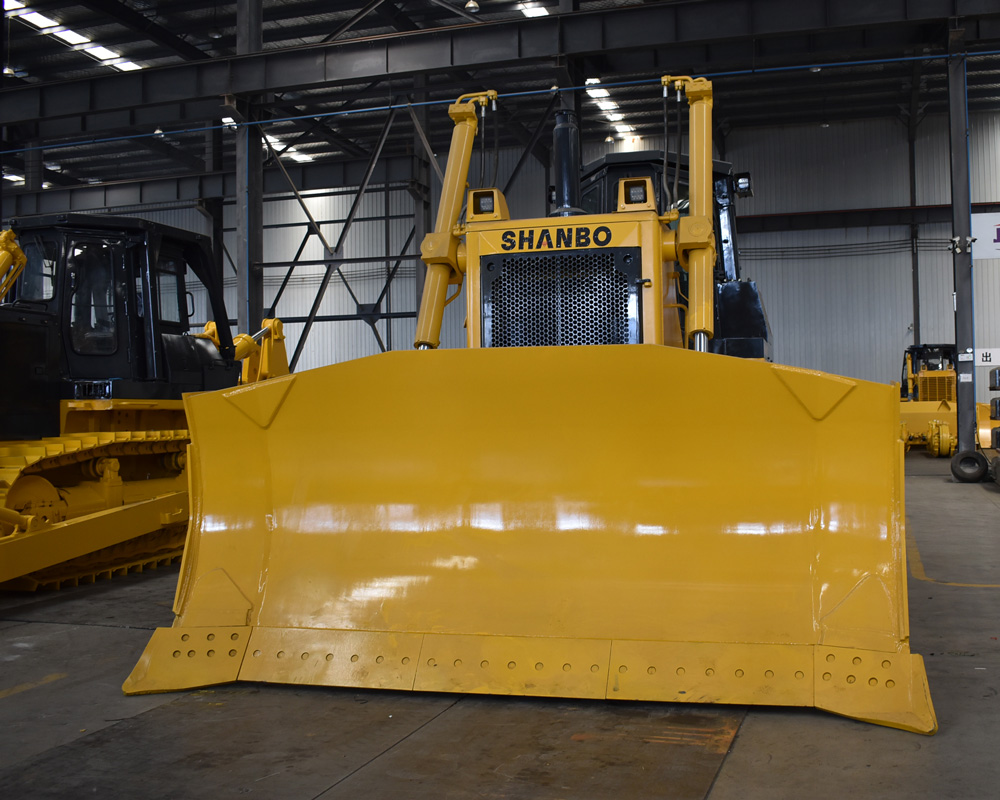
Taking the SD46 large crawler dozer in this site's product information as an example, its verified parameters include operating weight 54000 kg, ground pressure 0.123 MPa, climbing capability 30°, blade capacity 16 m³, blade width 4314 mm, maximum cutting depth 700 mm, and engine rated power 340 kW/600 hp. These figures are not selection conclusions in themselves, but they can be matched item by item against the checklist above.
| Pre-Entry Check Item | Corresponding Information in the Materials | Still Requires On-Site Confirmation |
|---|---|---|
| Material and blade | Semi-U blade, blade capacity 16 m³, maximum cutting depth 700 mm | Actual material hardness, rock content ratio, and blade wear |
| Ground bearing capacity | Ground pressure 0.123 MPa, climbing capability 30° | Actual bearing capacity of soft foundations, backfill areas, and rainy-season sites |
| Undercarriage and continuous operation | K-type floating undercarriage, integral articulated undercarriage, multi-stage shock absorption | Impact conditions along the travel route and track wear |
| Transport and unloading | Operating weight 54000 kg, blade width 4314 mm | Transport vehicles, road clearances, and unloading site |
| Maintenance accessibility | Large opening engine hood, hydraulic oil temperature and level monitoring, over-limit alarms | On-site maintenance space and spare parts supply arrangements |
The purpose of this table is not to prove that this model suits all heavy-load conditions, but to show that each piece of information corresponds to a site condition that must be verified item by item before a procurement judgment can be formed.
Continuous Operation Approach Corresponding to Power and Transmission Configuration
The materials show that this model uses a turbocharged intercooled diesel engine, hydraulic power-shift transmission, and planetary final drive structure, with the transmission assembly equipped with multi-plate hydraulic clutches and forced circulation lubrication. For continuous heavy-load dozing, the focus of such a configuration is whether power output can adjust with external load changes, and whether transmission components are lubricated and cooled under prolonged high load. The materials also mention a built-in hydraulic buffer structure used to absorb impact loads in power transmission, which corresponds to instantaneous impacts when material weight fluctuates or the blade cuts into hard layers, not to a general promise for any terrain.
It should be noted that the materials do not provide productivity, fuel consumption, or continuous operating hours for this model under specific materials, and these data cannot be inferred from the parameter table. Before procurement, information relevant to actual working conditions should be confirmed with the supplier based on on-site materials and shift arrangements.
The Place of Operation and Safety Configurations in Pre-Entry Preparation
Heavy-duty continuous operations directly affect operator fatigue management. The PPC pilot proportional control, left-side gearshift and steering with right-side work equipment joystick layout, adjustable seat, and air-conditioned cab mentioned in the materials are configurations that improve long-duration operating conditions. The ROPS/FOPS safety structure, reversing voice alarm, safety warning lights, and braking system are part of on-site safety arrangements. These configurations cannot replace on-site safety management; before entry, operator training, work area isolation, and signal arrangements still need to be confirmed.
Application Boundaries and Items to Be Confirmed
According to the materials, this model is positioned for heavy-load scenarios such as mining, large earthworks, and mountain grading, but the following points have no direct conclusions in the materials and should be confirmed before procurement:
- Actual productivity under specific materials and dozing distances is not provided in the materials.
- Fuel consumption and the economics of continuous operation shifts lack verifiable on-site data in the materials.
- Adaptability to soft foundations, wet slippery slopes, and extreme cold or high-temperature environments requires separate evaluation based on site conditions.
- Complete transport dimension data, spare parts supply cycles, and after-sales service response arrangements.
If the project mainly involves short-distance bulk material pushing and the site bearing capacity is relatively weak, whether this specification is still needed should first be calculated based on material volume, site bearing capacity, and transport conditions, rather than judged only by horsepower class.
Information Recommended to Prepare Before Inquiry
When communicating with suppliers, stating conditions clearly is more helpful for judging suitability than asking only about price. It is recommended to prepare: main material type and state, average daily dozing volume and dozing distance, site bearing capacity and slope conditions, transport roads and unloading conditions, shift duration and fuel supply arrangements, whether a ripper is needed, and key configuration preferences. This information corresponds to the blade, tracks, undercarriage, and continuous operation organization, and can help both parties break "heavy-duty continuous operation" into verifiable conditions.