






Earthwork on constrained sites often involves two conflicts: spatially, equipment struggles to turn and pass, while earthwork goals call for pushing material into place in one pass. Defining the role of a small bulldozer here essentially means judging whether it can complete effective pushing and rough grading in limited space, not merely comparing body dimensions. Specification sheets cannot answer this alone; working goals and site constraints must first be clarified, then matched against equipment data.
First define where "constrained" specifically applies
"Constrained site" is a directional description; before implementation it should be broken into verifiable items:
- Clear width of the working area and access passage width, determining whether equipment can enter, turn around, and pass;
- Material type and stockpile height, determining whether the blade can penetrate effectively and whether pushing causes frequent spillage;
- Ground bearing conditions, such as undisturbed soil, backfill, or soft ground after rain, affecting the focus on ground pressure;
- Push distance and per-shift earthwork volume, determining how many round trips the equipment can complete in one shift;
- Whether rear attachments such as rippers or towing equipment are needed, and their impact on turning space.
These conditions cannot be read directly from equipment data; the contractor must verify them against site measurements or design documents. Without these conditions, only conditional judgments can be made, and the model should not be determined directly.
Roles a small bulldozer can take on
The industry often understands small bulldozers as "only suitable for light work," which is too narrow. The value of small machines lies in their compact body and controllable ground pressure, making them suitable for municipal engineering, farmland improvement, and site grading—tasks with limited space and short push distances. But "what it can do" depends on the specific model's dimensions, power, and blade configuration, and cannot be generalized by category.
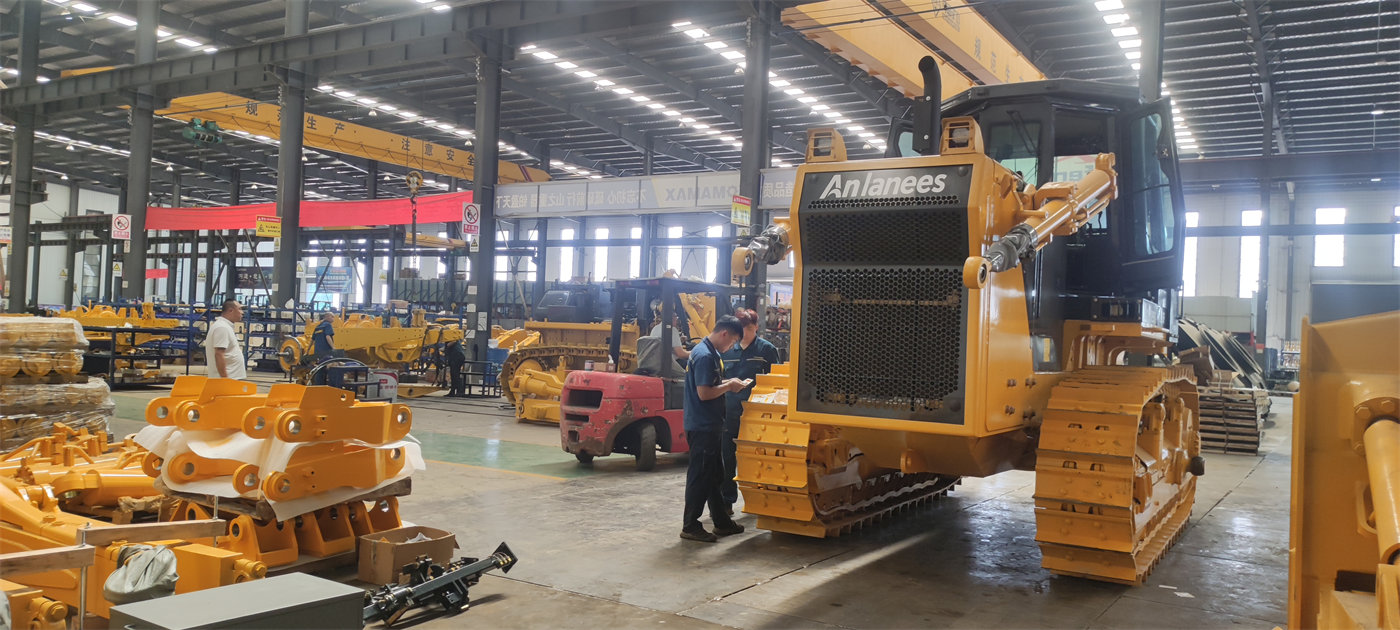
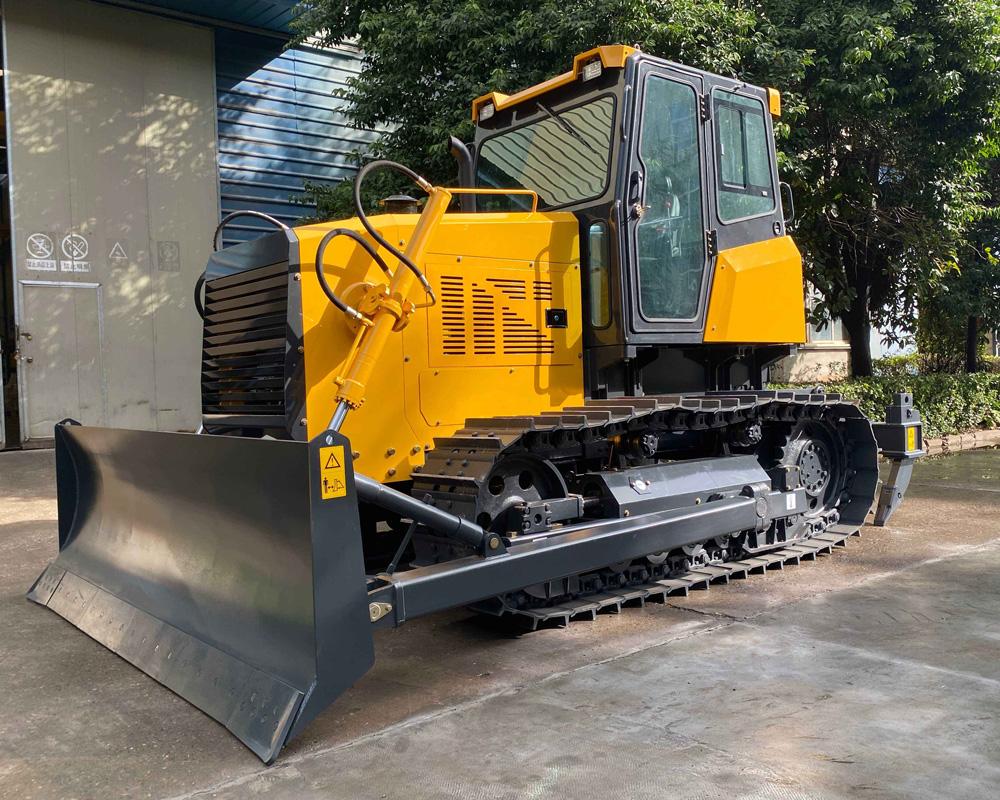
The SD10 is a small bulldozer for which data is available on this site: overall dimensions 4400×2960×3030mm, blade width×height 2960×960mm. If the working area width and turning radius are close to these dimensions, the equipment has basic conditions for entry and passing. This inference is only a dimension-level verification direction; actual operation still requires judgment based on slope, foundation, and safety distances.
How pushing capability corresponds to ground conditions
Constrained sites often come with soft or backfilled ground. Small machines are lighter, so whether ground pressure is appropriate is the primary verification item. The SD10 has a total weight of 10000kg, track shoe width of 450mm, and a documented ground pressure of 54.4kPa. This value indicates the model matches track contact area to machine weight, but whether it suits a specific ground still depends on soil type, moisture content, and the contractor's tolerance for settlement; the data itself does not promise applicability to any soft ground.
For towing and pushing, the SD10 has a maximum tractive force of 95kN, powered by a Cummins 4BT3.9-C125 diesel engine with rated power 81kW (125HP)/2300r/min. These parameters serve as a starting point for judging whether pushing capability matches material and slope, but push distance, per-shift earthwork volume, and actual efficiency depend on material looseness factor, ground friction, and operating method. The data contains no construction efficiency figures, so output cannot be calculated from it.
| Verification item | SD10 documented value | Corresponding working condition |
|---|---|---|
| Overall dimensions (L×W×H) | 4400×2960×3030mm | Working area clear width, passage, and turning space |
| Track shoe width | 450mm | Contact area and settlement concerns on soft ground |
| Ground pressure | 54.4kPa | Bearing differences between undisturbed and backfill soil require on-site judgment |
| Blade (width×height) | 2960×960mm | Material push width and stockpile height |
| Maximum tractive force | 95kN | Push resistance and slope conditions |
The table only places documented values alongside site conditions to verify; it does not mean the model has been validated under any specific working condition.
Configuration trade-offs from blades and rear attachments
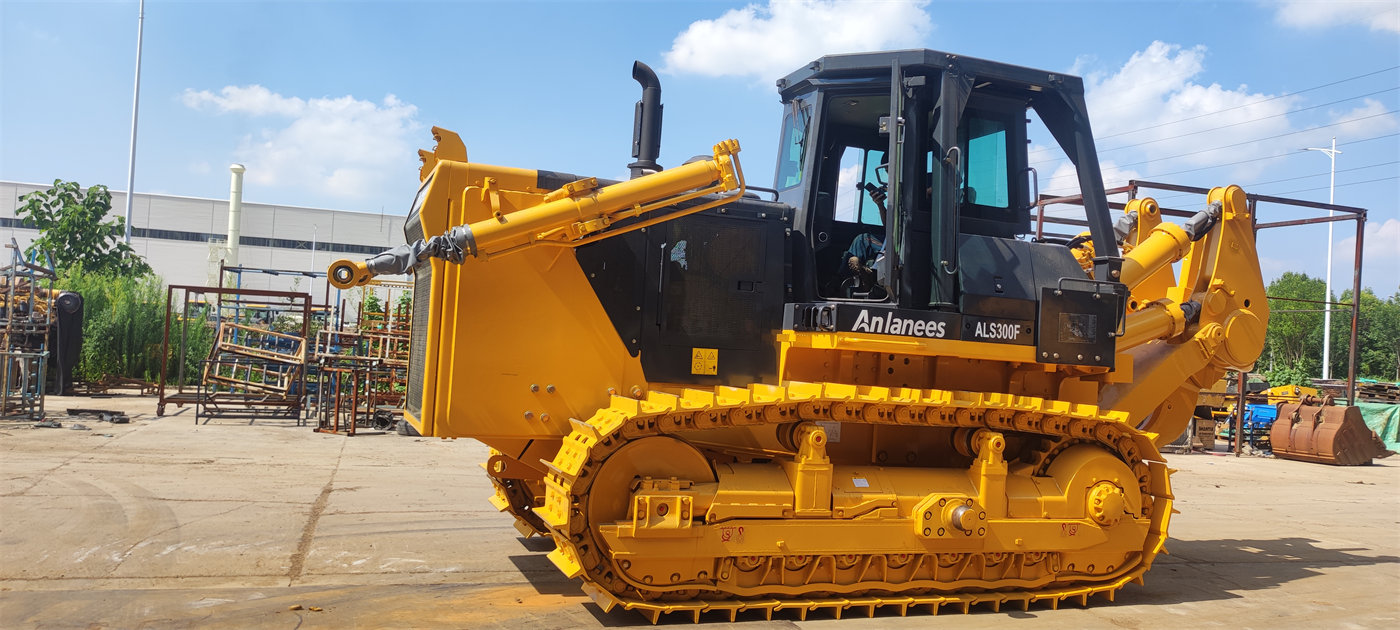
Another constraint on constrained sites is the space occupied by attachments. The SD10 blade has a maximum lift height of 830mm and maximum digging depth of 350mm; the data also lists optional straight, curved, and coal blades, with rear attachments of fixed towing equipment or a three-shank ripper. Choosing rear attachments changes overall length and rear turning range, and on narrow sites this change must be factored into passage and safety distance calculations.
Blade types are not a matter of more being better; they should be determined by the primary material: pushing loose soil and grading require different blade shapes, and coal blades correspond to specific bulk material scenarios. The data does not give efficiency differences among blades for different materials; before purchase, confirm with the supplier the matching description for the selected blade and primary material.
Scenarios where this small model should not be directly applied
If the goal is large-volume, long-distance continuous pushing, or the site is narrow but per-shift earthwork demand is high, the small machine's push cycle count becomes a bottleneck; equipment specifications should be re-evaluated rather than repeatedly comparing within the small-machine range. Similarly, if the ground is persistently wet and soft with high settlement risk, a ground pressure of 54.4kPa alone is insufficient to judge applicability; on-site bearing and construction plans must be confirmed separately.
In addition, the data does not provide the model's slope adaptability, continuous operation duration, or measured fuel consumption; for slope pushing or long continuous operation, these are items to be verified and conclusions cannot be drawn from existing parameters.
Information to fix before purchase
To put role definition into the inquiry stage, it is recommended to provide the supplier with the following and request the manual and configuration list:
- Material type, loose state, and stockpile height;
- Per-shift or per-project earthwork volume, push distance, and site plan dimensions;
- Ground type and bearing conditions, including whether soft or backfill areas are involved;
- Transport method for entry and exit and passage restrictions;
- Required blade type and rear attachments, and whether they affect turning space;
- Power form confirmed as diesel per verified data; continuous operation shifts and refueling arrangements to be confirmed on site.
Once this information is complete, judge item by item against the SD10's dimensions, ground pressure, tractive force, and blade parameters—this is closer to real selection than looking at any single value. Without site conditions, this article can only provide verification directions and cannot replace equipment confirmation for a specific project.