




















When people receive technical documentation for a high-horsepower bulldozer, many first turn to the lines for power and blade capacity, and if the numbers look large enough, they conclude that continuous heavy-duty operation will not be a problem. But whether continuous heavy-duty operation is feasible often does not depend on a single peak figure; it depends on whether the fields for power, transmission, undercarriage, hydraulics and monitoring can corroborate one another. This article uses the product documentation for the SD46 on this site as a sample to explain the order in which such documentation should be read, which fields are directly related to continuous heavy-duty operation, and which conclusions cannot be drawn from the documentation alone.
First distinguish that "heavy-duty" and "continuous" are two types of fields in the documentation
Heavy-duty describes the load intensity of a single work cycle, while continuous describes operating duration and intervals. Fields related to heavy-duty in the documentation usually include engine rated power, blade capacity, maximum cutting depth and ripper configuration; fields related to continuous operation fall more often under heat dissipation, lubrication, undercarriage cushioning, transmission cooling and monitoring alarms. Looking only at the former makes it easy to mistake a machine suitable for high-intensity short-duration work for equipment that can run continuously for long periods.
Therefore, the recommended reading order is: first confirm the form of power and transmission, then see how the undercarriage structure absorbs impact, then check whether hydraulic and electrical monitoring covers temperature and fluid level changes during continuous operation, and finally see whether maintenance access supports frequent inspection. This order also corresponds to the items that need to be confirmed one by one with the supplier during procurement.
Power and transmission fields: first look at the form, then whether load regulation is supported
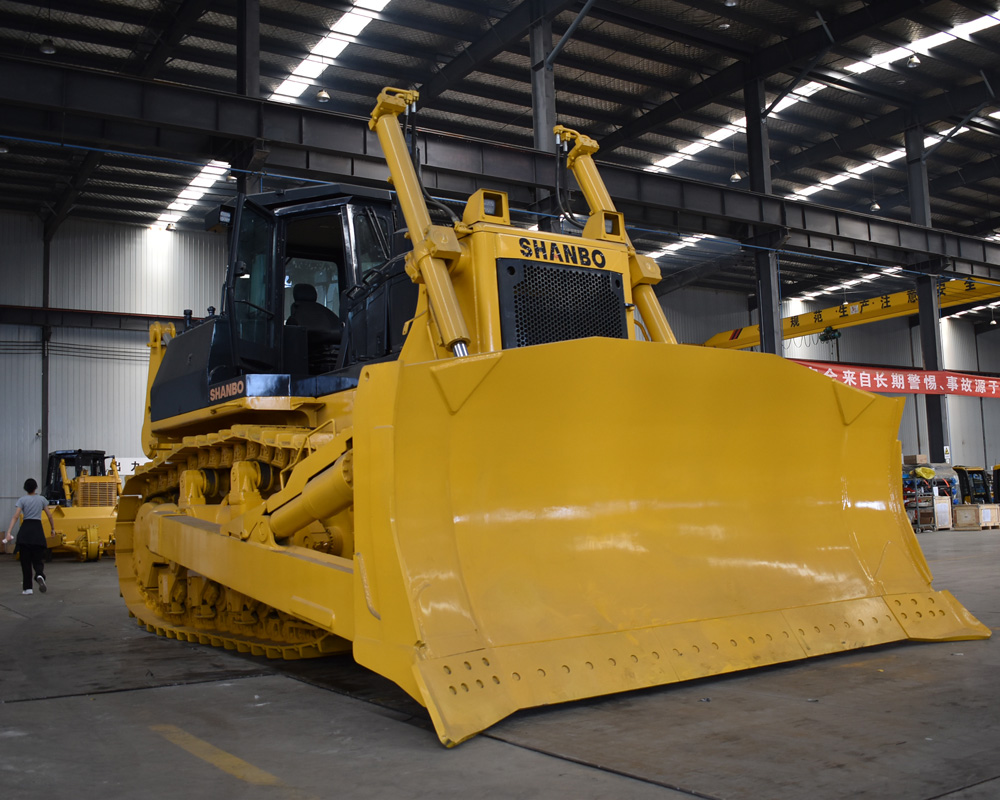
The SD46 documentation lists the engine model as KT419-C525, water-cooled, in-line, four-stroke, direct injection, turbocharged and intercooled, with a rated speed of 2000 rpm, rated power of 340 kW/600 hp, and displacement of 18.9 L. The documentation also states that the machine uses a hydraulic power-shift transmission together with a planetary final drive structure, and says the system can adjust power output according to changes in external load, while the built-in hydraulic cushioning structure absorbs impact loads in power transmission.
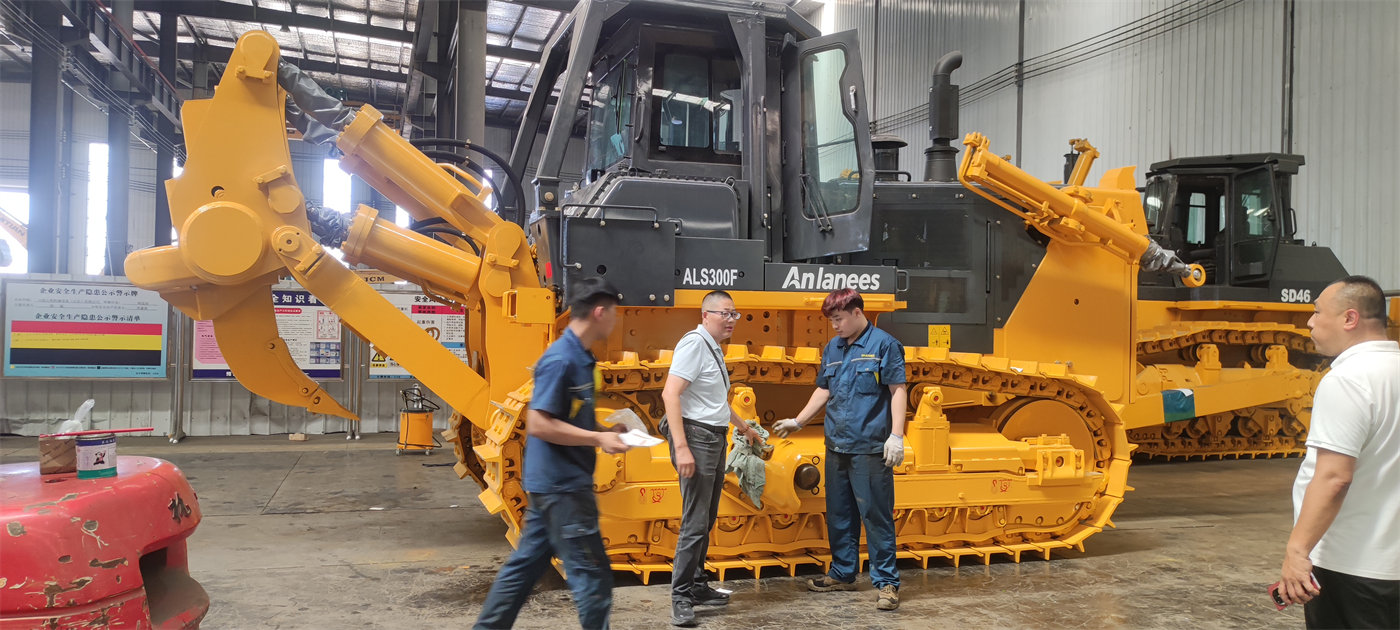
The significance of these fields for continuous heavy-duty operation lies in the following: turbocharging and intercooling plus direct injection relate to the intake and combustion conditions during sustained output; the combination of hydraulic power shift and planetary final drive relates to whether power is interrupted during gear shifts and load fluctuations; and the description of load regulation and cushioning structure shows that the documentation writer treated "load changes" as one of the design conditions. However, the documentation does not give continuous operating duration, allowable load cycles or the upper limit of transmission oil temperature, and these still need to be confirmed with the supplier.
Undercarriage fields: where impact loads go during continuous heavy-duty operation
The documentation states that the SD46 adopts a K-type suspension floating drive structure plus an integral articulated undercarriage, and says this structure can cushion impact loads during travel and operation; it is also equipped with a multi-stage shock absorption assembly to offset vibration on complex road surfaces. The track section uses fully sealed and lubricated track chains, with an integrated design for the main connecting link.
In continuous heavy-duty scenarios, the reason undercarriage fields deserve attention is not the word "rugged," but whether impact loads have a clear absorption path. Suspension floating, articulated undercarriage and the shock absorption assembly together form this path; the sealed and lubricated track chain relates to the wear conditions of pins and bushings during long periods of travel. The documentation does not give inspection intervals or wear limits for undercarriage components, so before procurement the supplier should be asked to provide the corresponding manual sections.
Hydraulic and electrical fields: visibility of status during continuous operation
The SD46 documentation mentions that the working hydraulic cylinders have been optimized, that core seals and high-pressure hoses use imported high-standard components, and that the externally mounted distribution valve group facilitates inspection, disassembly and maintenance; the electrical section is equipped with a combination instrument panel that can electronically monitor key data such as hydraulic oil temperature, oil level and coolant temperature, and automatically alarm when limits are exceeded.
The correspondence between this group of fields and continuous heavy-duty operation is relatively direct: the hydraulic system continuously does work during long pushing and hauling, and oil temperature and oil level are visible operating states; the externally mounted valve group means that inspection access is relatively open. It should be noted that "electronic monitoring" in the documentation belongs to the category of electrical control and alarms, and it cannot be inferred from this that the whole machine is purely electric-powered, nor can indicators such as battery and range be inferred.
Use a table to align documentation fields with conditions to be confirmed
| Documentation field | Verified content | Still to be confirmed before procurement |
|---|---|---|
| Engine | KT419-C525, rated power 340 kW/600 hp, displacement 18.9 L | Fuel consumption data under continuous operation, heat dissipation margin |
| Transmission | Hydraulic power-shift transmission plus planetary final drive | Upper limit of transmission oil temperature, method for checking shift oil pressure |
| Undercarriage | K-type suspension floating drive, integral articulated undercarriage, multi-stage shock absorption | Wear limits for track rollers and track chains, inspection intervals |
| Hydraulics | Externally mounted distribution valve group, electronic monitoring of key data and over-limit alarms | Alarm threshold settings, criteria for determining hydraulic oil replacement |
| Overall parameters | Operating weight 54000 kg, ground pressure 0.123 MPa, gradeability 30° | Pushing distance and efficiency under specific material and ground conditions |
The "Still to be confirmed" column in the table is not a defect of the documentation; it is content that the documentation itself is not responsible for. Technical documentation usually describes structure and configuration, not output, fuel consumption and wear rates on a specific site; these can only be evaluated separately in light of material, haul distance, shifts and ground conditions.
Which conclusions cannot be drawn directly from this documentation
- It cannot be concluded that the machine can operate continuously in any mine or rock site; the documentation only states that it is suitable for heavy-duty conditions such as mining, large-scale earth and rock works and mountain leveling, and specific suitability depends on material hardness, haul distance and site organization.
- It cannot be concluded that there is a fixed fuel consumption or energy-saving ratio; the documentation mentions that load regulation helps optimize fuel consumption, but gives no quotable values.
- It cannot be concluded that there is a maintenance interval; the documentation only states that there are maintenance reminder decals, a maintenance-free battery and a large-opening engine hood, and intervals and steps should refer to the manual.
- "Electronic intelligent monitoring" cannot be understood as electrified power; the power form in this machine's documentation is a diesel engine.
Operating conditions to submit together with the documentation when requesting a quotation
If you are preparing to request a quotation for a large bulldozer, it is recommended to provide the supplier with the following conditions together with the results of checking the documentation: main material type and loose density, single-shift pushing volume and haul distance range, ground bearing capacity and slope conditions, whether a ripper and which blade form are needed, transport size restrictions for equipment entry, daily shifts and continuous operating duration, power form preference, and the expected undercarriage and hydraulic inspection arrangements. Whether the supplier can give configuration recommendations for these conditions is itself a basis for judging the completeness of the documentation.
Returning to the reading method: the value of large bulldozer technical documentation does not lie in the size of the numbers in a particular line, but in whether the power, transmission, undercarriage, hydraulics and monitoring fields can jointly support the premise of "continuous heavy-duty operation." Reading the documentation as a list of conditions is closer to actual procurement decisions than reading it as a ranking of parameters.