




















The trouble with auxiliary hauling in mining areas is that it is rarely a single task. The same machine might push material at the coal yard in the morning, repair slope roads in the afternoon, and level the edge of the dump site at night. When tasks are mixed, selection tends to go to two extremes: either configure a large machine according to the standards of main mining equipment, or directly apply data from general earthmoving machines. A more practical approach is to break auxiliary hauling into several describable conditions and then check them one by one against equipment data.
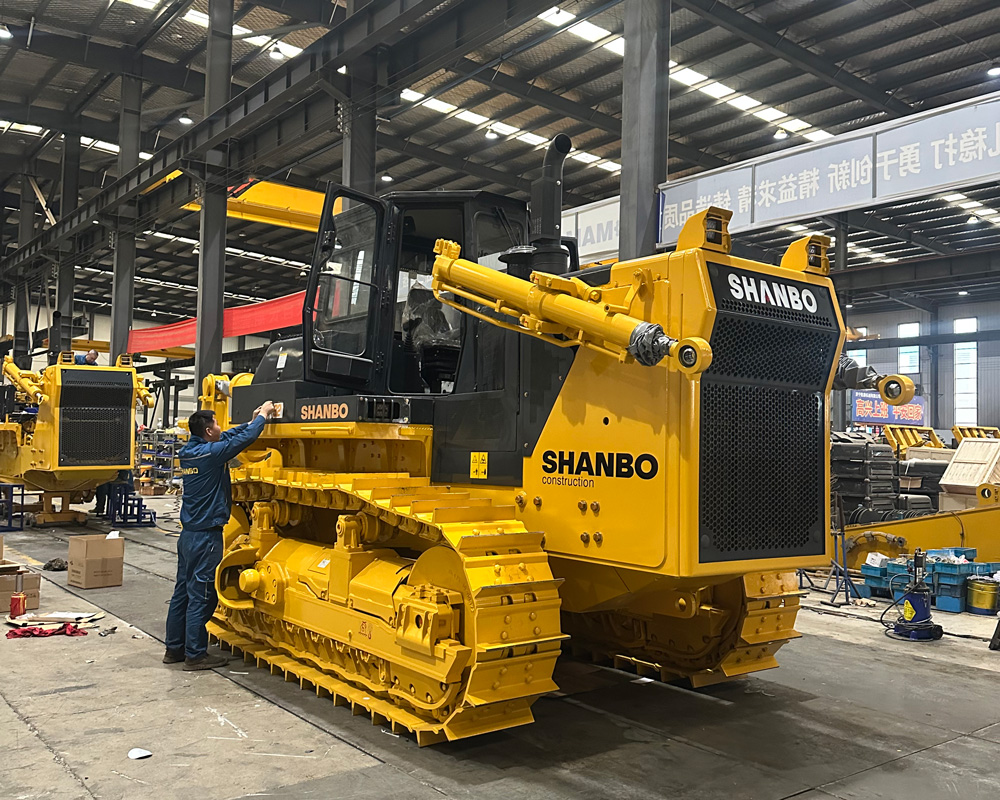
This article uses the SD32, a 320-horsepower class crawler bulldozer, as an example to explain how to use the broken-down condition checklist. All parameters in this article come from verified data for this model; items not covered by the data, such as on-site power supply, fuel consumption, and efficiency, are listed as items to be confirmed.
First, break down the task: what auxiliary hauling actually pushes
Auxiliary hauling in mining areas usually includes four types of actions: pushing and stockpiling bulk materials, rough leveling of roads and sites, loosening and pushing local stone or weathered rock, and short-distance transfer in coordination with other equipment. The four types have different requirements for blades, undercarriage, and traction devices.
When breaking down, several specific questions need to be answered: Is the material coal, gangue, sand, or weathered rock? Is the pushing distance a dozen meters or several dozen meters? Is the ground a compacted site, a loose material pile, or a gravel road? Does the equipment run a single shift or continuous multiple shifts? These questions determine which parameters to look at later, rather than looking at horsepower first.
Condition 1: Do the material and blade configuration match?
The working attachments listed in the SD32 data include straight blade, semi-U blade, U-blade, angle blade, coal pusher blade, rock blade, and sanitation blade, with optional single-shank or three-shank rippers. Different materials correspond to different blades: loose coal and light bulk materials emphasize blade capacity and smooth discharge; stone conditions emphasize blade structure and push rod strength; road leveling focuses more on blade width and leveling operation.
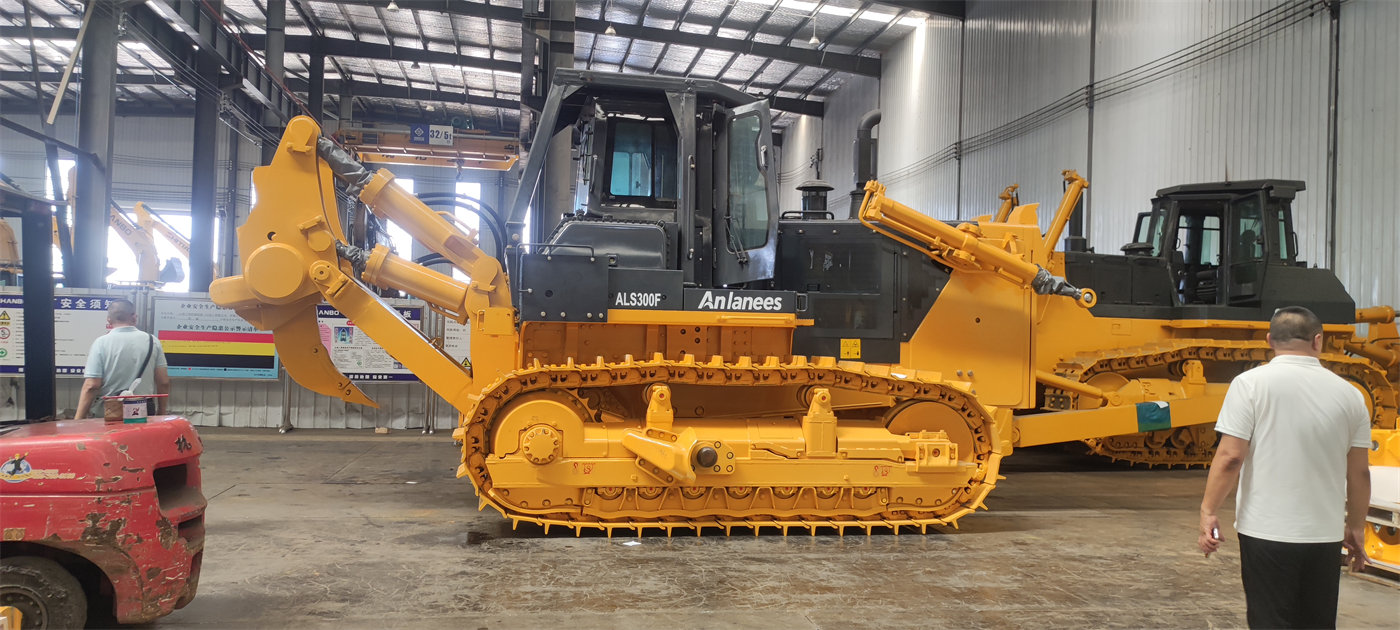
Taking the standard version data as an example, the straight blade is 4130 mm wide and 1590 mm high, the semi-U blade is 4130 mm wide and 1710 mm high, and the angle blade is 5000 mm wide and 1140 mm high. The coal version SD32C is equipped with a 4806 mm or 4520 mm wide coal mining blade, with an operating weight of 40500 kg. These figures cannot be directly converted into efficiency, but they help determine whether the blade matches the material.
What needs to be confirmed is whether the maximum lump size and bulk density of on-site materials will cause obvious spillage or difficulty in penetration for a certain blade. The data does not provide recommended material particle sizes for each blade; this part can only be determined through on-site tests or by requesting explanations from the supplier.
Condition 2: Do the undercarriage and ground conditions match?
Mining area ground often alternates between gravel, compacted soil, and loose material piles. The SD32 standard version has a track gauge of 2140 mm, optional track shoe widths of 560, 610, 660, and 710 mm, a ground contact length of 3150 mm, and a ground pressure of 97.7 kPa; the rock version has a ground pressure of 99.4 kPa, and the coal version 98.4 kPa. The wider the track shoe, the more dispersed the ground pressure distribution, but the specific width to choose depends on site bearing capacity and turning frequency.
Ground clearance of 500 mm and track pitch of 228.6 mm are related to passability on gravel roads. The data also mentions that long track ground contact length and high ground clearance are used for smooth travel and off-road passability, but it does not give applicable limits for slopes, soft foundations, or wet conditions. Therefore, if auxiliary hauling involves wet, soft dump sites or large longitudinal slopes, ground pressure, slope, and soil moisture content should be listed as conditions to be verified, and the standard version conclusions cannot be directly applied.
Condition 3: Continuous operation, power, and fuel conditions
The SD32 is equipped with a WP12 or QSNT-C345 electronically controlled engine, rated power 258 kW or 257 kW (2000 rpm), fuel tank 640 L, hydraulic tank 97 L. The data states that it can support continuous day and night construction and comes standard with high-brightness LED work lights. However, continuous operation capability depends not only on the fuel tank but also on shift arrangements, refueling conditions, and heat dissipation environment.
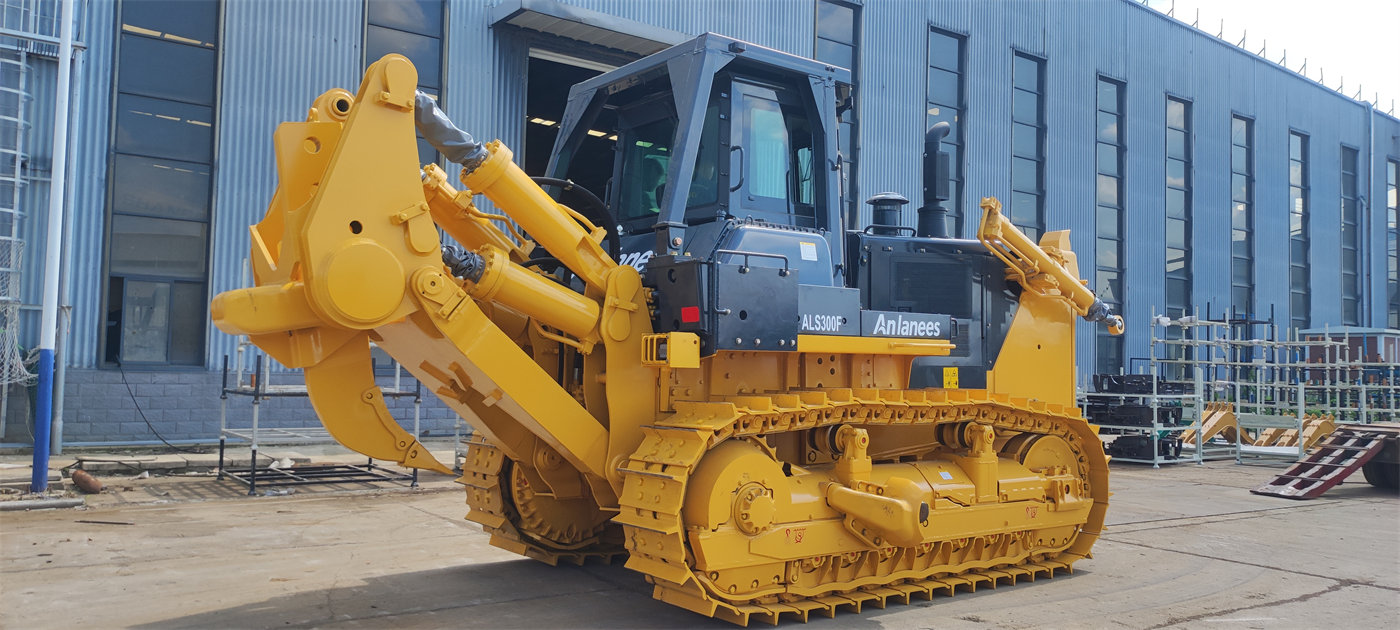
The desert version SD32D data mentions high-position dust-proof air intake and a large-capacity radiator, indicating that the same model has targeted configurations in different environments. If the mining area has heavy dust and high summer temperatures, air intake filtration and heat dissipation configuration should be included in the checklist, rather than assuming the standard version is sufficient.
The data does not provide actual fuel consumption, endurance hours, or maintenance intervals, so single-shift costs cannot be calculated from it. When inquiring, ask the supplier to provide fuel consumption references corresponding to on-site working conditions and explain the test conditions.
Condition 4: Versions and attachments are not all required; choose according to the task
The standard, rock, desert, sanitation, and coal versions appearing in the SD32 data represent different configuration directions, not that one machine has all configurations at the same time. If the auxiliary hauling task is mainly bulk material at a coal yard, focus on checking the coal version's coal mining blade and box-type body structure; if it is mainly stone road maintenance, the rock version's thickened blade and reinforced push rod are more relevant; if site dust and high temperatures are prominent, the desert version's dust-proof and heat dissipation configuration deserves separate confirmation.
For rippers, the data gives a maximum ripping depth of 1250 mm for single-shank and 842 mm for three-shank, with a ripper lift height of 955 mm or 883 mm. These figures can be used to determine whether local hard layer loosening is within the equipment's capability, but the data does not specify applicable rock types; whether actual loosening is possible still depends on rock strength and weathering degree.
Organize the conditions into an inquiry checklist
After breaking down, when inquiring with the supplier, it is not advisable to simply state "want a 320-horsepower bulldozer." Conditions can be organized according to the following table, requiring corresponding explanations item by item.
| Condition Category | Information Required | Corresponding Check Item |
|---|---|---|
| Material | Material type, maximum lump size, bulk density | Blade type and width, ripper configuration |
| Site | Ground material, bearing capacity, longitudinal slope, dust and temperature | Track shoe width, ground pressure, air intake and heat dissipation configuration |
| Shift | Single shift duration, consecutive working days, refueling conditions | Fuel tank capacity, lighting, maintenance accessibility |
| Transport | Access road width, turning conditions, transport method | Overall dimensions, weight, whether disassembled transport is required |
The "Transport" item in the table is often overlooked. The SD32 standard version has overall dimensions of 8650×4130×3760 mm and an operating weight of 40200 kg (with single-shank ripper and ROPS). These figures affect access roads and transport vehicle selection and need to be checked in advance.
Conclusions that cannot be drawn yet
First, applicable terrain boundaries. The data provides ground pressure and undercarriage dimensions, but no applicable conclusions for mining area slopes or wet, soft dump sites; these need to be confirmed according to actual conditions. Second, efficiency and fuel consumption. The data does not provide pushing volume per unit time or fuel consumption rate, so productivity or cost cannot be promised based on it. Third, maintenance intervals and disassembly/repair steps. The data only states that lubrication points are centrally arranged externally and side guards are open for easy inspection; specific maintenance intervals should refer to the accompanying manual.
If the auxiliary hauling task is mainly short-distance, multi-material switching, priority can be given to checking blade quick-change or attachment compatibility conditions; if it is mainly continuous pushing of a single bulk material, blade capacity and undercarriage wear-resistant configuration should be put first. In neither case is it necessary to directly copy the specifications of main mining equipment.
When inquiring, it is recommended to attach material type and workload, site conditions and transport routes, shift arrangements, power form preferences, and blade and ripper configuration requirements, so that the supplier can provide corresponding explanations for different versions of the same model, rather than just quoting a base price.