














When dozing soil on wet soft ground, machines often sink, tracks slip, and a pit forms after pushing only a short distance. Whether a medium bulldozer has enough horsepower is often not the first question; what really determines whether it can work is ground pressure, track width, the undercarriage on which the machine's weight rests, and whether the blade and ripper are properly matched. Using the SD26 series as an example, this article breaks down the boundary conditions for dozing on wet soft ground.
What to Check First on Wet Soft Ground, Not Horsepower
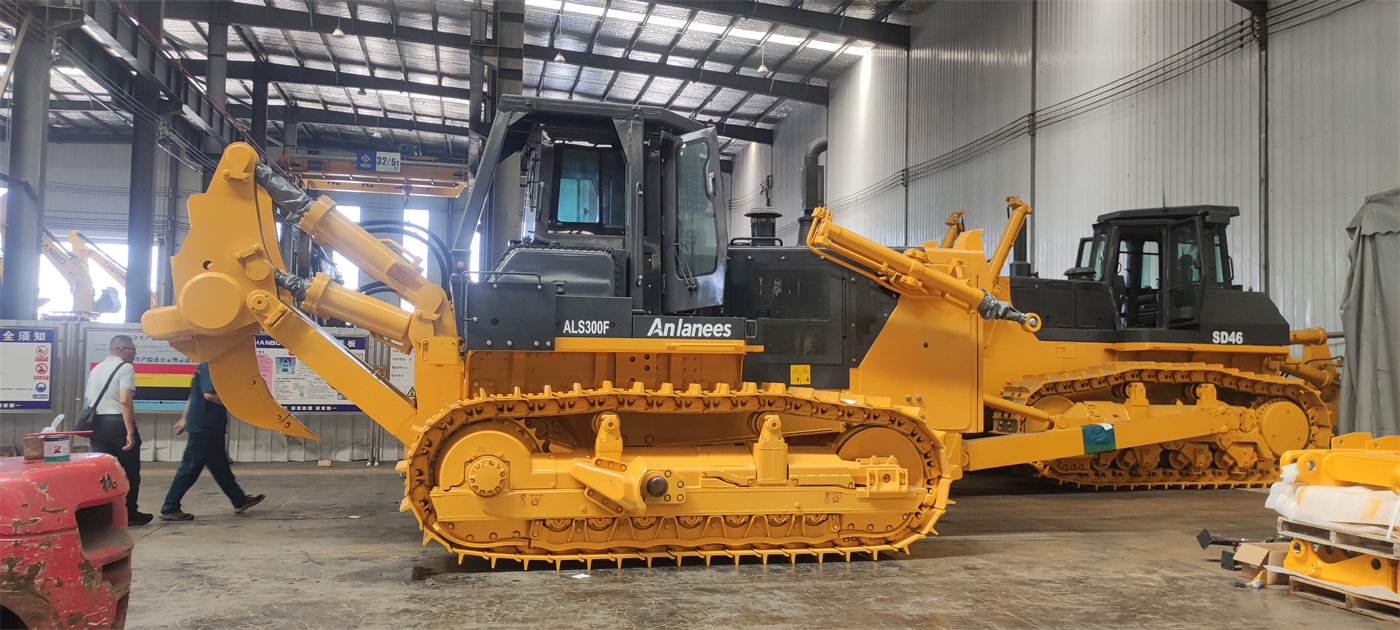
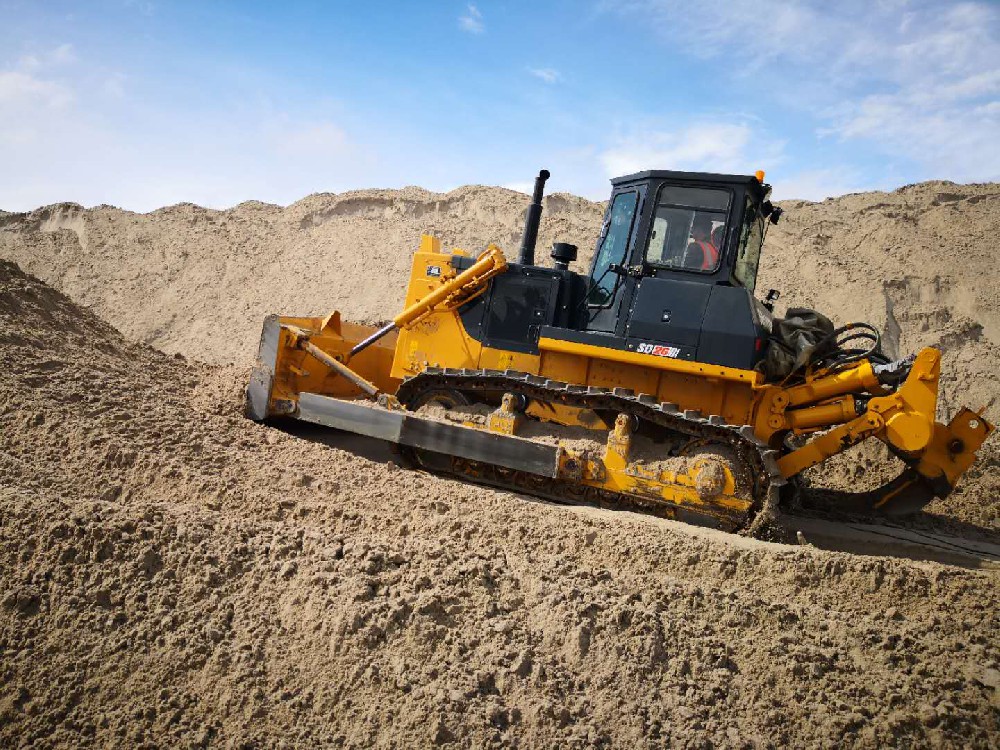
In soft-foundation, wetland, and high-moisture earthwork areas, whether a machine can doze smoothly depends on whether the pressure its tracks exert on the ground matches the ground's bearing capacity. The SD26 standard version has an operating weight of 23,450 kg, ground pressure of 66 kPa, standard track shoe width of 560 mm with 610 mm or 660 mm optional; ground contact length is 2,872 mm and ground contact area is 28,727 cm². The forestry version SD26F in the same series has an operating weight of 24,700 kg, ground pressure of 64 kPa, and uses 610 mm widened tracks. The comparison shows that although the machine is heavier, the tracks are wider, so ground pressure is actually slightly lower. On wet soft sites, the judgment order should be to calculate ground pressure and track width first, then check whether power is sufficient.
Operating Margin Provided by Power and Transmission
The SD26 is equipped with a WP12G280E304 engine, China-III emissions, rated speed 1,900 rpm, gross power 206 kW (277 hp), net power 194 kW (260 hp), maximum torque 1,250 N·m @ 1,200–1,300 rpm; it is matched with a powershift transmission, torque converter, and two-stage straight-tooth final drive. Dozing resistance on wet soft ground is high, and traction at low speed is more critical: forward and reverse speeds are both F1/R1 3.8, F2/R2 6.9, and F3/R3 11.8 km/h, with maximum theoretical tractive force of 460 kN. When dozing on wet soft ground, it is meaningful only to consider low-gear tractive force together with track adhesion; the horsepower figure itself cannot be directly equated with mobility on soft ground.
Configuration Checks Under Wet Soft Conditions
According to the materials, the SD26 series includes standard, forestry, wetland, desert, sanitation, and rock versions, among others. Configurations differ by version, and it should not be assumed that the same model has all configurations. When selecting a machine for wet soft ground, at least the following items should be verified:
- Whether the wetland version is the version verified in this article, and whether its track shoe width, ground pressure, and operating weight differ from the standard version;
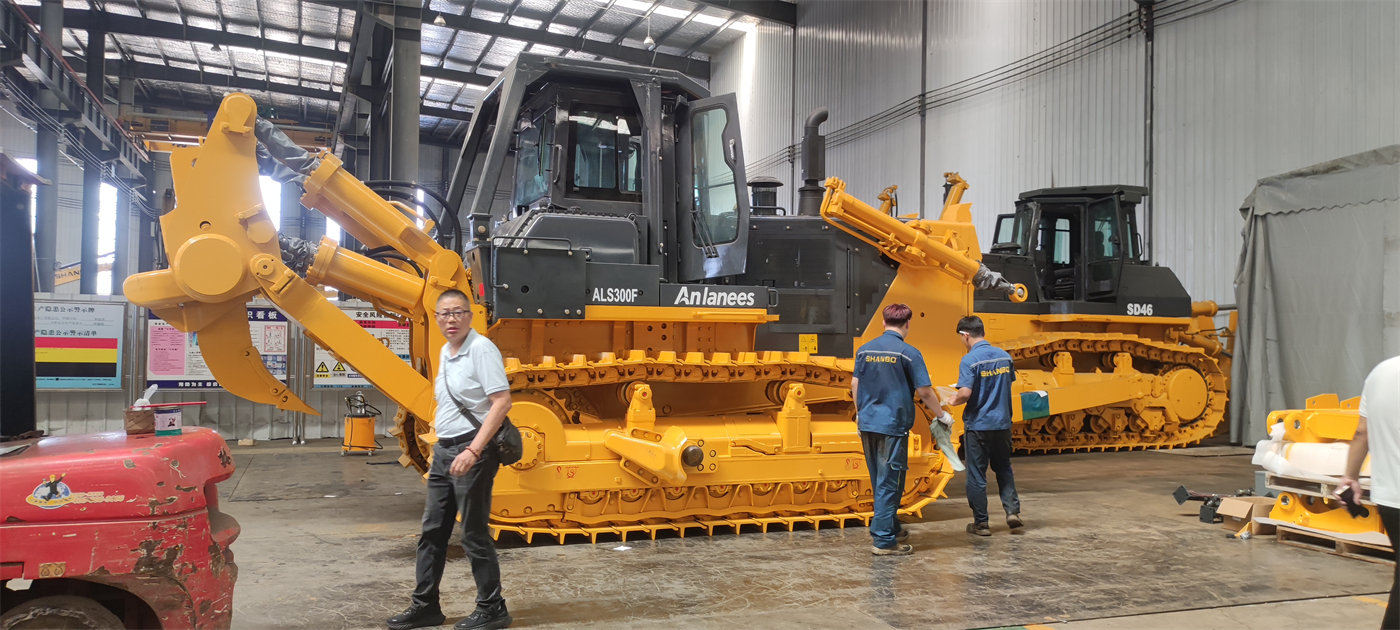
- Whether the standard straight-tilt blade with a capacity of 4.6 m³, blade width of 3,725 mm, and blade height of 1,315 mm needs an angle blade, U-blade, or semi-U blade in wet soft soil;
- Whether the three-shank ripper with maximum ripping depth of 666 mm, width of 2,000 mm, and weight of 2,600 kg is needed in soft soil; and how the machine's operating weight and ground pressure change after installation;
- Whether the semi-rigid suspension undercarriage with 38 track shoes per side, 6 track rollers, and 2 carrier rollers makes mud clearing and tension checking convenient in muddy conditions, and what the actual maintenance requirements are for automatic track tensioning.
Boundary Conditions and Items to Confirm
| Condition | Basis in Materials | To Confirm Before Purchase |
|---|---|---|
| Ground bearing capacity | Standard version ground pressure 66 kPa | Whether on-site soft-foundation bearing capacity is higher than this value and whether wider tracks are needed |
| Version configuration | The series includes versions such as the wetland version | The actual tracks, weight, ground pressure, and blade of the version being inquired about |
| Continuous operation | Fuel tank 450 L; cooling system designed for full-load high temperature | Actual shifts, refueling conditions, and heat dissipation environment at the wet soft site |
| Transfer transport | Machine length 5,462 mm; track shoe to track shoe width 2,560 mm | Size restrictions of transport vehicles and site access roads |
The materials do not provide conclusions on the SD26's passability under specific wetland, swamp, or moisture-content conditions, nor do they provide data on slope capability, dozing distance, or efficiency. These should all be listed as on-site verification items and should not be inferred directly from ground pressure figures.
Conditions to Provide When Requesting a Quote
When requesting a quote for a wet soft-ground dozing project, it is recommended to also provide the material type and moisture condition, workload and dozing distance, site bearing capacity and whether a wetland version is needed, site access road and transport size restrictions, shifts and continuous operating hours, and blade and ripper configuration requirements. The SD26 series can serve as a comparison reference for 260-hp-class medium machines, but whether it suits a specific wet soft site still needs to be confirmed item by item according to the above boundaries.