














Many buyers default to treating a mid-size dozer as a “general-purpose earthmover”: one standard configuration is enough for pushing, rough grading, and short-distance loose material handling. But in real projects, the same horsepower-class machine may push earth on a road site in the first half of the year, be reassigned to a coal yard in the second half, or enter crushed rock sites and mountain access work. What really determines whether it can do the job is often not horsepower, but whether the blade type, track width, ground pressure, and protective features match the material and ground conditions.
Below, using public data for a 235 hp mid-size crawler dozer as an example, we break it down by work objective: beyond general earthmoving, what else can a mid-size machine cover, what configuration changes are needed, and which conditions must be confirmed in advance.
Start with the problem: where mid-size machines usually fall short when asked to be “multi-purpose”
The work equipment and undercarriage of a standard mid-size dozer are designed for conventional earth and rock work: straight or angle blade, U blade, and semi-U blade options; track shoe widths of 560, 610, and 660 mm; and a ground contact length of 2730 mm. For ordinary earthmoving, sand and gravel loose materials, and rough grading, this combination is reasonable.
But when the material becomes coal, crushed rock, or forest land, the problems shift:
- When pushing coal, standard blade capacity is on the small side and hourly pushing volume is limited; ground pressure also affects trafficability on soft stockyards;
- When pushing crushed rock and weathered rock, impact on ordinary blade edges and push arms is more concentrated, making wear resistance and structural reinforcement of the work equipment critical;
- When entering forests or complex terrain, cab protection, off-road capability, and self-recovery means need to be configured separately;
- If the site is soft over the long term, track shoe width and ground pressure need to be rechecked rather than carrying over standard tracks.
So the answer to “what else can a mid-size machine handle” is not a simple “yes,” but whether the same horsepower platform offers corresponding versions and work equipment.
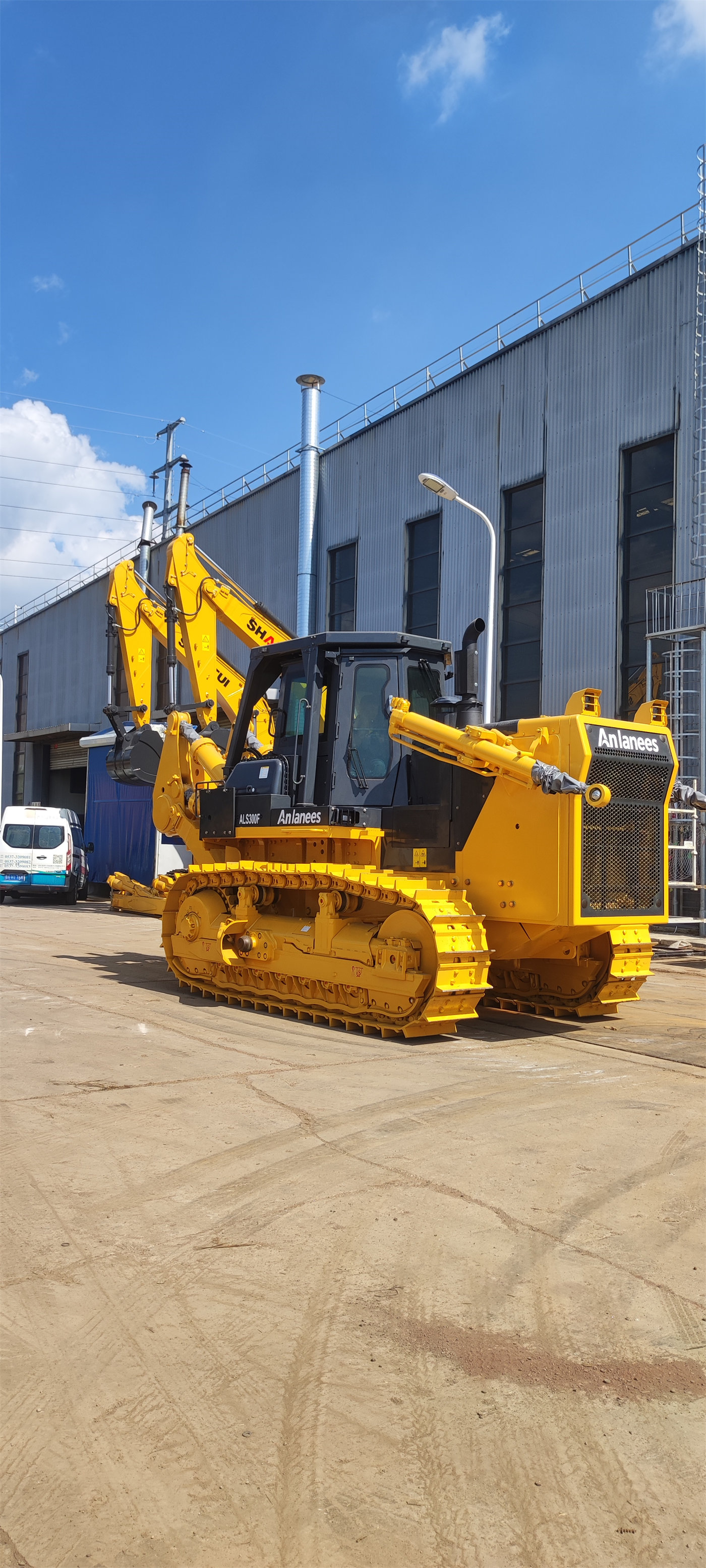
Expansion directions on the same horsepower platform
Data for this 235 hp dozer shows a rated power of 175 kW (235 hp), with a WP12 or QSNT-C235 engine, an electronically controlled engine meeting China Stage III off-road emission standards. On this power platform, the data lists standard, coal, rock, forestry, and other versions, plus desert, extended, sanitation, and wetland versions. Different version names only indicate that these configuration directions exist in the product line; they do not mean any one version simultaneously has all capabilities.
For purchasing decisions, the differences worth noting across versions are at three levels: blade and work equipment, undercarriage and tracks, and protection and attachments. These are explained below by application.
Coal stockyards and bulk materials: blade capacity and ground pressure come first
The coal version is positioned in the data for coal yard stockpiling, power plants, port bulk stockyards, and bulk material transfer. Verifiable differences from the standard version include:
- Coal blade width 4200 mm and height 1350 mm, larger than the standard straight blade’s 3725 mm width;
- Operating weight 24000 kg, slightly higher than the standard version’s 23450 kg;
- Ground pressure 57.5 kPa, lower than the standard version’s 66 kPa; track shoe width is 660 mm.
These figures correspond to soft stockyard and light bulk material scenarios: a wider blade helps push more coal at once, and lower ground pressure helps maintain trafficability on the coal pile surface. Note, however, that these are data parameters and cannot be directly converted into hourly coal pushing volume; actual capability also depends on coal pile height, moisture content, haul distance, and operating method.
Quarries, mountain road reconstruction, and crushed rock sites: wear-resistant work equipment and structural reinforcement
The rock version is positioned in the data for quarries, mountain road reconstruction, rock terrain excavation, and hard soil ripping. Its blade types are rock straight blade, rock angle blade, rock U blade, and rock semi-U blade, with width specifications matching the standard version, but the data explicitly mentions high-strength wear-resistant rock blades and reinforced push arms. Operating weight is 23600 kg and ground pressure is 66 kPa, close to the standard version.
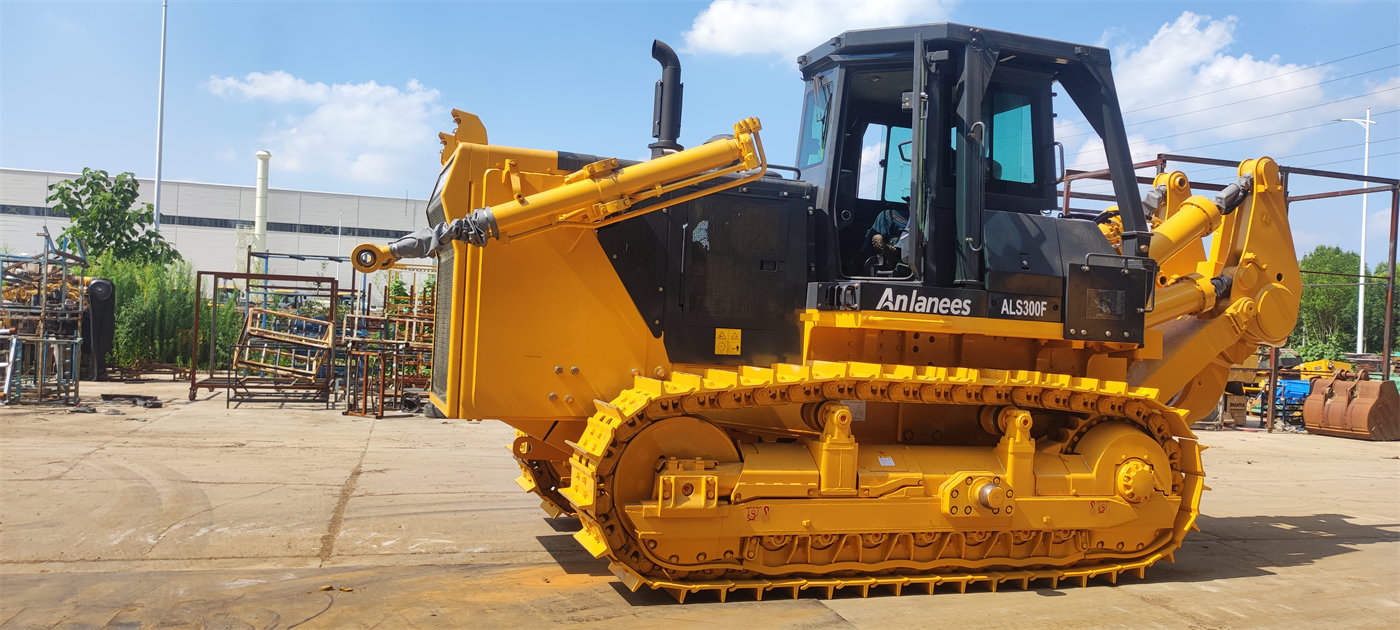
This means the rock version does not rely on more horsepower to handle rock, but strengthens the components in direct contact with material at the same power level. What needs to be confirmed during selection is: whether the site is crushed rock, weathered rock, or hard soil requiring a ripper, and whether impact frequency exceeds what ordinary work equipment can withstand. The data does not provide wear-part life figures; this can only be an item to verify with the supplier before purchase.
Logging access and forest work: protection and self-recovery configuration
The forestry version data mentions an impact-resistant logging cab, optional wide tracks, and a mechanical winch, for forest harvesting, timber collection, mountain road opening, and field rescue. Compared with the standard version, it adds cab protection and recovery means.
It should be noted that such configurations address “protection and self-recovery for people and machines in forest environments,” which does not mean the model is suitable for any slope or any forest road. Slope capability, forest transport dimensions, and winch traction parameters are not fully provided in the data and should be confirmed separately before purchase.
The existence of other versions does not mean they can all do the job
The data also lists desert, extended, sanitation, and wetland versions. These names indicate that the product line can offer multiple configuration directions, but this article’s data does not give detailed parameters or application boundaries for each version, so no inference can be made about a version’s performance on a specific site. If a project involves soft ground, sand, or sanitation work, request the technical data for the corresponding version separately before judging.
Key differences between the standard version and extended versions
| Item | Standard | Coal | Rock |
|---|---|---|---|
| Operating weight | 23450 kg | 24000 kg | 23600 kg |
| Ground pressure | 66 kPa | 57.5 kPa | 66 kPa |
| Blade type | Straight/angle/U/semi-U | Coal blade | Rock straight/angle/U/semi-U |
| Blade width | 3725–4635 mm | 4200 mm | 3725–4635 mm |
| Track shoe width | 560/610/660 mm | 660 mm | 560/610/660 mm |
Note: The table lists only fields verifiable in the data. The forestry version is not included because its public parameters are mainly protection and optional equipment descriptions, lacking complete values directly comparable to the table above. Regarding rippers, the standard, coal, and rock versions all list single-shank or three-shank options, with maximum ripping depth of 695 mm for single-shank and 666 mm for three-shank; whether to configure one must be confirmed separately based on hard soil or rock ripping needs.
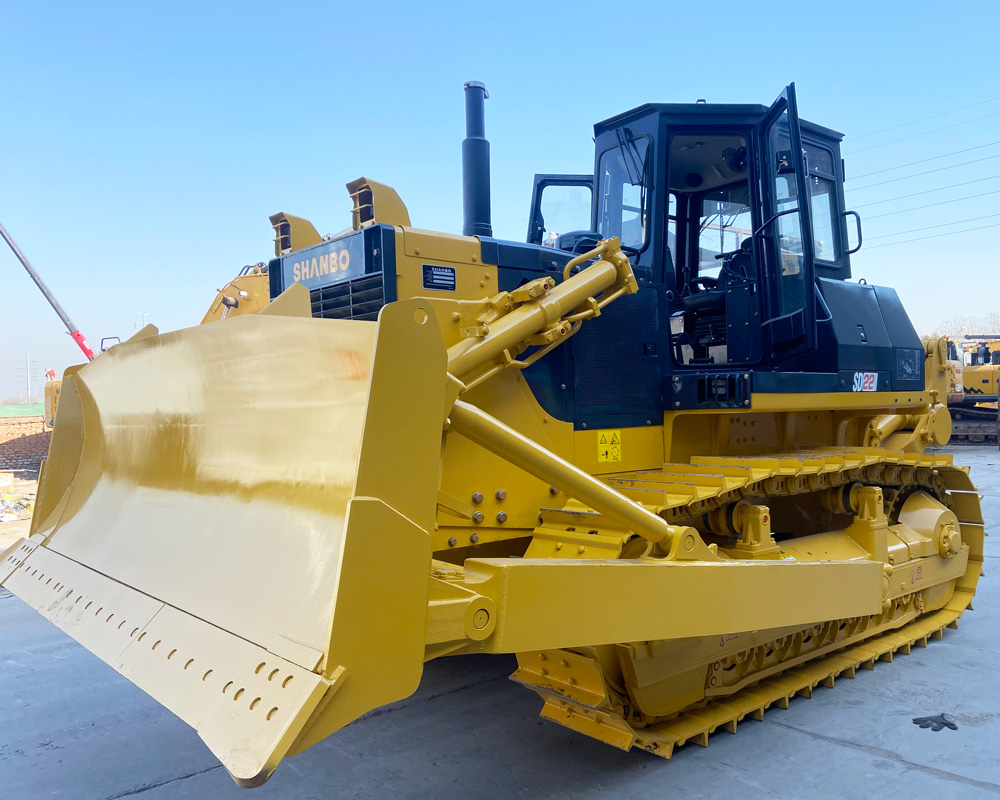
Supporting conditions: things to think through before changing versions
For a mid-size machine to switch among multiple applications, besides the host version, the following conditions should be considered:
- Transport and relocation: The data gives overall dimensions of approximately 5495×3725×3402 mm (standard version), with the coal version’s width increasing to 4200 mm. Different blade and track configurations change transport dimensions; check trailer and road width limits before relocation.
- Attachment compatibility: Rippers, drawbars, winches, and similar items are supporting conditions of the overall machine solution, and optional ranges differ by version; clarify them at the inquiry stage.
- Fuel and refueling arrangements: Fuel tank capacity is 450 L, and this is a fuel-powered model; continuous work shifts and on-site refueling conditions will affect actual usage arrangements.
- Operation and maintenance: Electric hand and foot throttles, smart display, and open side guards are described in the data, but daily inspection items and intervals should follow the accompanying manual and should not be set based on experience.
Conclusions that cannot yet be drawn
This data can show that multiple application versions exist on the same 235 hp platform, and the verifiable differences among versions in blade, weight, ground pressure, and protection. But it cannot answer the following questions:
- Actual hourly output of each version under specific materials;
- Wear life of rock work equipment and coal blades;
- Trafficability of the forestry version on forest land at specific slopes;
- Actual application boundaries of versions without detailed parameters, such as wetland and desert versions;
- Machine price, delivery time, and spare parts supply cycle.
These all need to be obtained item by item from the supplier during the inquiry stage, or judged in combination with on-site trial conditions.
Conditions recommended for inquiry
If a project truly needs one mid-size machine to cover multiple jobs, it is advisable to state clearly in the inquiry: main material types (earth, coal, crushed rock, timber, etc.) and their proportions; expected annual workload and single-shift duration; site ground bearing capacity and slope conditions; whether attachments such as ripper, winch, or drawbar are needed; road width limits and trailer conditions for relocation transport; power form and emission requirements; and the blade and track configurations you hope to cover. The more specific the conditions, the easier it is for the supplier to judge whether to recommend the standard version or an extended version, rather than quoting generically for a “mid-size dozer.”