


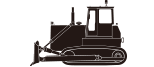
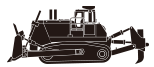















A common situation in medium dozer procurement is: the horsepower range is already set at around 178 hp, but the same series is divided into standard, extended, super wetland, coal, and other versions. Quotations and configurations do not match, and the site cannot clearly say which direction to take. The problem is often not horsepower, but whether the work object is conventional earthmoving or special sites such as wetlands and coal stockyards—if the version direction is wrong, the undercarriage and blade will be difficult to match to the actual pushing task.
First, divide work objectives into two categories
The first step in determining version direction is not to look at the specification table, but to classify the main tasks for the next one to two years:
- Mainly conventional earthmoving: pushing, backfilling, and rough grading at highways, railways, mines, airports, and other sites, with materials mainly earth and rock, and the ground having some bearing capacity.
- Mainly special sites: swampy soft ground, wetland improvement, river improvement, or bulk material pushing at power plant and port stockyards, where ground bearing is low or material bulk density differs significantly from earthmoving.
The two types of tasks have different requirements for undercarriage ground pressure, track shoe form, blade capacity, and machine dimensions. If both types of tasks exist, it is necessary to determine which type accounts for more shifts, and then decide which version to focus on, whether the other version is supplementary or handled by changing attachments.
Verification sequence for conventional earthmoving direction
When earthmoving and rough grading are the main tasks, first look at the structural support and blade matching of the whole machine under heavy-load pushing, then look at transfer and transport constraints.
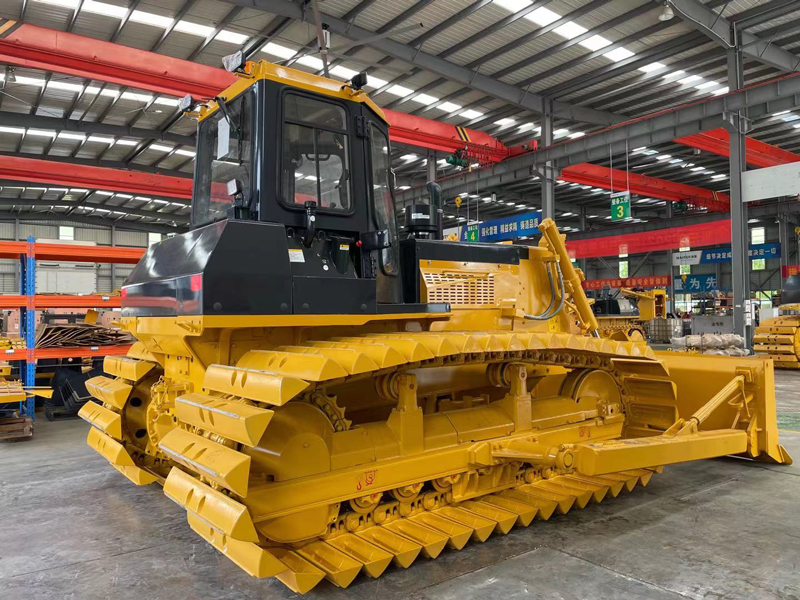
A representative configuration of a 178 hp medium dozer is the standard version: operating weight 17,000 kg, rated engine power 131 kW, ground pressure 58 kPa, track shoe width 510 mm, ground contact length 2,635 mm, ground clearance 400 mm, fuel tank capacity 315 L. Blade options include angle blade, straight blade, or U-blade, with widths of 4,011, 3,455, and 3,556 mm respectively. Straight blade is standard, and a three-shank ripper can be equipped for breaking clay and frozen soil.
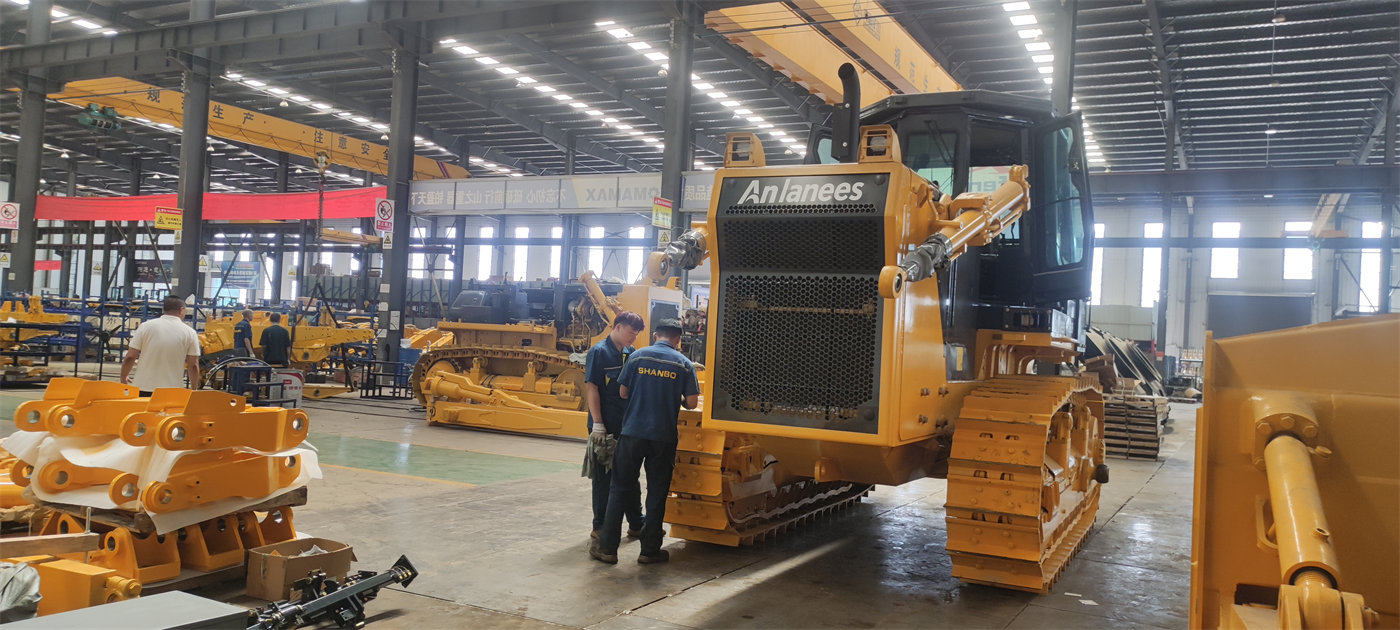
The operational judgments corresponding to these data are:
- 510 mm track shoes and 58 kPa ground pressure are suitable for conventional earthmoving sites with some bearing capacity; for long-term soft ground operations, separate verification is required.
- Straight blade emphasizes cutting and pushing; U-blade and angle blade are suitable for different material organization methods. The specific choice depends on material looseness and pushing distance.
- Machine dimensions are 5,140×3,455×3,024 mm. Before site entry and transport, verify flatbed trailers and road width/height limits according to these dimensions.
If the task is mainly medium-distance continuous pushing and grading, the same series also has an extended version: operating weight 17,100 kg, machine length increased to 5,241 mm, and maximum forward third-gear speed increased from 9.63 km/h to 9.82 km/h. Whether the body change brought by the extension suits turning and U-turns on the specific site needs to be confirmed in conjunction with the working face width.
Version branches for special site direction
When soft ground, wetlands, or bulk materials become the main objects, the branch point of version selection shifts to ground pressure and track shoe form.
Soft and wet sites: first look at ground pressure
The super wetland version reduces ground pressure to 22 kPa, expands track shoe width to 960 mm, has 41 track shoes per side, and operating weight of 16,900 kg. For comparison, the standard version is 58 kPa and 510 mm. Lower ground pressure means the same machine weight is distributed over a larger ground contact area, which is the main basis for considering this version for soft ground operations.
However, low ground pressure does not mean it can pass through any wetland. Mud depth, moisture content, whether there is a hard layer underneath, and whether the access road can support transport vehicles all need on-site confirmation. The super wetland version also has a machine width of 4,150 mm, which is wider than the standard version, so transport and working face width must be verified together. In the data, this version's blade is a straight blade with width 4,150 mm, height 1,245 mm, and digging depth 482 mm, which differs from the standard straight blade dimensions and cannot directly use standard version data.
Coal and bulk material stockyards: look at blade and wear-resistant configuration
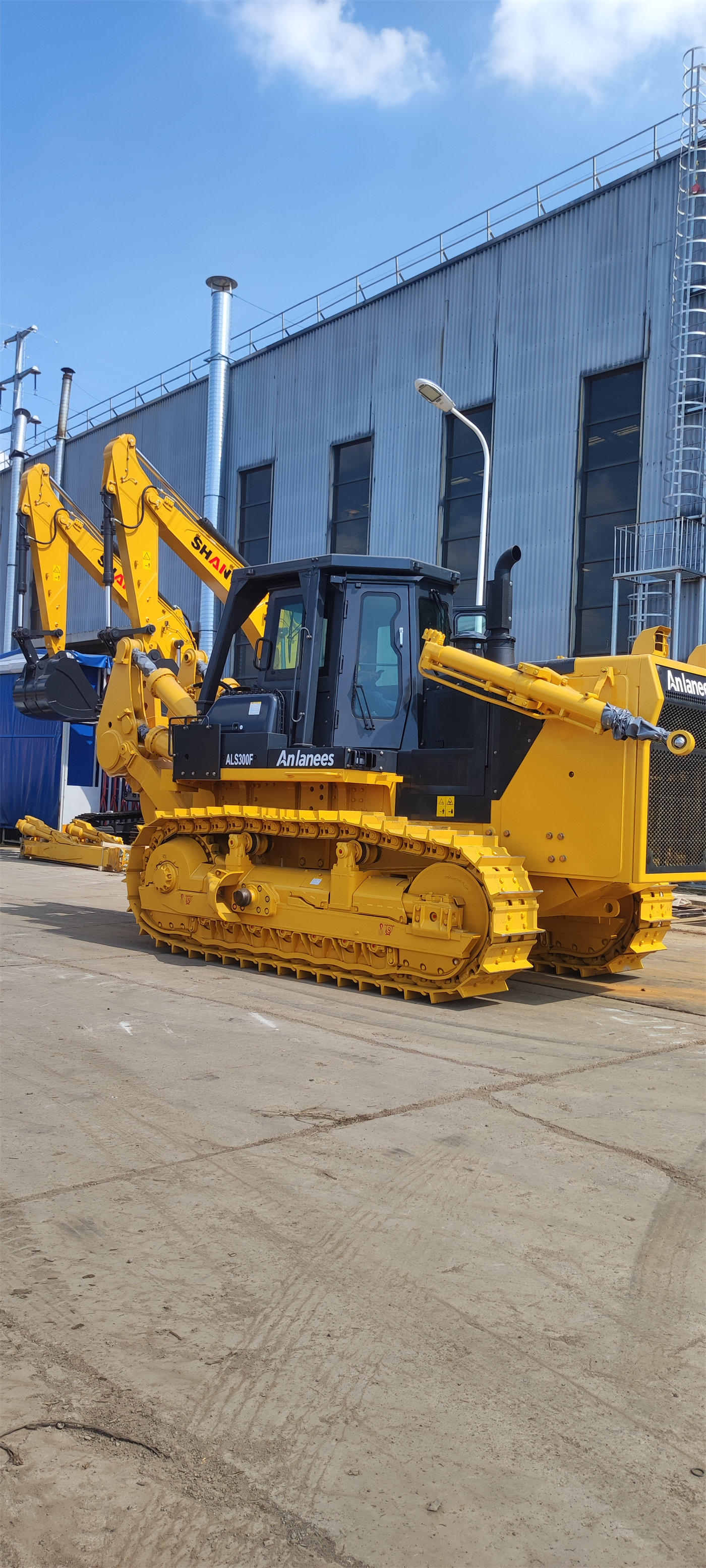
The coal version has operating weight 17,500 kg, ground pressure 55 kPa, still 510 mm track shoes, but is equipped with a coal blade with width 4,150 mm and height 960 mm, mainly used for loading, unloading, and pushing of bulk materials at power plants and ports. Its machine length is 5,427 mm, greater than the standard version's 5,140 mm.
Note that the coal version data emphasizes the material pushing match of wide tracks and coal blade; it cannot be inferred from this that it is suitable for soft wetland, nor can the ground pressure data of the super wetland version be applied to the coal version.
Comparison of key fields for each version
The following table only organizes some difference fields of verified versions in the same series to illustrate the basis for branching. It does not represent all configurations and does not constitute a version recommendation.
| Field | Standard | Extended | Super Wetland | Coal |
|---|---|---|---|---|
| Operating weight (kg) | 17,000 | 17,100 | 16,900 | 17,500 |
| Ground pressure (kPa) | 58 | Not listed | 22 | 55 |
| Track shoe width (mm) | 510 | 510 | 960 | 510 |
| Blade type | Angle/Straight/U | Angle/Straight/U | Straight | Coal |
| Dimensions (mm) | 5,140×3,455×3,024 | 5,241×3,455×3,025 | 5,262×4,150×3,074 | 5,427×3,900×3,032 |
Fields such as ground pressure and track link pitch for the extended version are not listed in the data. Before purchase, request a complete specification table from the supplier and do not substitute data from other versions.
Decision path: from task to version
The judgment can be advanced in the following order, rather than locking in a version first and then finding reasons:
- Step 1: Count shift composition: How much is conventional earthmoving, soft wet sites, and bulk material stockyards, and which is the long-term main task.
- Step 2: Verify ground conditions: For soft ground areas, ask clearly about mud depth and bearing conditions; for conventional earthmoving, confirm whether temporary soft ground may occur during rainy seasons or in low-lying sections.
- Step 3: Verify material and blade: Earth and rock, clay, frozen soil, and coal have different pushing methods; blade type and whether a ripper is equipped must correspond to the task.
- Step 4: Verify transport and working face: Check flatbed trailers, road width/height limits, and turning space according to each version's dimensions and weight.
- Step 5: Verify power and emissions: This series is equipped with electronically controlled engines, and the data indicates compliance with China's National Non-Road Machinery Stage IV emission standards; local emission access requirements at the project location must be confirmed separately.
Only after the main task is clear does the version direction have a basis for comparison. If the main task repeatedly switches between the two categories, consider changing attachments, purchasing a second machine, or adjusting work organization as alternatives, rather than expecting one version to cover all conditions.
Items still to confirm before selection
The verified data can explain the configuration differences of each version, but the following content is not covered by the data and should be confirmed item by item before purchase:
- Soil type, moisture content, bearing capacity, and slope of the specific site, as well as the actual passability of the equipment under those conditions;
- Pushing distance and shift output targets; the data does not provide corresponding efficiency data;
- Actual fuel consumption, maintenance intervals, and wear part replacement intervals, subject to the accompanying manual and supplier data;
- Optional configurations, delivery lead times, and prices of each version locally;
- Transport vehicle matching, loading/unloading plan, and on-site road bearing capacity;
- Local environmental and emission access requirements, and whether additional configurations are needed.
When requesting a quotation, it is recommended to provide: material type and volume, working face dimensions and ground conditions, transport distance and road restrictions, daily shift arrangements, power and emission requirements, and attachment needs such as blades and rippers. The more specific the information, the easier it is to align the version direction and reduce subsequent rework caused by configuration mismatch.