

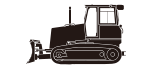
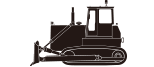
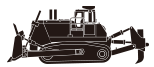






When assigning a small dozer to earthmoving or site grading tasks, a common concern is that "the machine is too small to handle tough work." This judgment equates equipment class directly with working capability, but whether a machine can actually handle a task depends on whether material state, push distance, ground bearing capacity, blade configuration, and shift arrangements match the equipment specifications. Using verified SD10 data as an example, this article outlines the basis for judging small crawler dozer capability, application boundaries, and items to confirm before purchase.
What the judgment "small machines can only do light work" overlooks
The load in dozing operations is not determined by a single indicator. Even for equipment of the same small class, performance differs greatly between short-distance pushing of loose material, rough site grading, and material stockpiling versus long-distance pushing on hard ground and continuous heavy-load operation. To judge whether equipment is sufficient, at minimum you need to check whether tractive force can drive the target blade, whether ground pressure suits the surface, and whether the undercarriage and travel speed match the haul distance and relocation rhythm—rather than ruling it out by specification class first.
Conversely, small machines cannot take on every task either. Heavy-load pushing beyond their traction and stability conditions, or site leveling requiring greater blade coverage width, should still move up to a larger class. The key is to compare task conditions item by item against equipment data, rather than broadly saying "can do" or "cannot do."
What SD10 data can support
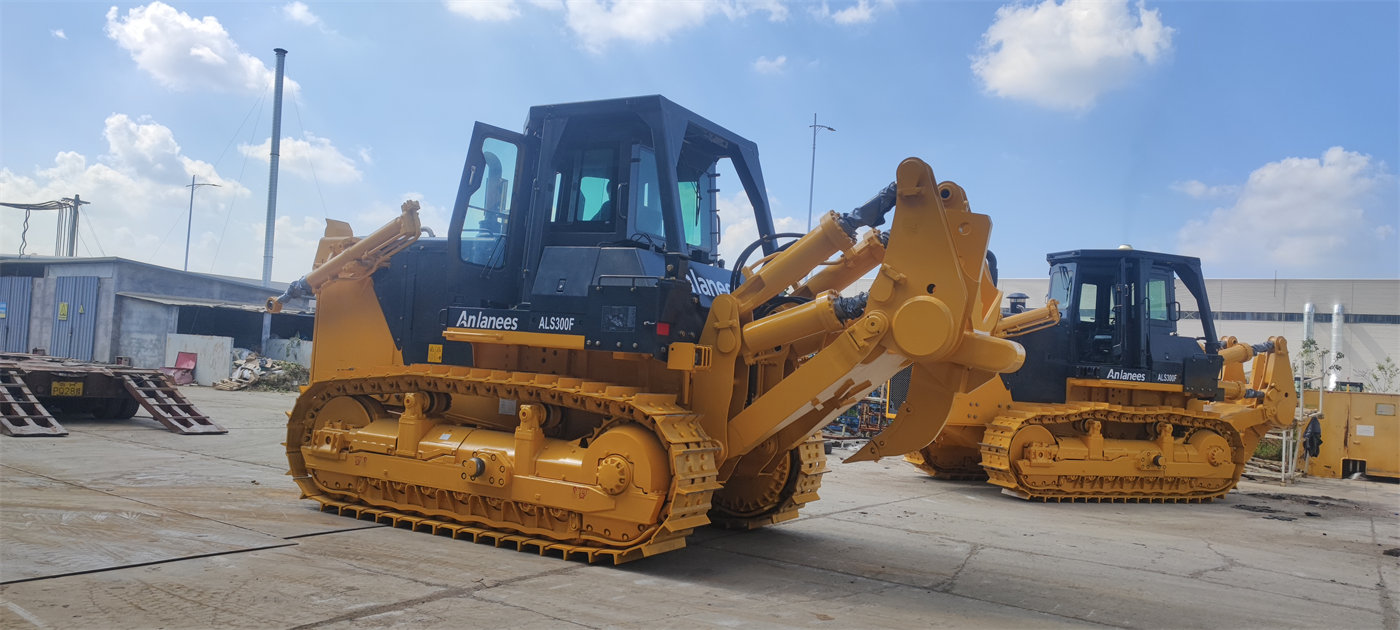
The SD10 is a 125HP small dozer in this site's catalog, with an operating weight of 10000kg and maximum tractive force of 95kN. Power comes from a Cummins 4BT3.9-C125 diesel engine with rated power of 81kW (125HP)/2300r/min and maximum torque of 400N·m. Transmission is a 4F+2R mechanical gearbox, with forward speed of 2.6–10.4km/h and reverse speed of 3.7–6.7km/h.
These figures indicate that it has the basic traction and travel conditions for small-to-medium earthmoving work, but they cannot be directly converted into daily push volume or efficiency for a specific site. Material looseness, push distance, and ground adhesion conditions will all change actual performance; these conditions should be written into inquiry specifications before purchase.
Undercarriage and ground conditions
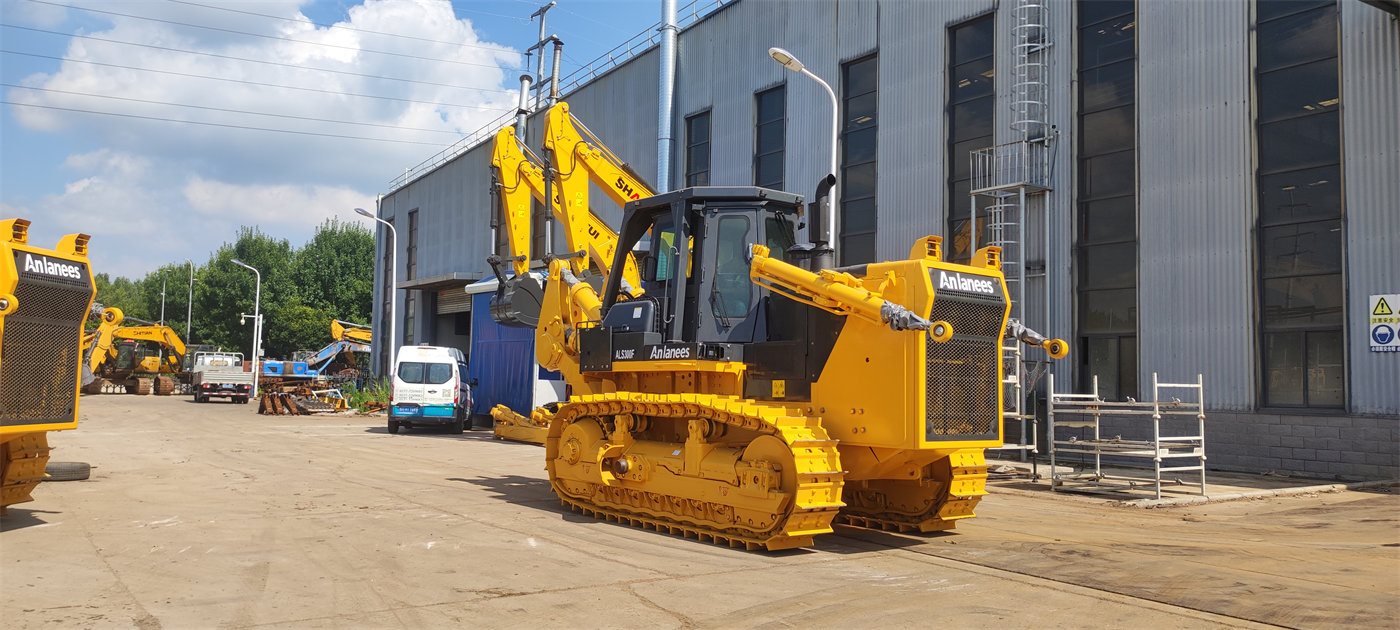
The SD10 has a track shoe width of 450mm, ground pressure of 54.4kPa, and dimensions of 4400×2960×3030mm. Ground pressure data can help judge the risk of sinking on a specific surface, but whether it is suitable for soft ground, wet ground, or slopes also depends on on-site soil quality, moisture state, and gradient. The data does not provide these application boundaries and they must be confirmed separately according to the actual site. Compact dimensions are advantageous for layout in narrow sites, but whether it can enter a specific work face still depends on site access and turning space.
Blade and rear attachments
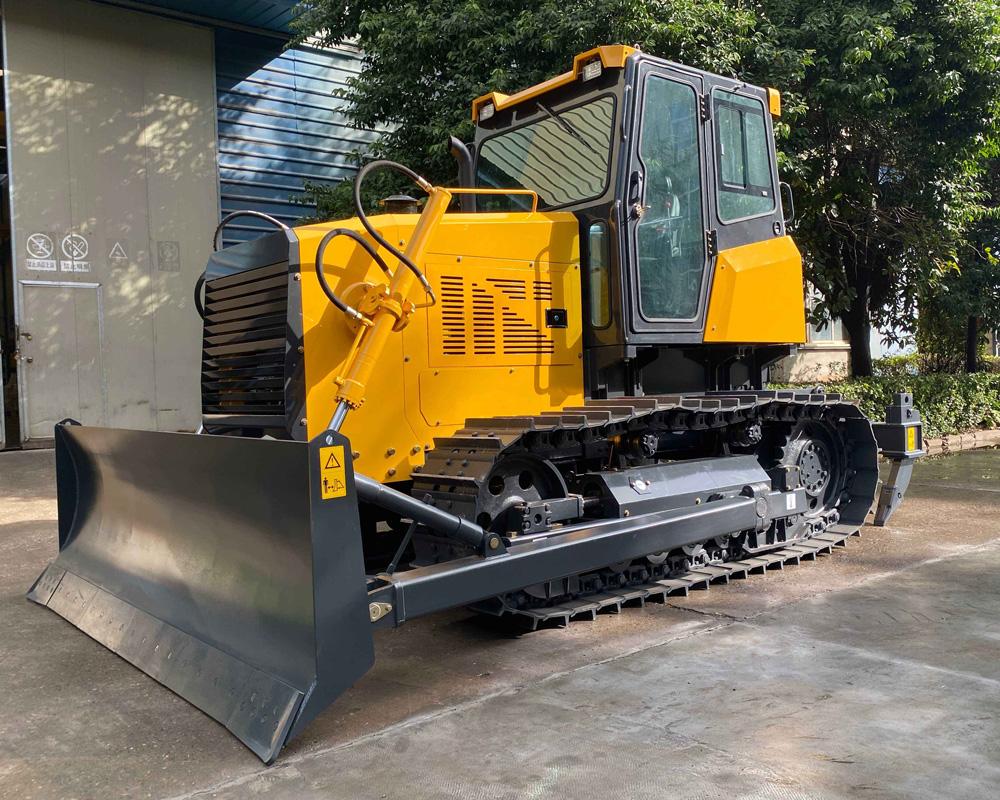
The SD10 blade measures 2960×960mm, with maximum lift height of 830mm and maximum digging depth of 350mm; straight, curved, and coal blades are available. The rear can be fitted with a fixed drawbar or a three-shank ripper.
Blade types correspond to different materials: straight and curved blades suit different pushing methods, while the coal blade targets bulk material handling scenarios. Selection should be determined by the primary material and work objective; all optional configurations should not be understood as being simultaneously available on the same machine. The ripper is used to loosen hard material, and its applicability depends on material hardness and site conditions. The data does not give a hardness range, so this must be specified in the inquiry.
Which tasks are better suited for checking small machines first
- Rough site grading, short-distance material stockpiling, and transfer connections;
- Municipal engineering, farmland improvement, and other occasions with relatively limited work faces and frequent repositioning needs;
- Occasions where material is relatively loose and ground bearing conditions allow 450mm track shoes and 54.4kPa ground pressure to perform effectively;
- Tasks requiring both traction or ripping and other rear operations, but with overall scale not large.
The above are only verification directions listed according to the data, not applicability conclusions. Each item should be confirmed through on-site measurement or supplementary data.
Conditions still to confirm before purchase
| Item to confirm | Why ask |
|---|---|
| Material type and state | Determines whether blade type and ripper are needed, and affects traction load judgment |
| Push distance and work face dimensions | Together with travel speed, dimensions, and blade width, affects work organization |
| Ground bearing and moisture state | Whether 54.4kPa ground pressure is suitable must be judged in conjunction with soil quality |
| Transport and relocation conditions | Machine dimensions and weight affect transport arrangements; the data does not provide a transport plan |
| Shift and continuous operation requirements | Determines whether equipment class needs to move up; the data does not provide fuel consumption or productivity figures |
| Blade and rear attachment configuration | Different blades and rippers correspond to different tasks and must be determined according to actual operations |
If any of these conditions is unclear, the judgment of whether a small machine is sufficient lacks a basis. Especially for continuous heavy-load operation and soft, wet sites, this site's data does not provide an applicability conclusion for the SD10 and should not be inferred from specifications alone.
Bringing the question back to the task itself
Whether a small dozer can only do light work depends on how well task load matches equipment conditions, not on specification class itself. SD10 data shows it has 95kN maximum tractive force, 54.4kPa ground pressure, and multiple blade options; these features correspond to selection verification for small-to-medium earthmoving and grading tasks, not a capability commitment for any working condition. When inquiring, provide material, workload, site and ground conditions, transport arrangements, shifts, and blade and rear attachment requirements so that configuration can be checked item by item.