


















Push operations at mining extraction faces are not entirely identical to ordinary earthmoving push operations. The material often contains blasted rock and hard interlayers, push distances are short with frequent back-and-forth travel, and the equipment alternates for long periods between high-load tramming and blade penetration. The impact borne by the undercarriage is not occasional; it accumulates in every work cycle. Under such conditions, what procurement personnel care about is often not "what is the maximum horsepower," but whether the undercarriage structure can absorb the impact and which components will first require shutdown inspection during continuous operation.
Using the verified information on the SD46 large crawler dozer from this site as a reference, the following breaks down "matching undercarriage structure to continuous operation" into several directions that can be checked item by item. The operating condition descriptions in this article are conditional analyses and do not represent any specific customer case or construction result.
Where impact loads come from and who should absorb them
Impact in mining push operations mainly comes from three sources: the instantaneous reaction force on the travel mechanism when tracks roll over blasted rock; the longitudinal impact transmitted back to the main frame through the push arms when the blade penetrates hard material; and the torque fluctuations borne by the final drive during frequent steering. These three types of loads follow different paths and require different structural responses.
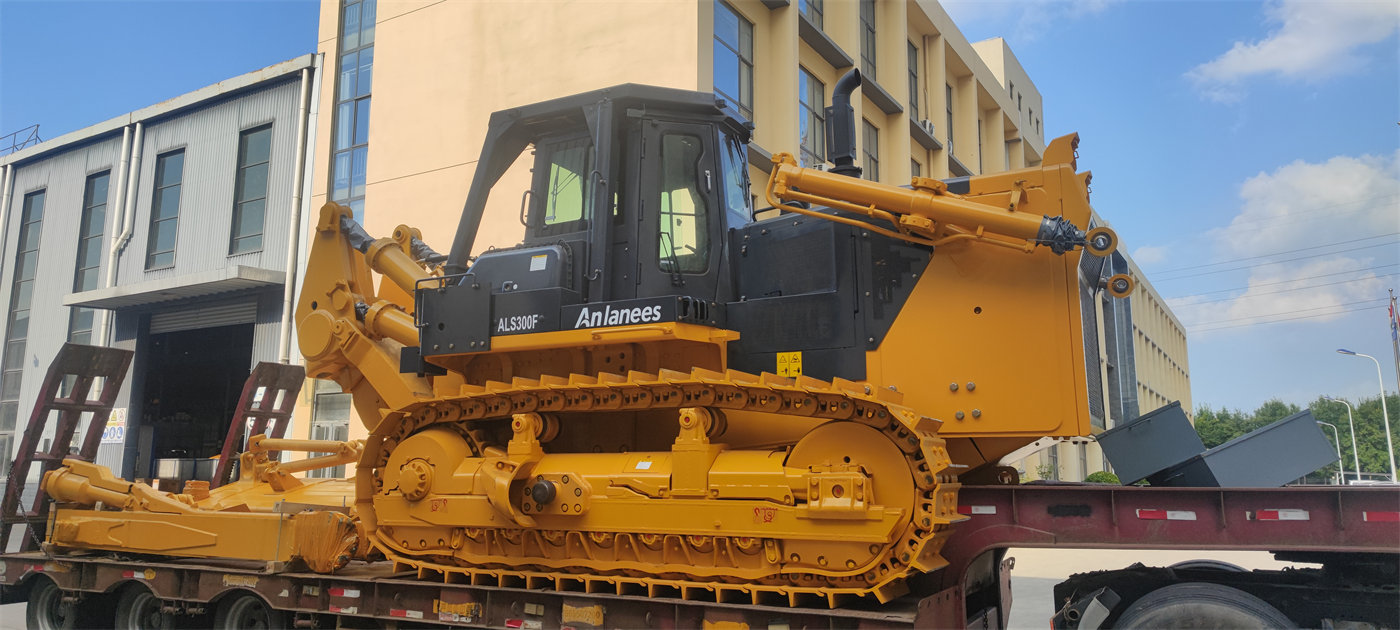
The corresponding structures given in the SD46 information are the K-type floating undercarriage and the integral articulated undercarriage, described as cushioning impact loads during travel and operation. At the same time, the main frame uses a fully enclosed box structure with high-strength wear-resistant steel and heavy cast steel components, emphasizing impact resistance, bending resistance, and torsional resistance. Viewed together, the logic is that travel impact is first partially dissipated by the floating undercarriage, and the residual structural loads are then borne by the box-type main frame. Whether this is sufficient to cover the rock size and hardness of a specific mine is not quantified in the information and is a matter requiring confirmation of on-site conditions.
Continuous operation fears downtime most; maintenance accessibility must be checked in advance
Mining equipment has high time value, and the cost of one unplanned shutdown often exceeds the purchase price difference. Therefore, "easy maintenance" should not be treated as an ancillary selling point but should be checked as a component of continuous operation capability. Relevant information that can be extracted from the SD46 materials includes: the externally mounted distribution work valve group facilitates inspection, disassembly, and maintenance; the large opening engine hood can expose internal core components; the track chain uses full-body sealed lubrication and an integrated main link design, making disassembly and replacement less labor-intensive; key data (hydraulic oil temperature, oil level, coolant temperature) have electronic monitoring and over-limit alarms.
This information indicates the accessibility of maintenance paths, not a commitment to maintenance intervals or fault intervals. Actual inspection intervals still need to be determined based on the manual and on-site conditions.
The undercarriage and the blade are not two separate matters
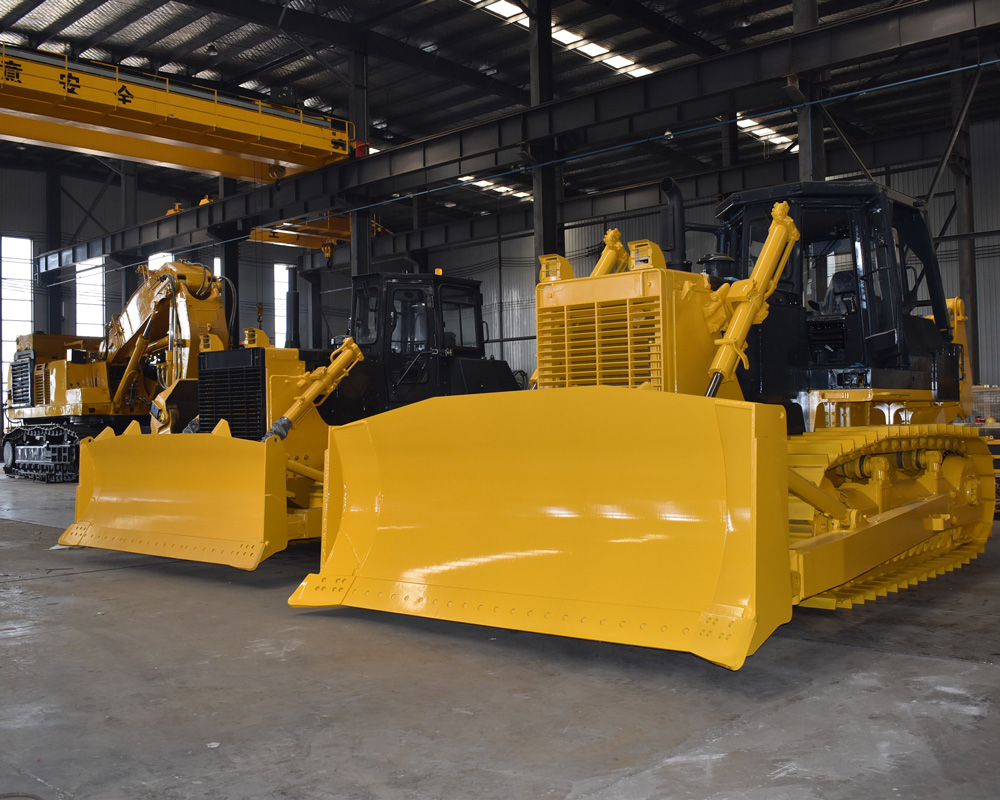
In heavy-load push operations, the undercarriage determines whether the equipment can remain continuously at the working face, while the blade determines how much can be pushed per cycle. The front-end configuration given in the SD46 information is a large-capacity semi-U bulldozer blade with a capacity of 16 m³, width of 4314 mm, height of 1841 mm, maximum cutting depth of 700 mm, and maximum tilt of 1000 mm; the rear is an adjustable-angle single-shank heavy-duty ripper. The box-type skeleton and wear-resistant material description of the semi-U blade point to impact-resistant cutting, while the ripper is used for hard ground or situations requiring prior breaking.
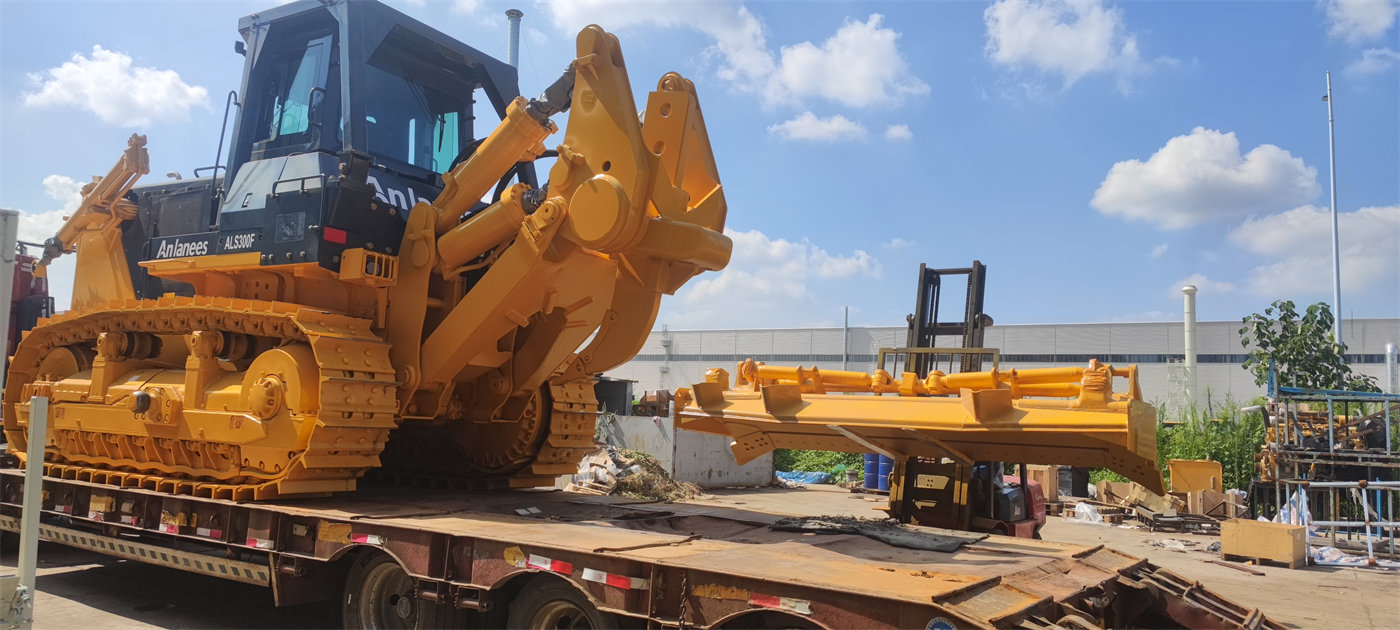
Together they affect how the work cycle is organized: whether to rip first and then push, or to directly penetrate and push, will change the type of load borne by the undercarriage. Before procurement, the material state and whether a ripper is needed should be considered together, rather than comparing blade capacity alone.
Examining several key trade-offs through comparison
| Check dimension | SD46 information statement | To be confirmed with supplier |
|---|---|---|
| Undercarriage structure | K-type floating undercarriage, integral articulated type | Adaptation experience with specific mine rock conditions |
| Ground pressure | 0.123 MPa | Working surface bearing capacity and weak interlayer conditions |
| Travel mechanism | Sealed lubricated track chain, integrated main link | Spare parts supply and replacement labor hours |
| Transmission and impact | Hydraulic power shift, built-in hydraulic cushioning | Temperature rise management under continuous full-load operation |
| Maintenance accessibility | External valve group, large opening engine hood | On-site maintenance space and tool conditions |
The "To be confirmed" column in the table covers matters not covered by the information but directly affecting the judgment of continuous operation. For example, the ground pressure of 0.123 MPa is a static reference value; actual sinking also depends on material moisture content and compaction state, and this value alone cannot be used to infer applicability to any mining area.
The role boundaries of power and transmission
The SD46 information specifies the engine as a Cummins KTA19-C525 turbocharged and intercooled diesel engine, rated power 340 kW/600 hp, rated speed 2000 r/min, displacement 18.9 L; the transmission is a hydraulic power shift gearbox with planetary final drive, and the system is said to adjust power output according to external load. A distinction is needed here: electronic monitoring and hydraulic shifting belong to the control and transmission domain and cannot be used to infer pure electric power. This model is fuel-powered, and the gallery classification should be fuel-powered crawler dozer.
The fuel consumption rate information does not provide complete values, so specific fuel consumption is not cited, nor are operating costs calculated. Actual fuel consumption under continuous operation is related to the load spectrum, operating habits, and altitude and temperature, and is a matter that should be required from the supplier with an explanation based on operating conditions during inquiry.
Conditions recommended to be submitted together before procurement
- Material type and rock proportion, hardness description, and whether a ripper is needed for pre-breaking.
- Per-shift push volume and push distance range, and whether multi-shift continuous operation exists.
- Working surface bearing conditions, slope, and the possibility of softening during the rainy season.
- Site access road and transport dimension restrictions, and the transport plan corresponding to the whole machine operating weight of 54000 kg.
- Confirmation of power form (fuel), blade and ripper configuration, spare parts supply, and inspection and repair conditions.
The more specific the above conditions are submitted, the better the supplier can judge whether the undercarriage configuration and blade form need adjustment, rather than merely quoting a standard configuration. Efficiency, fuel consumption, and payback period not covered by the information should not be accepted as verbal commitments at the inquiry stage; written condition explanations or on-site trial machine arrangements should be required for confirmation.