



















Dozing tasks in port bulk stockyards are not the same as dozing for earth excavation. Materials are mostly coal, mineral powder, or other loose bulk materials, and the work is concentrated on pushing material, stockpiling, and leveling pile surfaces. Equipment repeatedly travels short distances back and forth within a fixed area. The requirements for such working conditions often are not simply about comparing horsepower, but about whether the undercarriage can travel stably on the stockyard ground, whether the blade can carry enough material in one pass, and whether the overall dimensions can adapt to the passages between stockpiles.
The following breaks this down according to the operational goal: first, the actual constraints of stockyard dozing; then, what should be checked for the undercarriage and blade; finally, using the verified data for the SD32 Coal Version on this site, which features correspond to these needs and which conditions still require confirmation before purchase.
On-site Constraints of Stockyard Dozing
Bulk stockyard ground is usually compacted, but the materials themselves are loose and highly flowable. During dozing, material in front of the blade tends to spill to the sides. The dozing distance is generally not long, but the cycle of turning, reversing, and re-entering the pile is very frequent. The site may also have passage width restrictions, stockpile height requirements, and cross-operation with other loading and unloading equipment. These conditions mean that selection cannot rely only on rated power; the following items must also be checked:
- Material type and bulk density, which determine blade capacity and blade type;
- Ground bearing capacity and flatness, which affect the trade-off between track shoe width and ground pressure;
- Dozing distance and cycle pattern, which affect transmission matching and operational convenience;
- Passage and stockpile dimensions, which affect overall dimensions and minimum turning radius;
- Shift arrangements, which affect fuel tank capacity and continuous operation capability.
There is no universal answer to these conditions; they can only be implemented item by item according to the actual project. The following uses SD32 Coal Version data to explain how the configuration corresponds to the above constraints.
Undercarriage: Correspondence Between Wide Tracks and Ground Pressure
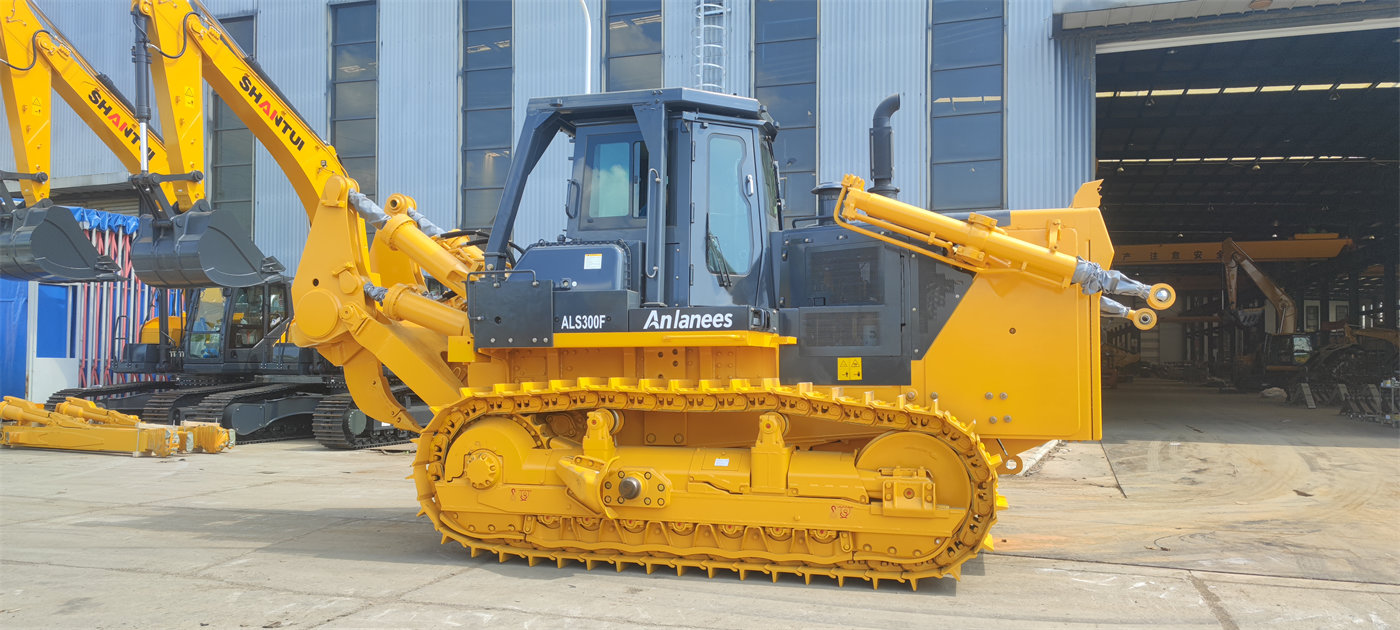
The ground conditions of bulk stockyards lie between hard surfaces and soft materials. If track shoes are too narrow, ground pressure is higher and the machine tends to sink on loose stockpiles; if track shoes are too wide, steering resistance and wear increase. The undercarriage data given for the SD32 Coal Version is: track shoe width options of 560/610/660/710 mm, track gauge 2140 mm, track ground contact length 3150 mm, 41 track shoes per side, track pitch 228.6 mm, 2 track rollers per side, and 7 carrier rollers per side. The Coal Version comes standard with 610 mm wide wear-resistant tracks.
The judgment logic corresponding to this data is: 610 mm is a middle width, balancing stockyard travel and steering; if the ground is softer or material piles are thicker, wider track shoe options can be checked; if passages are narrow and steering is frequent, the steering resistance caused by wide tracks must be evaluated. The data also gives a ground pressure of 98.4 kPa for the Coal Version, with an operating weight of 40,500 kg (with single-shank ripper and ROPS). Ground pressure is an important reference for assessing sinkage risk, but it is a value measured under a specific configuration. Actual performance also depends on material moisture content, compaction level, and operating method, so it should be checked against measured site conditions before purchase.
Blade: Matching Coal Blades with Stockpiling Operations
The core action of bulk material dozing is to push material away and stockpile it, so the blade needs large capacity and good material retention. The SD32 Coal Version data lists two types: semi-U coal blade and U coal blade, with blade widths of 4806 mm and 4520 mm respectively, both with a blade height of 1710 mm, blade lift height of 1560 mm, and digging depth of 560 mm.
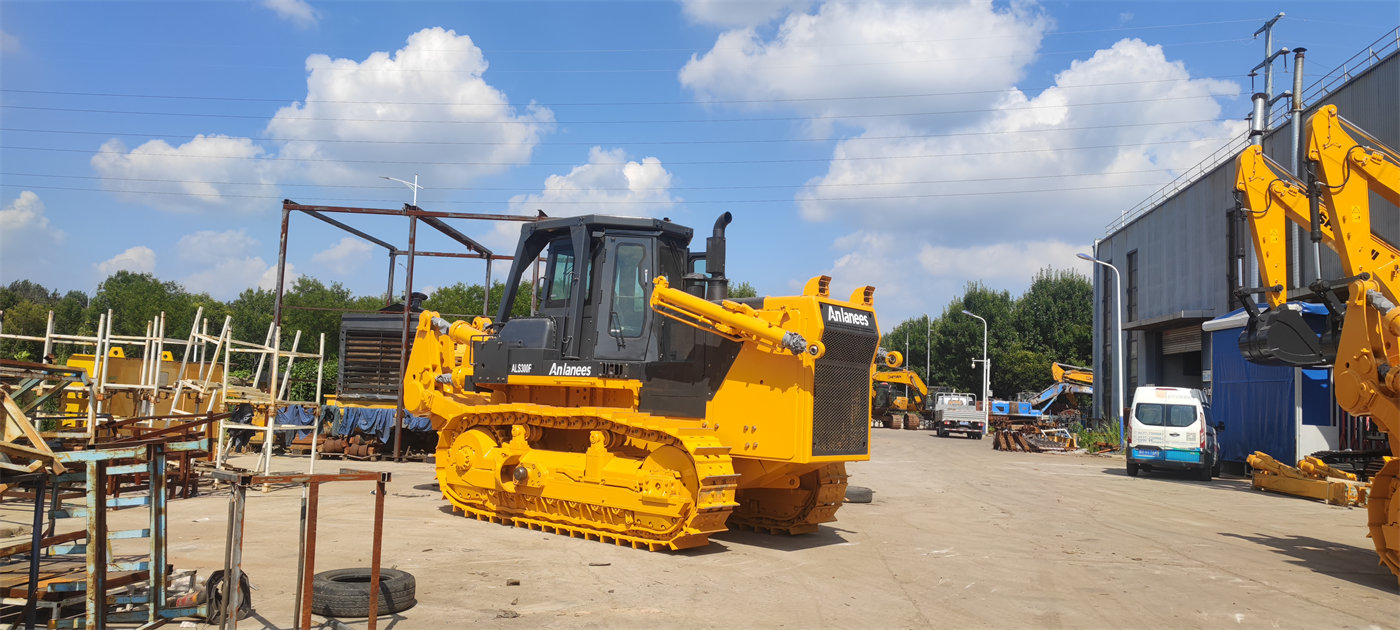
The side plate structure of the semi-U and U blades helps reduce lateral spillage of material during dozing, making them suitable for concentrated dozing of loose bulk materials. Blade width is related to overall machine dimensions; the Coal Version overall dimensions are 8650×4755×3760 mm, wider than the standard version, which comes from the difference in blade configuration. During selection, check whether stockyard passages and stockpile spacing can accommodate these dimensions, especially when working close to stockpile edges or passing other equipment.
| Check Item | SD32 Coal Version Data | To Be Confirmed On Site |
|---|---|---|
| Track shoe width | 560/610/660/710 mm optional, standard 610 mm | Ground bearing capacity, material thickness, steering frequency |
| Ground pressure | 98.4 kPa | Material moisture content and compaction state |
| Blade type | Semi-U/U coal blade | Material flowability, stockpiling requirements |
| Overall dimensions | 8650×4755×3760 mm | Passage width, stockpile spacing |
Power and Transmission: Checkpoints for Continuous Operation
Stockyard dozing is usually continuous by shift, and the stability and maintenance convenience of the power system affect availability. The SD32 Coal Version data gives the engine as QSNT-C345, rated power 257 kW/2000 rpm, fuel tank capacity 640 L, and hydraulic tank 97 L. Forward speeds in three gears are 0–3.6, 0–6.6, and 0–11.5 km/h; reverse speeds in three gears are 0–4.4, 0–7.8, and 0–13.5 km/h. Short-distance cyclic dozing mainly uses low gears; whether the speed range matches the stockyard operation rhythm needs to be evaluated based on dozing distance and cycle time.
The data also mentions that this model uses a six-sided enclosed cab, electronic hand-foot integrated throttle control, and an intelligent digital display control panel. These are operation and monitoring configurations and cannot be used to infer automation level or operating efficiency. The Coal Version data does not give a ripper traction structure; the configuration list indicates no traction structure. If there is a need to tow other equipment on site, this must be confirmed separately.
Application Boundaries and Items to Confirm Before Purchase
The SD32 Coal Version is a configuration intended for power plant, port, and bulk material stockyard operation scenarios. The data explicitly states its uses include bulk material stockpiling, pushing, and leveling. Whether it suits a specific stockyard still depends on the following conditions, which are recommended to be provided together during inquiry and planning:
- Material type, bulk density, moisture content, and particle size;
- Average daily dozing volume and shift arrangements;
- Stockyard ground structure, bearing capacity, and flatness;
- Dozing distance, stockpiling height requirements, and clear passage width;
- Site access transport method and on-site road width and weight limits;
- Blade type, track shoe width, and whether other work equipment is needed;
- Power form and on-site fuel supply conditions;
- Whether spare parts and after-sales support scope descriptions are required.
The above data can show that the Coal Version has targeted configurations for the undercarriage and blade, but it cannot be used to promise dozing efficiency, fuel consumption, or component life in any stockyard. These indicators are directly related to materials, operation, and site conditions, and corresponding explanations should be provided by the supplier after the working conditions are clarified.