




















Equipment specs for material pushing tasks are often pulled straight to the upper limit under a "bigger is safer" mindset. But what really determines the spec on site is often not a single total material volume, but push distance, material looseness, ground bearing conditions and whether shifts are continuous. A medium crawler dozer may be a more suitable starting point when these conditions are not extreme; conversely, certain conditions clearly push selection toward a larger spec. This article, centered on verified data for the 235HP medium class, sorts out when there is no need to configure to maximum spec and when a step up is required.
Start with the task itself: push distance and material state set the base spec
When a dozer pushes material, the pile in front of the blade loses volume as distance increases; the longer the push distance, the harder it is to maintain effective pushing volume per unit time. Therefore, the same machine performs differently in short-distance gathering and medium-to-long-distance pushing. Before selection, the typical push distance range should be clarified rather than looking only at total material volume.
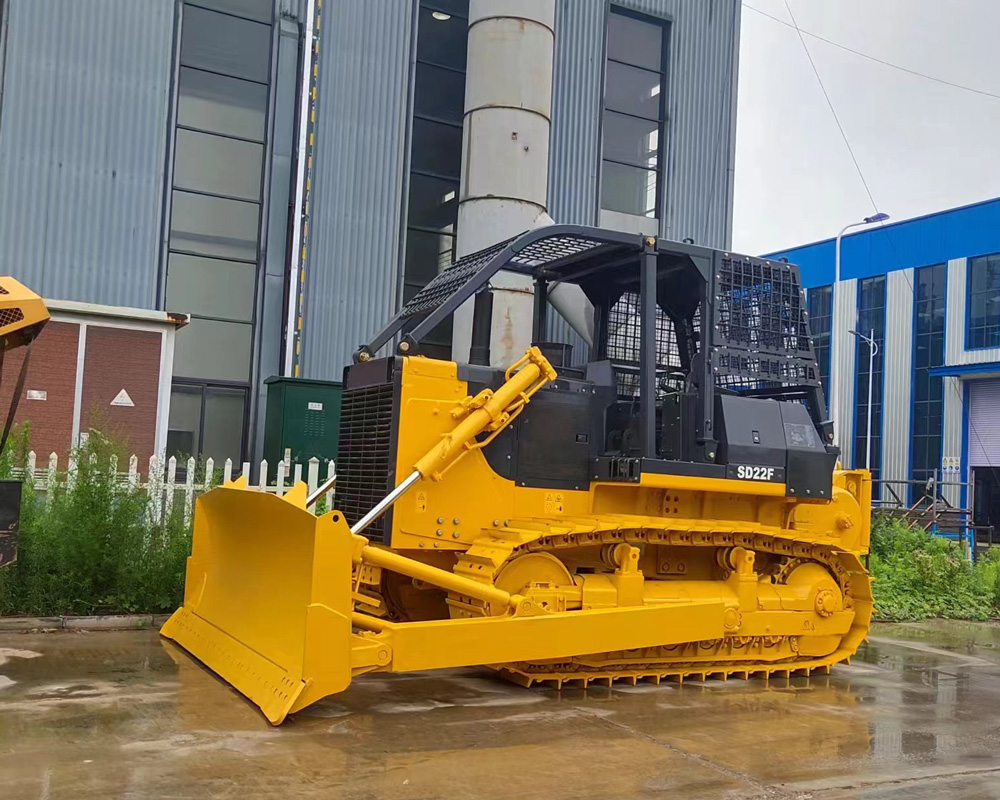
Material state is equally critical. Loose coal, sand and gravel, compacted hard soil and weathered rock place different demands on blade form and undercarriage strength. Data for the 235HP medium class lists several versions: the standard version targets general road engineering, auxiliary mining construction, earthwork excavation and ordinary bulk material handling; the coal version targets coal yard stockpiling, thermal power plants, port bulk stockyards and bulk material transfer; the rock version targets quarries, mountain road reconstruction and rock terrain excavation. These version differences show that material type first affects the work equipment and structural reinforcement direction, rather than being simply determined by tonnage.
Conditions under which a medium machine suffices
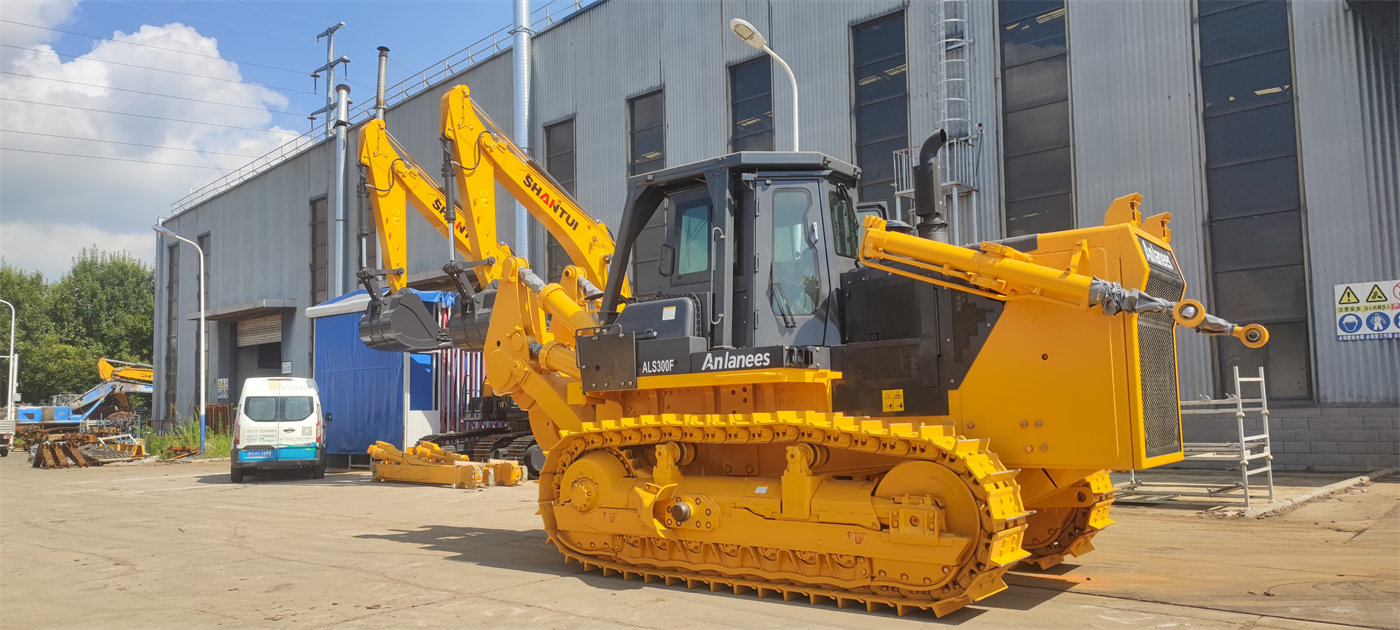
If the task is mainly short-distance pushing, rough grading and bulk material stockpiling, single-shift operating time is not continuously maxed out, and ground bearing conditions allow the tracks to sit normally, the power and undercarriage configuration of a medium machine usually leave room for discussion. Taking the 235HP standard version data as an example, rated power is 175kW (235HP), operating weight 23450kg, ground pressure 66kPa, ground contact length 2730mm and ground clearance 405mm. These figures correspond to a medium-weight crawler dozer with medium passability, suitable for general earthwork and bulk material pushing, not designed for extreme heavy loads or extra-long-distance pushing.
The coal version has an operating weight of 24000kg and ground pressure of 57.5kPa, with blade width 4200mm and height 1350mm; its ground pressure is lower than the standard version, consistent with the direction of bulk material stockyards being more sensitive to ground pressure. However, the data does not give actual pushing efficiency under different materials, so the ground pressure difference cannot be directly converted into a productivity difference.
Conditions that push selection toward a larger spec
- Push distance is consistently long and pile loss is obvious, requiring greater power and a heavier body to maintain pushing rhythm;
- Material is compacted hard soil, weathered rock or mixed stone, and the blade and undercarriage endure continuous impact, so ordinary work equipment may not suffice;
- Site slope is relatively steep, traction and braking conditions are more complex, and whole-machine capability must be rechecked;
- Shifts are continuous and shutdown windows are short, placing higher demands on the sustained load capacity of the undercarriage and drivetrain;
- Transport dimensions and access roads are restricted, which may instead rule out a larger spec and require rebalancing.
Whether the above conditions hold depends on specific site data. The data does not provide efficiency curves for this series under different push distances, slopes or material hardness, so "sufficient" or "insufficient" cannot be judged by horsepower alone; actual work cycles and site conditions should be provided to the supplier for verification.
Configuration check: blade, tracks and ground pressure
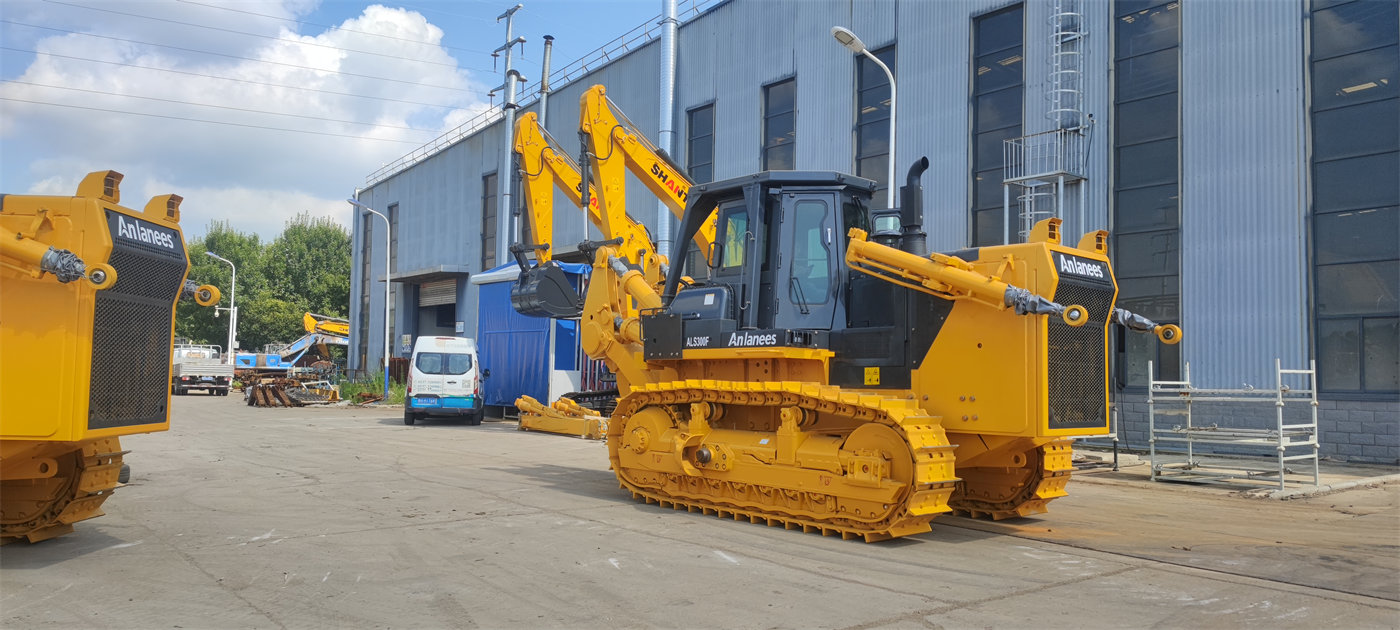
Within the same power class, configuration choices often affect applicability no less than the spec itself. The 235HP standard version offers straight blade, angle blade, U blade and semi-U blade, with blade widths of 3725mm, 4635mm, 3800mm and 3725mm respectively; track shoe widths of 560/610/660mm are optional. The coal version uses a 4200mm wide coal blade with 660mm track shoes. The rock version offers rock straight blade, rock angle blade, rock U blade and rock semi-U blade, with reinforced push arms and undercarriage structure.
| Version | Operating weight | Ground pressure | Typical material direction |
|---|---|---|---|
| Standard version | 23450kg | 66kPa | General earthwork, bulk material pushing |
| Coal version | 24000kg | 57.5kPa | Coal yards, bulk stockyards |
| Rock version | 23600kg | 66kPa | Quarries, rock terrain |
It should be noted that the values in the table correspond only to the configuration states listed in each version's data; after changing the blade or track shoe width, ground pressure and machine center of gravity will change and should be rechecked. The data does not give specific parameters for a wetland version; if the site is soft ground or a material stockyard with high moisture content, wetland adaptability must be confirmed separately and cannot be inferred from standard version data.
Site conditions to confirm before purchase
Before requesting a quote or confirming configuration, it is advisable to organize the following information clearly:
- Material type, loose state and bulk density, and whether hard layers or mixed stone exist;
- Typical push distance range and per-shift pushing volume, and whether rough grading is included;
- Site ground bearing conditions and whether a low ground pressure configuration is needed;
- Access road width, transport restrictions and relocation frequency;
- Shift arrangements, continuous operating duration and available maintenance windows;
- Blade form, track shoe width and whether accessories such as a ripper are needed.
These conditions determine "whether a medium machine suffices" rather than "whether a medium machine is better." The data supports that the 235HP class has corresponding versions for general earthwork and bulk material pushing; for extra-long-distance pushing, steep slopes or continuous heavy-load rock conditions, the data is insufficient to give an applicability conclusion and should be treated as an item to be confirmed, with the supplier judging whether a larger spec is needed based on site data.