













Projects with unstable earthmoving push volumes often face a dilemma: configure for peak demand and equipment capacity sits idle during low-load periods; configure for average demand and the peak may not be met. Rather than repeatedly weighing "how big to buy," it is better to first break the push task into several verifiable configuration conditions, then see whether the same mid-size dozer can cover these conditions through version and attachment combinations.
The following uses verified SD16 information as an example to explain this breakdown approach. All scenarios in this article are condition analyses and do not represent any customer's actual choice or construction result.
Break Down the Work Objective First, Not the Equipment Specification
Fluctuating push volumes essentially mean the task composition changes across periods. Tasks can be broken down into the following aspects:
- Push distance: short-distance stockpiling, medium-distance continuous pushing and long-distance pushing have different requirements for body length and speed configuration.
- Material type: ordinary earthwork, clay or frozen soil, coal and other bulk materials, and soft wet sites have different requirements for blade form and undercarriage ground pressure.
- Site bearing: hard, solid sites and swamps or soft wet ground differ greatly in requirements for track ground pressure.
- Auxiliary work: whether ripping or towing is needed determines whether a ripper or drawbar should be included.
- Shifts and relocation: continuous operation and frequent relocation have different effects on transport dimensions and configuration complexity.
Only after breaking down these conditions is it easy to judge which periods can be covered by the same machine and which conditions require separate configuration.
Configurations in SD16 Information Useful for Breakdown Judgments
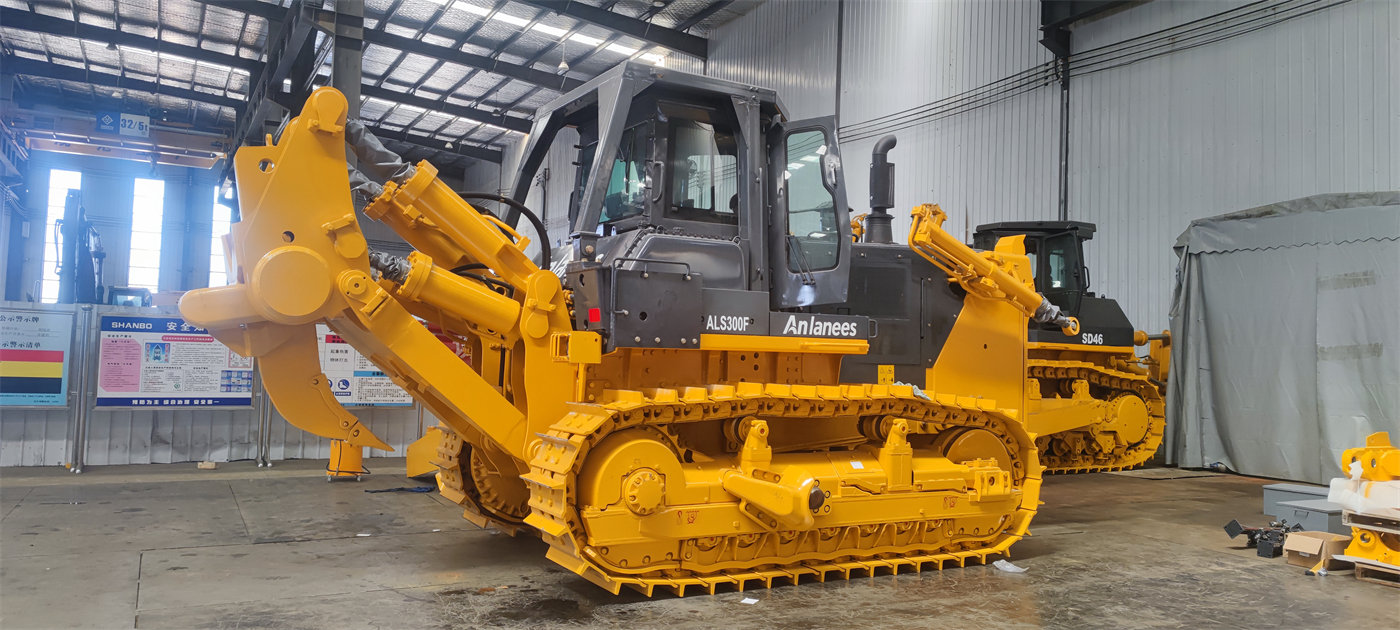
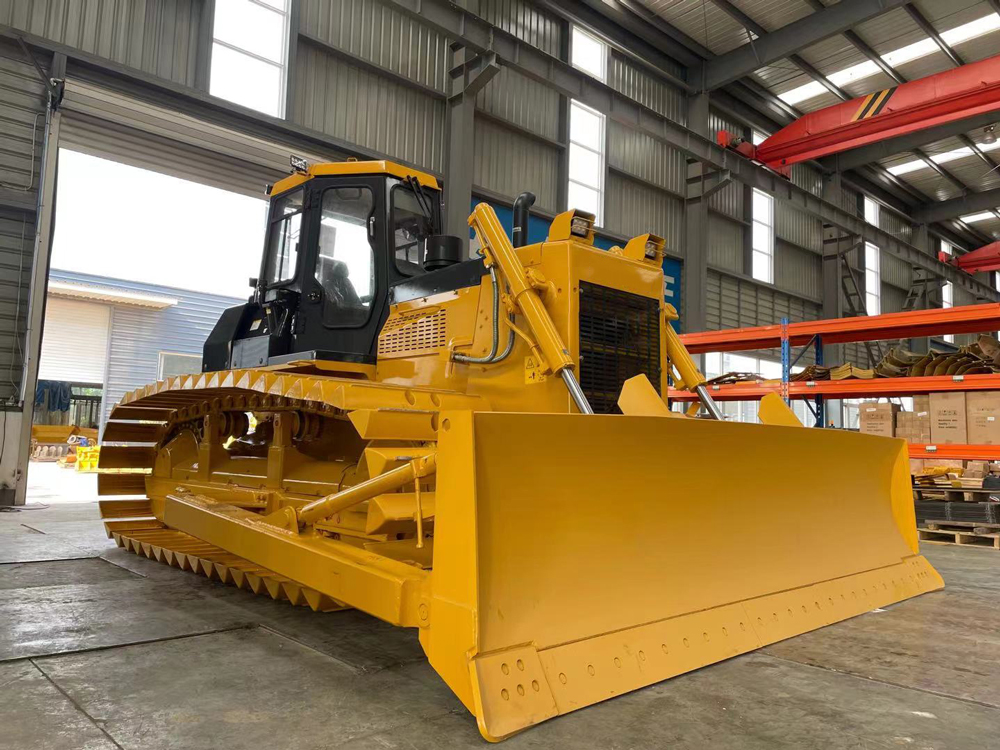
The SD16 is a 178 hp crawler dozer with a rated power of 131 kW, powered by a WP10 electronically controlled engine and meeting the national non-road machinery China IV emission standard. Information shows it is available in multiple versions including standard, coal, extended, super-wetland, sanitation, desert and forestry logging. Different version names do not mean the same machine has all configurations; each item must be verified by version at purchase.
| Version | Main differences in the information | Corresponding working conditions |
|---|---|---|
| Standard | Operating weight 17000 kg, ground pressure 58 kPa, track shoe width 510 mm, straight blade standard, angle blade and U-blade optional | Conventional earthmoving pushing and backfilling for highways, railways, mines and airports |
| Extended | Operating weight 17100 kg, body length 5241 mm, speed range close to the standard version; information states it is suitable for medium-distance continuous dozing and leveling | Medium-distance continuous pushing on general engineering sites |
| Coal | Operating weight 17500 kg, ground pressure 55 kPa, coal blade, blade width 4150 mm | Bulk material pushing at power plants, ports and similar sites |
| Super-wetland | Operating weight 16900 kg, ground pressure 22 kPa, track shoe width 960 mm, straight blade | Soft foundation conditions such as swamps, soft wetlands and river improvement |
This table only illustrates the correspondence between version differences and working conditions and cannot be used to infer that a version is suitable for all similar sites. For example, the super-wetland version has lower ground pressure, but whether it can actually enter a given soft-foundation area still needs confirmation based on site bearing capacity, moisture state and specific working methods.
Breakdown Approach Under Fluctuating Conditions
Break Down by Push Distance
If fluctuations mainly come from changes in push distance, short-distance and medium-distance tasks can share the standard or extended version, but the extended version information explicitly mentions suitability for medium-distance continuous dozing and leveling. Which version to choose should be verified against the proportion of push distances in each period, not decided solely by the single longest distance.
Break Down by Material
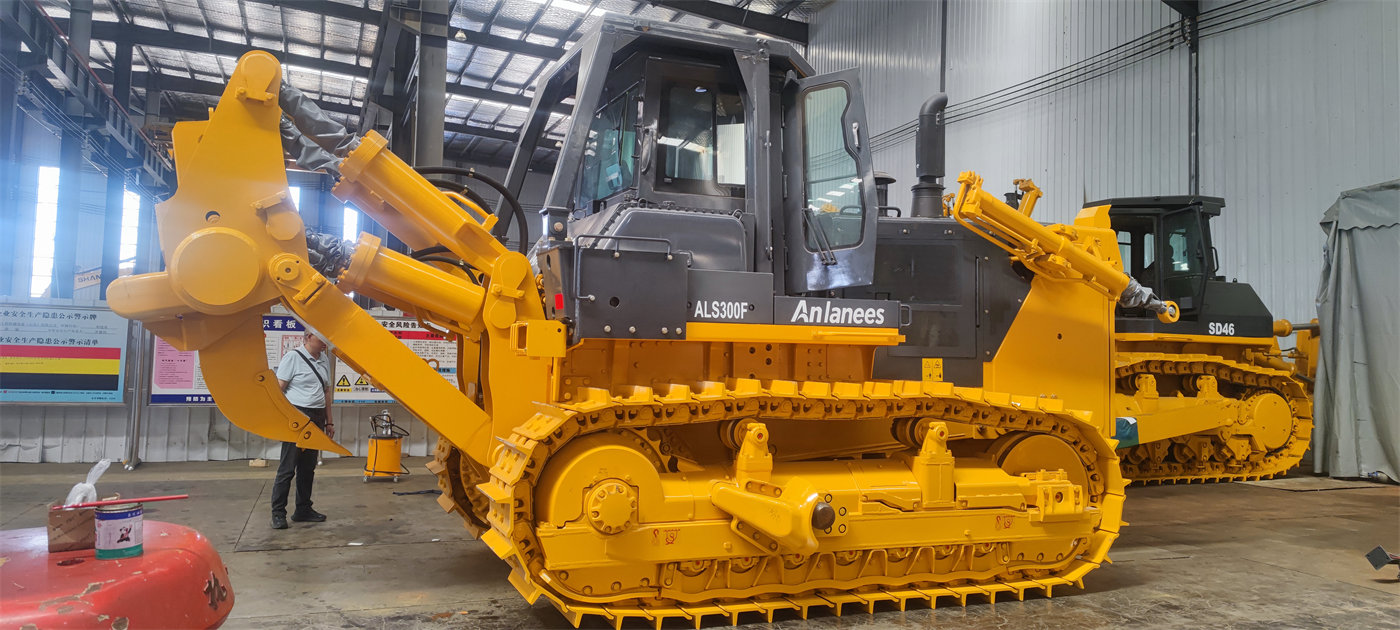
Ordinary earthwork and bulk materials such as coal have different requirements for blade form. In the information, the coal version has a coal blade, while the standard version offers straight, angle and U-blades. If material types will switch during the project cycle, it is necessary to confirm whether the blade can be changed by version and whether the machine configuration after the change remains within the original version's scope.
Break Down by Site Bearing
The difference between soft wet sites and hard solid sites is first reflected in ground pressure. The SD16 standard version has a ground pressure of 58 kPa, and the super-wetland version 22 kPa. This difference shows that the two versions target different site conditions, but it cannot be inferred in reverse that 58 kPa suits all ordinary sites or that 22 kPa suits all wetlands. Whether a site can bear the machine still needs verification against actual ground conditions.
Break Down by Attachments
Information shows the SD16 can be equipped with a three-shank ripper, drawbar and other attachments. If fluctuations come from whether clay or frozen soil needs breaking or whether towing work is required, attachments can be treated as one configuration breakdown item rather than directly changing the machine specification. Attachments are supporting conditions of the overall machine solution, and their applicability must be confirmed according to specific materials and work requirements.
Conditions Still to Be Confirmed Before Purchase
- The distribution of push distances in each period and the proportion of medium-distance continuous pushing.
- Whether material types will switch during the project cycle and how often.
- Site bearing conditions, especially the actual state of soft-foundation sections.
- Whether auxiliary work such as ripping or towing is needed and how attachments are matched.
- Relocation frequency and transport conditions, and whether body dimensions and operating weight meet transport arrangements.
- How emission requirements match local regulations.
These conditions cannot be derived directly from product information and must be verified item by item according to actual project conditions. Data not provided in the information, such as fuel consumption, construction efficiency and unit cost, should not be used as a basis for selection.
Information to Provide When Requesting a Quote
When communicating with suppliers, prepare material type, workload in each period, push distance, site bearing conditions, transport method, shift arrangements, power and emission requirements, and blade and attachment configuration needs. This information helps determine the suitable version direction, but the final configuration still needs confirmation based on site conditions.