




















When replacing a diesel dozer with an electric one, the real question is not whether an electric version exists, but whether this machine can complete the planned volume within the given shift and recharge smoothly between work periods. Full-shift dozing means continuous load, a fixed rhythm, and the constraint of no long mid-shift downtime. Therefore, the replacement decision must be checked simultaneously along four lines: power output, hydraulic system, energy replenishment, and site conditions. The following uses a verified 272 hp battery-electric mid-size dozer as an example to explain how to make such a judgment and which items remain unresolved in the available data.
First, clarify: what hard conditions does full-shift dozing impose on equipment?
The core actions of dozing are blade penetration, full-load pushing, and return travel. The load varies with material density, push distance, and ground conditions. To complete a full shift of dozing, the equipment must at least meet the following conditions:
- The main drive must continuously output sufficient traction, with no obvious power drop during heavy-load sections;
- The hydraulic system must stably drive blade lift, tilt, and other actions, with response matching the main drive;
- Energy reserves and recharging rhythm must cover one shift of continuous operation, with feasible recharging arrangements between shifts or during shift changes;
- The site must have power supply conditions, safety protection, and management requirements compatible with electric equipment;
- Environmental factors such as high temperature, low temperature, and dust must not cause thermal management or electronic control systems to derate or shut down.
Whether these conditions are met depends on the specific job site, not on the equipment category itself. The product data below can only answer part of this.
Verified configuration of this battery-electric mid-size dozer
This model is a battery-electric mid-size dozer. The main parameters provided in the data are as follows (all based on this site's data):
| Item | Verified data |
|---|---|
| Power type | Battery-electric, permanent magnet synchronous motor drive |
| Main motor power | 200 kW (272 HP), stable torque 200 Nm |
| Battery | Lithium iron phosphate battery pack, 614.2 V, 690 Ah, 423.94 kWh |
| Recharging interface | 2×300 kW battery interfaces, 2×250 A DC fast charging, 2×400 kW DC discharge |
| Hydraulic system | 50 kW (68 HP) permanent magnet synchronous hydraulic motor independent drive, torque 280 Nm; triple gear pump, standard working pressure 30 MPa |
| Control and thermal management | VCU controller; 8 kW compressor cooling system, 2.5 kW fresh air cooling, 10 kW electronically controlled air conditioning; liquid-cooled radiator 45 kW |
| Safety monitoring | Insulation monitor, high-voltage shielded cables, 128 GB dashcam, 4G remote monitoring, 7-inch interactive screen, 2-channel starlight night-vision cameras |
The data also states that this model is mainly aimed at urban municipal construction, environmental protection projects, green mines, and low-noise demolition scenarios, and that its power and hydraulic sections adopt modular design. The above is the factual boundary for selection discussion. The data does not provide range, single-shift operating duration, charging time, energy consumption values, or efficiency comparison with conventional diesel machines, so it cannot be directly concluded that "full-shift operation can be completed."
Power and hydraulics: can it push, and do actions keep up?
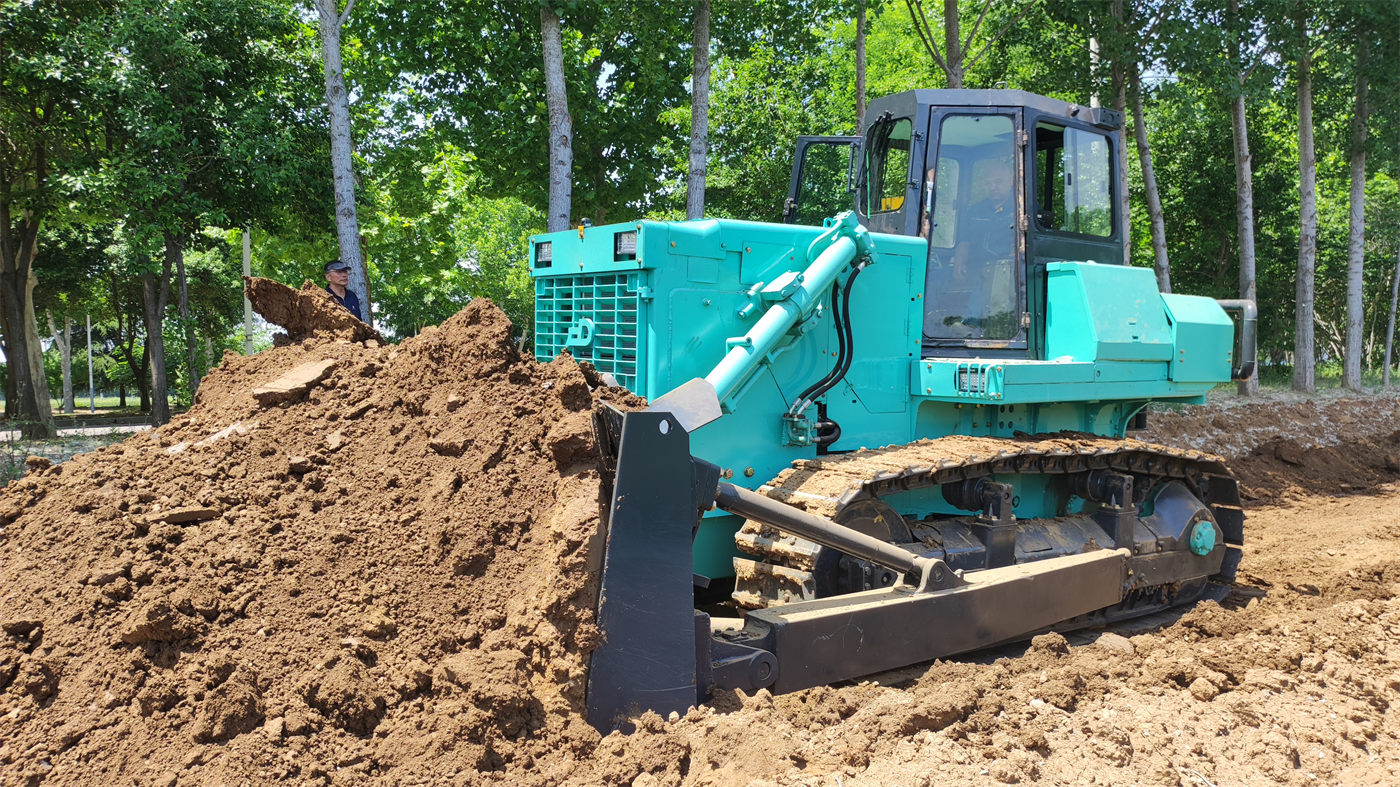
Full-shift dozing first depends on whether the main drive can maintain output during heavy-load sections. This model's main motor is 200 kW, 272 HP. The data states that the travel motor controller supports 210 kW power and 800 AAC current, and that stable power output can be ensured under heavy-load conditions. This is the basis for judging "can it push," but it does not mean it can achieve the same working rhythm as a diesel machine under any material and push distance—pushing resistance depends on material density, blade penetration depth, and ground adhesion, and the data does not provide corresponding tests for these conditions.
On the hydraulic side, the data states: the hydraulic system is independently driven by a 50 kW permanent magnet synchronous hydraulic motor with 280 Nm torque, equipped with a triple gear pump, standard working pressure 30 MPa, used for dozing, lifting, and ripping operations. This shows that blade actions have an independent power source and do not rely on diversion from the main drive. The practical significance for full-shift operation is that when pushing and blade adjustment alternate, the stability of hydraulic actions is easier to evaluate separately. However, whether hydraulic response matches the overall machine rhythm still needs to be confirmed with specific materials and operating habits; the data does not provide cycle times or measured data.
Recharging: the most easily underestimated part of full-shift replacement
Whether a diesel machine can be replaced often comes down to energy replenishment. Diesel machines continue working by refueling, while electric equipment needs charging or battery swapping between shifts or during work gaps. The recharging conditions given in this model's data are: battery pack 423.94 kWh, supporting 2×250 A DC fast charging, battery interfaces 2×300 kW, discharge capability 2×400 kW.
These figures indicate interface and power levels, but cannot be directly converted into how long charging takes per shift or how many cubic meters can be pushed. The reason is that the data does not provide energy consumption per unit of work, actual usable depth of discharge, or charging curves. Before purchase, the following questions should be listed as items to confirm with the supplier or the site's electrical manager:
- Can the site's distribution capacity support DC fast charging power, and is capacity expansion or off-peak charging needed?
- How does actual continuous operating time per shift correspond to planned volume, and is mid-shift recharging arranged during shift changes?
- Does the distance between the charging location and the dozing face affect shift-change waiting time?
- How do battery heating and cooling under low or high temperature affect available power?
- Is a backup battery or a second machine for rotation configured to reduce the constraint of recharging on progress?
These questions have no universal answers, and one should not infer "sufficient" or "insufficient" merely from battery capacity figures.
Environment and thermal management: stability conditions under continuous operation
Full-shift dozing is a continuously heat-generating condition. The thermal management configuration listed in this model's data includes an 8 kW compressor cooling system, 2.5 kW fresh air cooling, 10 kW electronically controlled air conditioning, a 45 kW plate-fin radiator, and a 400 W PWM water pump. The data states that this can keep the battery and motor working at suitable temperatures and that the machine can operate stably in extremely high and low temperature areas. This is configuration information directly related to continuous operation, but the specific temperature range, derating strategy, and duration of "stable operation" are not given numerically in the data and still need to be confirmed in the procurement technical agreement.
In addition, the data mentions that high-voltage safety protection includes an insulation monitor, 2500 Vac withstand voltage, 10 ms fast leakage detection, and high-voltage shielded cables. For electric equipment entering a job site, these configurations are part of on-site electrical safety management and cannot replace the site's own electrical safety system.
Which scenarios are more worth prioritizing for electric solutions
According to the application description in the data, this model is suitable for urban municipal construction, environmental protection projects, green mine operations, and indoor demolition projects with strict low-noise requirements. It also mentions suitability for rental business and green low-carbon construction projects. Translating these descriptions into selection judgments, this can be understood as:
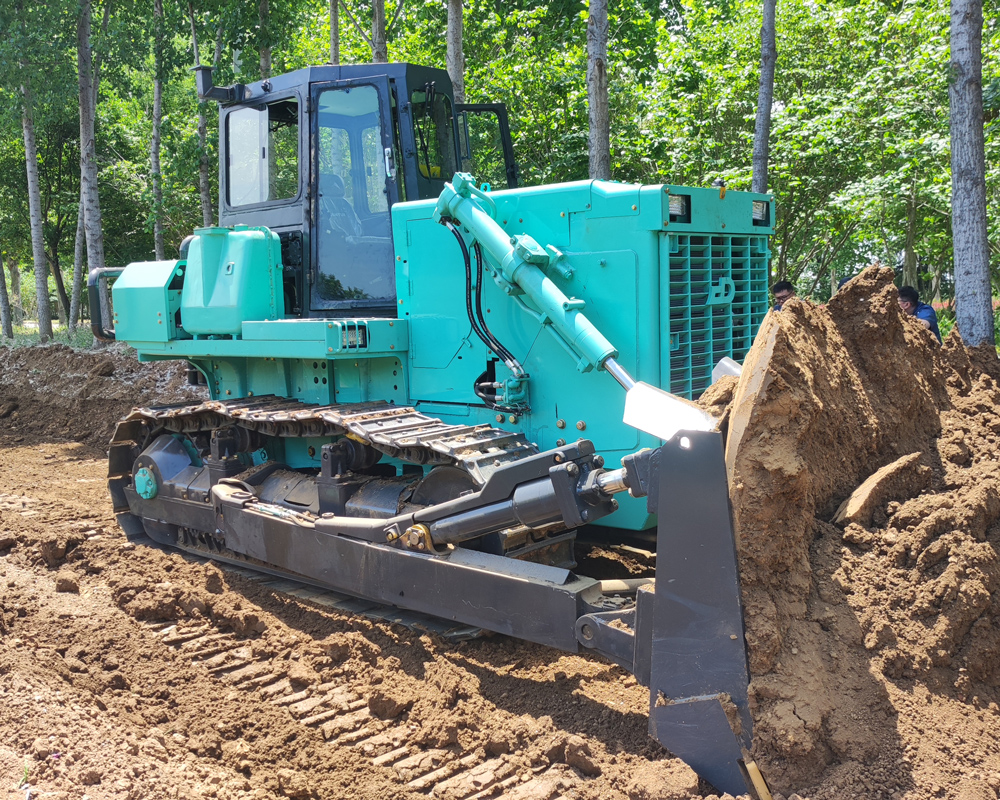
- Sites with relatively fixed work faces and power supply conditions or planned charging points make recharging arrangements easier to implement;
- In urban or indoor scenarios with clear constraints on exhaust emissions and noise, the advantages of electric solutions are more direct;
- Projects with clear shift systems that can incorporate recharging into shift-change procedures are easier to match than continuous rush-style operations.
Conversely, if the site has no power, frequent relocations, long continuous single-shift operation with no charging window, or materials and push distances beyond what the data can judge, it is not advisable to directly replace a diesel machine based solely on "battery-electric." The recharging plan and work organization must be evaluated together.
Conditions to confirm together before purchase
If this battery-electric mid-size dozer is to be included in a full-shift dozing replacement plan, it is recommended to prepare inquiry materials in the following items and check them one by one with the supplier:
- Material type, loose or compacted degree, planned push distance, and shift volume;
- Site power supply capacity, available charging interface locations, and whether construction of charging facilities is permitted;
- Shift arrangements, shift-change times, and whether mid-shift recharging or equipment rotation conditions exist;
- Blade configuration and whether attachments such as rippers are needed, as well as matching of corresponding hydraulic system working pressure;
- Operating environment temperature range, dust and water exposure conditions, and confirmation of whether thermal management and protection ratings cover them;
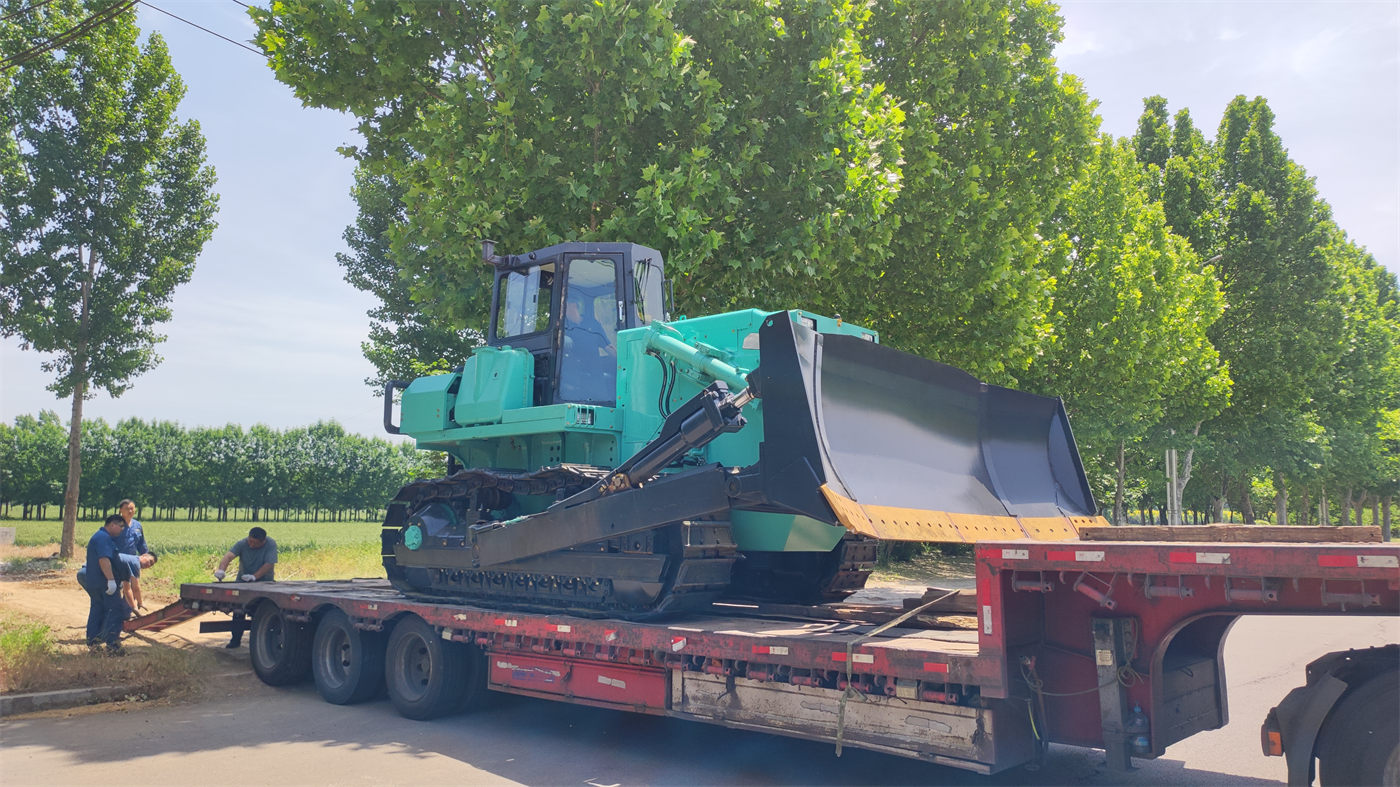
- Transport and relocation methods; overall transport dimensions and weight are subject to actual delivery data;
- Maintenance arrangements: specific maintenance items for modular power and hydraulic sections, spare parts supply, and high-voltage system service requirements must refer to the accompanying manual; maintenance intervals or disassembly procedures are not given in this article.
Whether full-shift dozing can be handled by an electric dozer instead of a diesel machine ultimately depends on whether the above conditions can be met simultaneously, not on the level of a single parameter. The verified data can show what configurations this 272 hp battery-electric mid-size dozer has in power, hydraulics, recharging, and thermal management, but range, charging time, unit energy consumption, and actual working efficiency still need to be confirmed based on site conditions and the supplier's technical confirmation. Without these confirmations, it can only be considered a conditionally viable option, not a default replacement conclusion.