















The difficulty in pre-delivery confirmation for a bulldozer is not whether the horsepower is sufficient, but whether the version is correct. For machines in the same power range, changing the blade, changing the track shoe width, or adding or omitting protective structures results in two different working capabilities on site. Discovering only after the equipment arrives at the job site that the blade type does not match the material, or that the track shoe width is incompatible with the ground bearing conditions, often costs more in adjustments than the extra time spent during the selection phase.
The checklist below is organized by work condition version, dividing the items to be confirmed before delivery into four groups: earthmoving and pushing, bulk material stockpiling, rock and hard soil, and soft ground and wetlands. Each group first explains the equipment requirements for that type of operation, then corresponds to the versions and parameters in the publicly available SD22 series information, and finally lists the matters that still need to be confirmed with the supplier. Parameters are used only as a basis for judgment, not as recommendations.
Group 1: Earthmoving and Site Leveling
The core of this type of operation is to push the earth to the designated location according to the haul distance and then create a roughly level surface. The push distance, soil compaction, and shift schedule determine the balance between blade capacity and overall machine weight. A machine that is too heavy with an oversized blade may not be cost-effective on soft ground; a machine that is too light will struggle to penetrate hard soil.
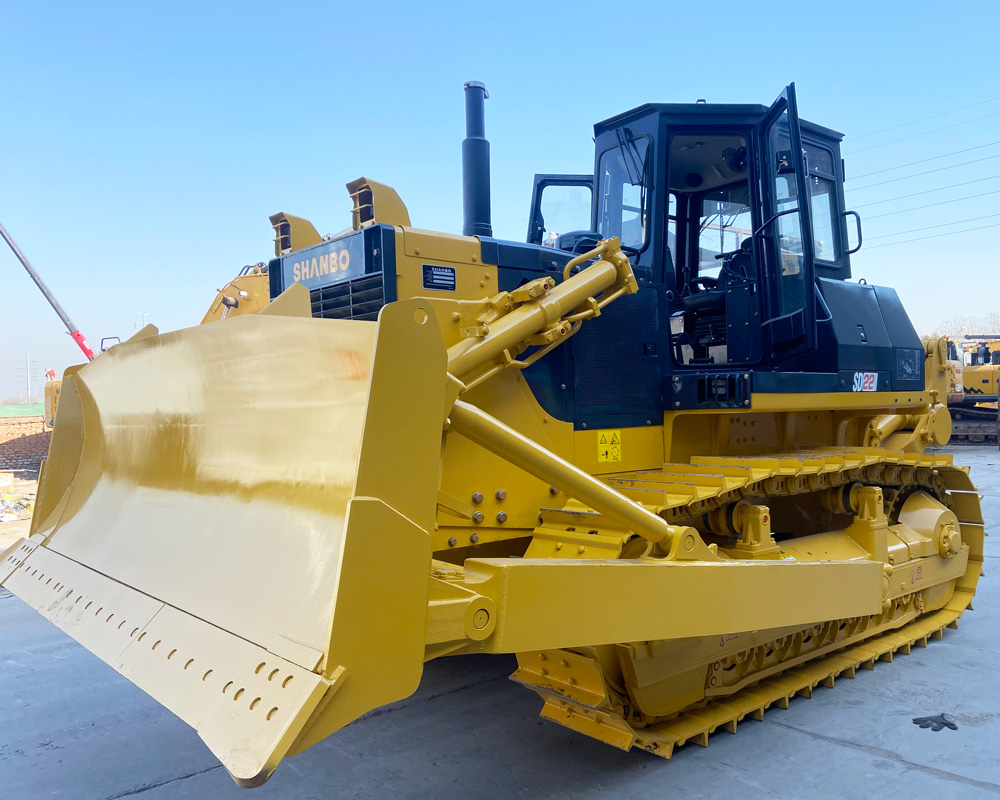
The SD22 standard version data gives an operating weight of 23450 kg, rated engine power of 175 kW (235HP), ground pressure of 66 kPa, standard straight blade with a width of 3725 mm and height of 1315 mm, and optional angle blade, U-blade, and semi-U blade. For general road construction and earthwork excavation, these data can be used to judge whether the single-pass push volume roughly matches the ground bearing capacity.
Items to confirm before delivery:
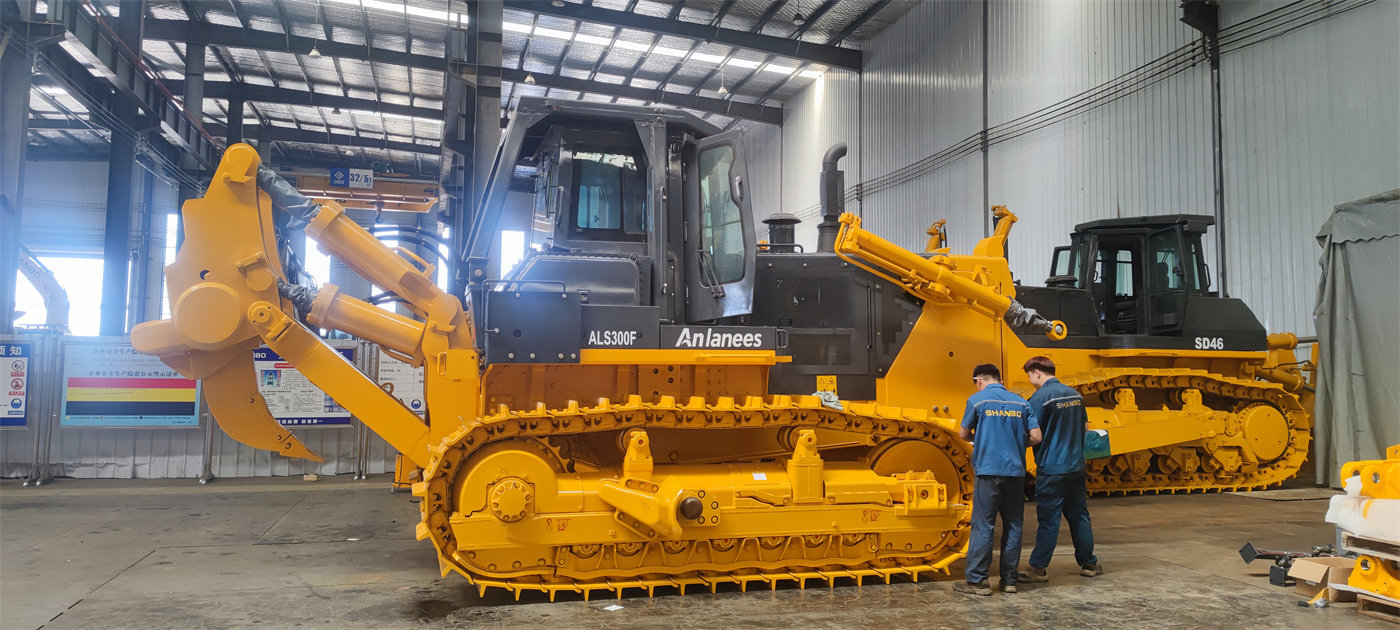
- Whether the push distance corresponds to the blade type—straight blades are suitable for conventional pushing, U-blades are more for aggregate pushing, and angle blades are used for slope trimming. The selected type must be clearly stated in the contract configuration.
- Track shoe widths are available in 560, 610, and 660 mm. The softer the ground, the more a wider track shoe is usually needed to reduce ground pressure, but ground pressure is also affected by overall machine weight and cannot be judged by track shoe width alone.
- Whether the cab is equipped with FOPS/ROPS protective structures depends on whether there is a risk of falling objects on site.
- Whether a ripper is included. The data lists single-tooth and three-tooth types, with single-tooth ripping depth of 695 mm and three-tooth of 666 mm. Before working in hard soil or weathered layers, confirm whether it is equipped.
Group 2: Bulk Material Stockpiling and Transfer
In scenarios such as coal yards and port bulk cargo stockyards, the material is loose, the single-pass volume is large, and continuous operation time is long. The blade must be able to carry more material at once, while the overall ground pressure must not be too high; otherwise, the machine may sink on the stockpile surface.
The SD22C coal version has an operating weight of 24000 kg, ground pressure of 57.5 kPa, equipped with a coal blade with a width of 4200 mm and height of 1350 mm, and the same 175 kW (235HP) engine. Compared with the standard version, the coal version has a wider blade and lower ground pressure, which is a configuration adjustment for bulk material pushing.
Items to confirm before delivery:
- Whether the bearing conditions of the stockpile surface allow an operating weight of 24000 kg; if necessary, lay hardened access roads or adjust the operation route.
- Whether the 4200 mm coal blade width leaves sufficient margin for the transfer passage width.
- Fuel supply arrangements for continuous shifts; the fuel tank capacity is 450 L, and actual consumption must be verified according to site conditions.
- Whether bulk material transfer also involves coordination with other equipment; the coordination method must be confirmed separately in the operation organization.
Group 3: Rock and Hard Soil Sites
In quarries, mountain road reconstruction, and rock terrain excavation, impact loads are high, and the wear on blades and push arms is far greater than in ordinary earthmoving. Under such conditions, the strength of the work equipment and the undercarriage structure are more worth examining first than mere horsepower figures.
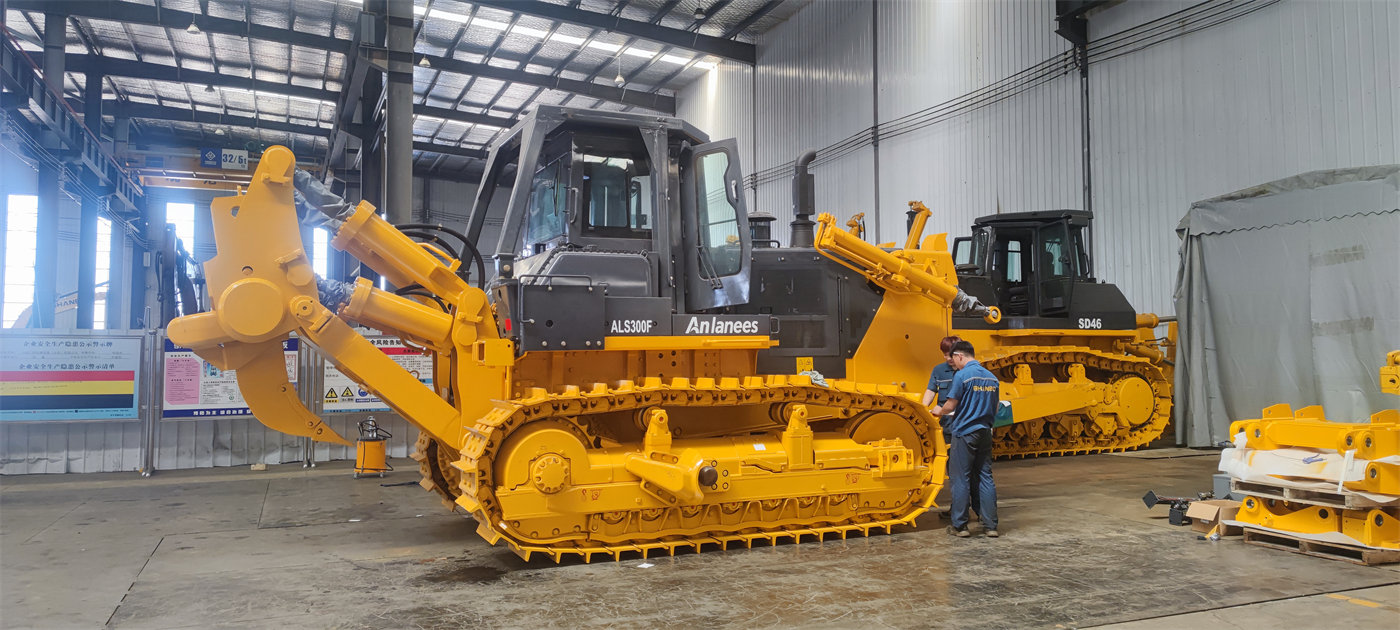
The SD22W rock version has an operating weight of 23600 kg, ground pressure of 66 kPa, and is equipped with rock straight blade, rock angle blade, rock U-blade, and rock semi-U blade. The blade width and height correspond to the standard version specifications. The engine is QSNT-C235, with the same rated power of 175 kW (235HP). The data states that it uses reinforced push arms and wear-resistant rock blades.
Items to confirm before delivery:
- Whether the specific rock blade type corresponds to the on-site particle size and hardness; the applicable differences of different blade types need to be verified with the supplier.
- Expected wear of the undercarriage and travel system on gravel roads; spare parts reserves must be planned in advance.
- Whether a ripper is also needed for hard soil or weathered rock layers; the data has given upper limit values for the ripping depth of single-tooth and three-tooth types, and actual results are affected by rock properties.
- Whether the night operation lighting and cab protection configuration are consistent with on-site safety requirements.
Group 4: Soft Ground and Wetland Operations
The key constraint on soft and wet sites is ground pressure. Once the machine sinks, pushing efficiency is out of the question. This is why soft ground operations cannot simply follow the standard version configuration approach.
The SD22 series data lists a wetland version, but does not provide specific overall machine parameters for the wetland version. What can be confirmed is that both the standard version and the coal version affect ground pressure through track shoe width options and overall machine weight: the standard version is 66 kPa, and the coal version is 57.5 kPa. For wetland areas, it is necessary to verify with the foundation bearing capacity whether wider track shoes or other undercarriage configurations are still needed.
Items to confirm before delivery:
- The specific operating weight, ground pressure, and track shoe specifications of the wetland version must be based on the version-specific data provided by the supplier and cannot be replaced by standard version values.
- Whether the working surface needs drainage or hardening treatment first; this is site preparation and is outside the scope of equipment parameters.
- Whether the difference in foundation conditions between the rainy and dry seasons will affect the passability of the same machine.
Consolidating the Confirmation Items into a Table
The key differences among the four versions are concentrated in three areas: blade, ground pressure, and overall machine weight. Before delivery, the table below can be used to check off items against site conditions.
| Confirmation Item | Information to Verify | Basis for Judgment |
|---|---|---|
| Operation type | Earthmoving, bulk material, rock, soft ground | Determines blade type and version direction |
| Ground pressure | Standard version 66 kPa, coal version 57.5 kPa | Compare with ground bearing capacity |
| Track shoe width | 560 / 610 / 660 mm optional | Judge in conjunction with overall machine weight, not as a standalone conclusion |
| Blade specifications | Straight blade, angle blade, U-blade, coal blade, rock blade | Corresponds to material form and pushing method |
| Protection and attachments | FOPS/ROPS, ripper, winch options | Confirm according to site risks and hard soil conditions |
Matters Still Requiring Confirmation from the Supplier
The above content is based on publicly available product information for the SD22 series. Some information is insufficient to draw direct conclusions and should be confirmed separately before delivery:
- Complete parameters of the wetland version, including operating weight, ground pressure, and undercarriage configuration.
- The forest version data mentions optional wide tracks and mechanical winch; specific specifications and adaptation conditions need to be verified.
- Actual operational performance of each version under different soil and material conditions; the data does not provide measured data and cannot be inferred on behalf of the supplier.
- Whether emission and registration requirements are consistent with local regulations at the project location. The data indicates China Stage III off-road emission standards, and specific compliance must be verified according to local requirements.
- Spare parts supply cycle and list of common wear parts, especially rock version work equipment and undercarriage parts.
By checking the checklist separately by version, pre-delivery communication has specific items for comparison, rather than remaining stuck on the single question of whether the horsepower is sufficient.