

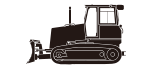
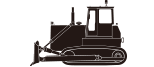
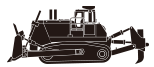









In small and medium earthmoving projects, a small dozer rarely performs a single task: one section of a haul road may require pushing loose soil into a low area, while the adjacent pad needs a roughly leveled surface. Whether one machine can handle both depends on whether its traction capability, blade size and lift method, travel speed, and undercarriage ground contact conditions match the requirements of these two tasks. Here, based on verified SHANBO SD10 specifications, we separate 'earthmoving' and 'site grading' to explain the basis and limitations of the machine in each role.
The two tasks impose different equipment requirements
'Earthmoving' focuses on how far loose or loosened material can be moved per unit time: it requires sufficient traction, reasonable blade capacity, and stability of the blade's cutting angle during pushing. Machine travel speed and shift smoothness also affect cycle time.
'Site grading' focuses more on fine control of cutting depth and material discharge: maximum lift height, digging depth, blade width, and overall machine dimensions determine controllability when trimming edges, overlapping passes, and transitioning between levels. Ground pressure affects whether deep ruts are created on soft ground, requiring repeated filling.
Putting these two tasks on the same small machine essentially asks: is its traction and blade configuration sufficient for pushing, and are its dimensions and control conditions suitable for grading? SD10 data provide some figures for judging both aspects, but cannot directly conclude that the machine will necessarily handle a given type of working condition.
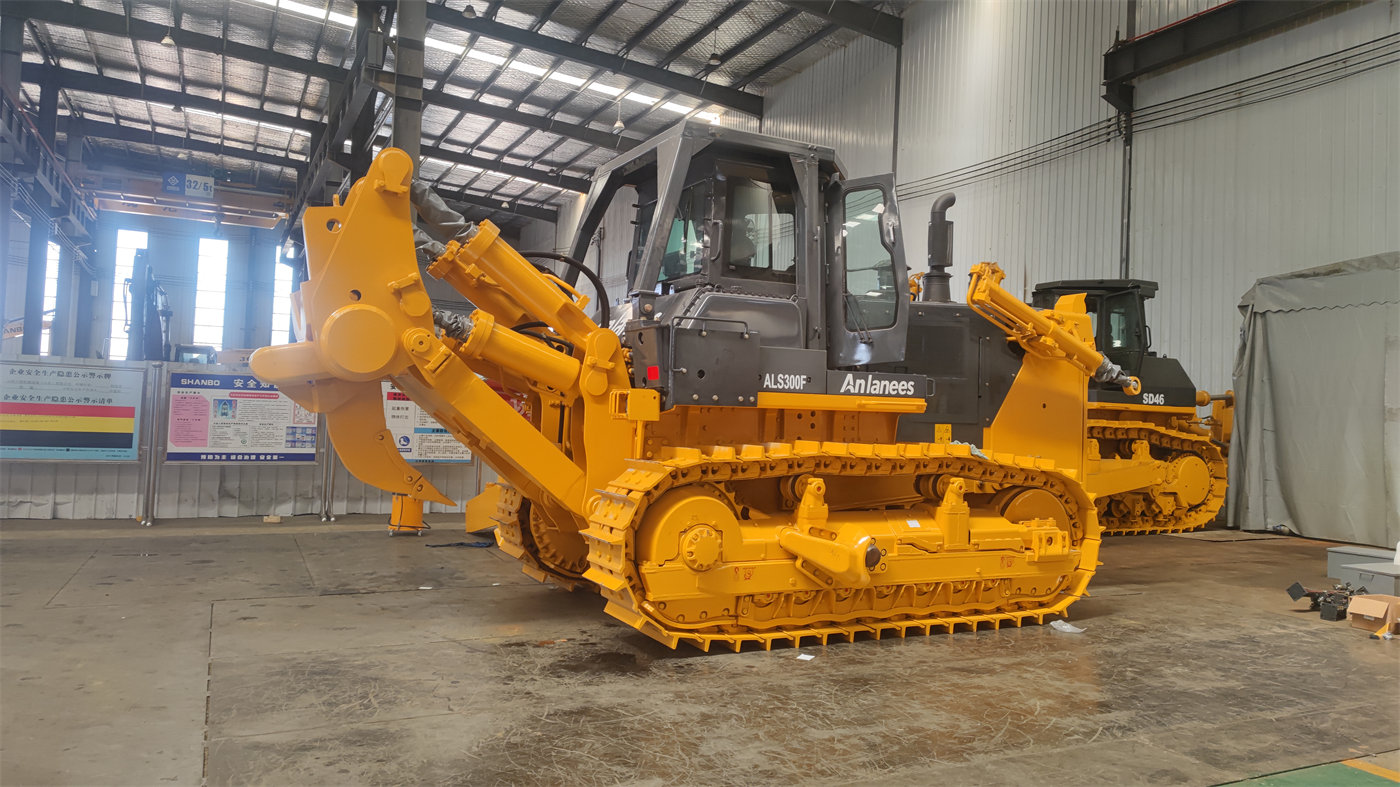
SD10 specifications relevant to the two tasks
The SD10 has an operating weight of 10000 kg and a maximum traction force of 95 kN. The engine is a Cummins 4BT3.9-C125 with rated power of 81 kW (125 HP) at 2300 r/min and maximum torque of 400 N·m. These are basic data on the traction and power side, corresponding to the need for sustained traction during earthmoving.
The blade width × height is 2960×960 mm, maximum lift height is 830 mm, and maximum digging depth is 350 mm; overall dimensions are 4400×2960×3030 mm. The blade width is close to the overall machine width, which matters in site grading for the width covered in one pass; digging depth is a reference value for how far the blade can cut into the surface, and lift height affects operating margin for discharge and traversing uneven ground. This part of the data is more directly relevant to grading tasks.
For travel, there is a 4F+2R mechanical transmission, with forward speeds of 2.6–10.4 km/h and reverse speeds of 3.7–6.7 km/h. The speed range determines whether higher gears can shorten cycles over longer push distances, while grading usually relies more on control in the low-speed range.
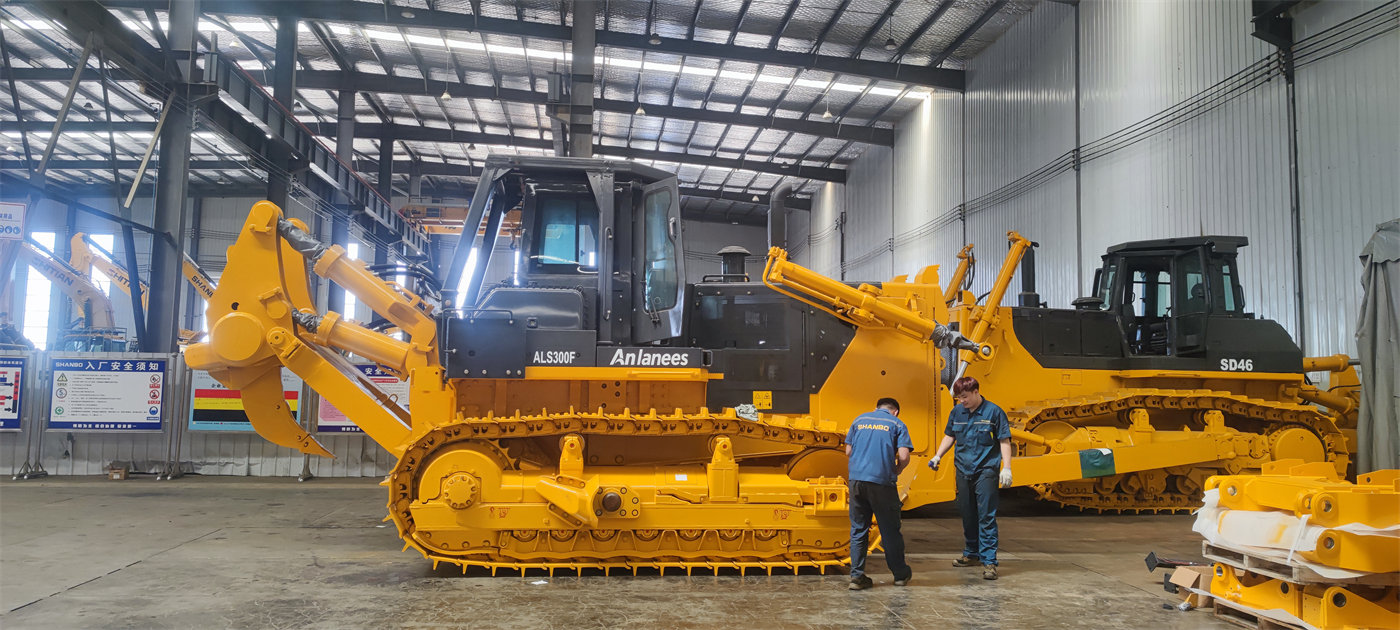
Undercarriage parameters are track shoe width 450 mm and ground pressure 54.4 kPa. Ground pressure is an entry point for judging soft-ground adaptability, but this value alone cannot be directly extrapolated to all soft sites; soil moisture and bearing conditions must also be confirmed.
Trade-offs and boundaries in the two roles
| Working role | Relevant data focus | Points to note |
|---|---|---|
| Earthmoving | Traction 95 kN, power 81 kW, maximum forward speed 10.4 km/h | Push distance, material looseness, and blade capacity jointly affect cycle efficiency; a single value cannot replace actual matching |
| Site grading | Blade 2960×960 mm, lift height 830 mm, digging depth 350 mm, overall width 2960 mm | Fine grading depends on operator habits, blade angle adjustment, and low-speed control; the data do not provide grading accuracy indicators |
According to the data, the SD10's width and weight are more suitable for small and medium sites: the overall width of 2960 mm imposes clear requirements on passage width when moving in relatively narrow construction spaces; the 10000 kg weight and 95 kN traction correspond to medium-scale pushing tasks, and it cannot be inferred that it can replace larger-tonnage equipment for long-distance, high-volume continuous pushing.
For grading, the maximum digging depth of 350 mm and lift height of 830 mm are reference values for operating boundaries, not amounts that should be used in every operation. In actual grading, cutting depth is usually shallower; what needs consideration is the coordination of blade width with overlapping passes, discharge height, and site drainage slope. The data on this site do not provide further information on these, and they are supporting conditions that need to be confirmed on site.
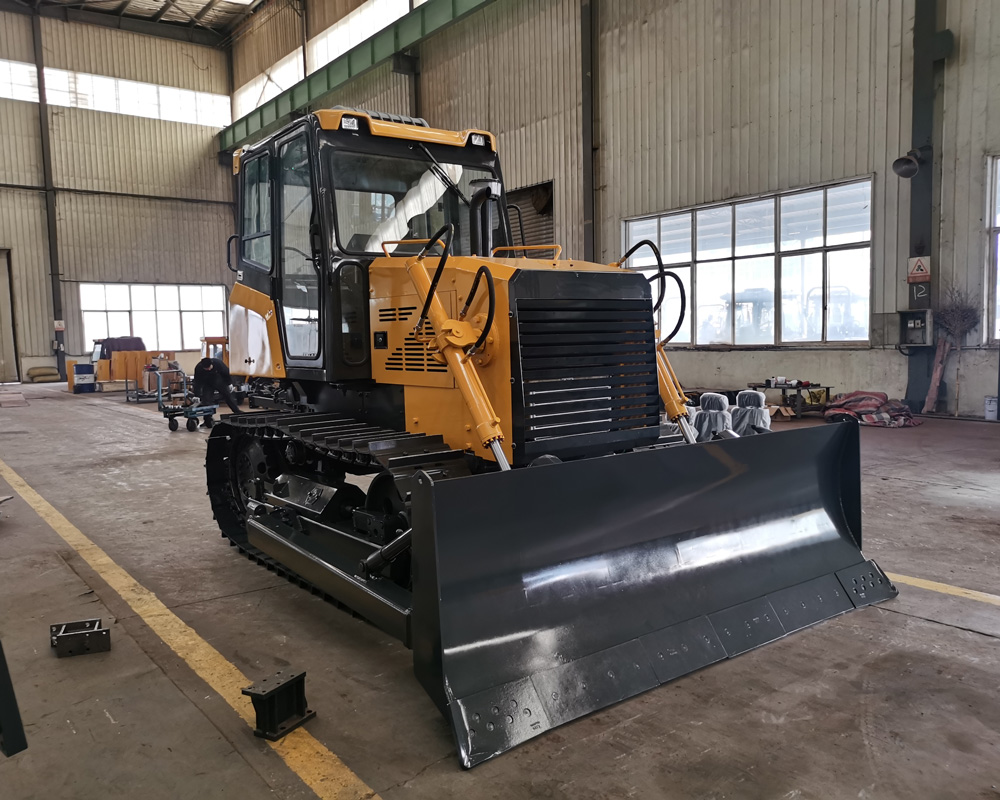
Blade options include straight, curved, and coal blades, and the rear can be equipped with a fixed ripper or three-shank ripper. These options affect the machine's adaptability to different materials and processes: the ripper can be used to loosen hard surface layers, but the data do not give ripping depth or applicable soil class, so confirmation with the supplier is needed before selection.
Conditions to confirm before purchase
- Minimum passage width and turning space at the work site; check whether they accommodate the 2960 mm overall width and 4400 mm length.
- Push distance and volume per pass; assess whether the 2.6–10.4 km/h speed range and 95 kN traction cover the planned cycle.
- Requirements for overlapping and edge trimming in grading sections; confirm whether the 2960 mm blade width matches the site's pass layout.
- Surface softness and moisture condition, to judge whether the 54.4 kPa ground pressure requires further ground treatment or a wetland configuration.
- Specific blade and rear attachment options, supply scope, and local emission compliance. The data mention meeting emission standards for environmentally friendly operation but do not list the specific emission stage; the actual delivery configuration should prevail at purchase.
The above is a selection analysis based on published specifications and does not constitute a conclusion on suitability for specific working conditions. Earthmoving and site grading often alternate within the same project; whether one small dozer can handle both should be determined after checking actual workload, site dimensions, and material conditions against the above parameters item by item.